
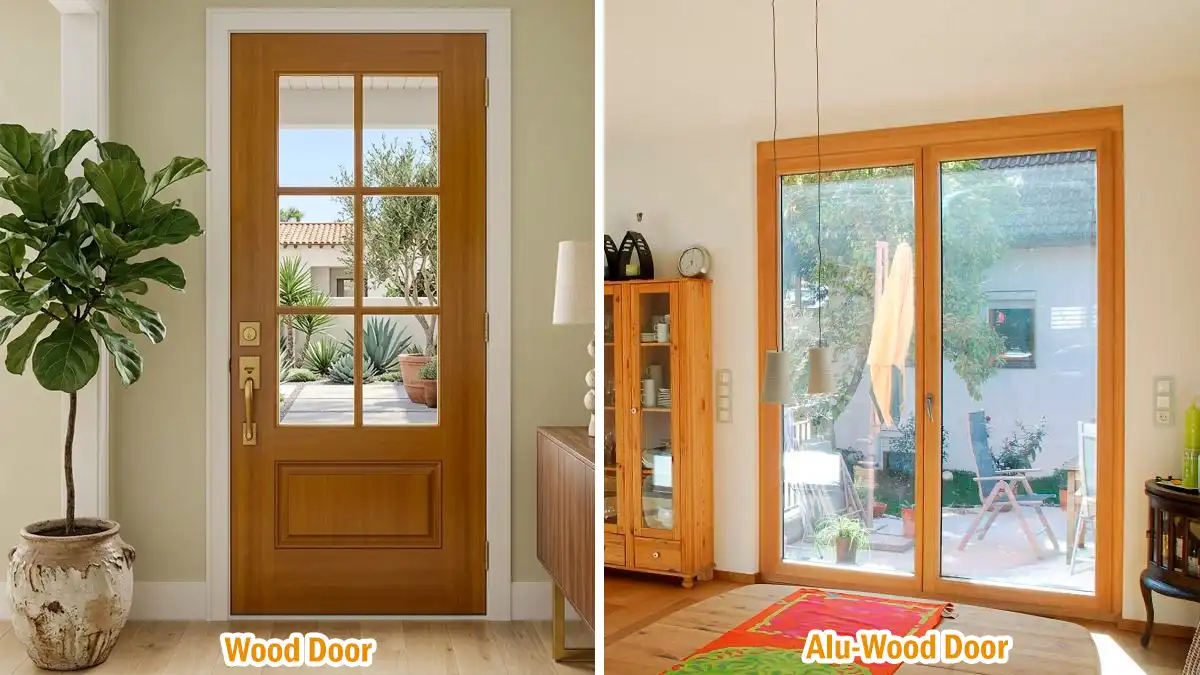
Choosing the right door is about more than appearance. Today, homeowners and architects increasingly prioritize energy efficient doors that help maintain comfortable indoor temperatures, reduce heating and cooling costs, and withstand changing weather conditions. While traditional wood doors remain a timeless choice, modern alu-wood doors combine the natural beauty of wood with the long-term protection of an aluminium exterior.
This comparison explains the key differences between wood doors and energy efficient alu-wood doors to help you select the right option for your home or commercial project.
Why Energy Efficient Doors Matter
Doors are one of the largest openings in a building envelope. Poorly performing doors can allow unwanted heat transfer, air leakage, and moisture intrusion, increasing the workload on heating and cooling systems.
Performance Envelope Objectives
- ✓ Thermal Retention: Significantly reduces interior heat loss during sub-zero winter periods.
- ✓ Solar Deflection: Minimizes unwanted thermal radiation and heat gain during peak summer months.
- ✓ Atmospheric Stabilization: Optimizes indoor climate comfort levels across changing seasonal shifts.
- ✓ Consumption Reduction: Directly lowers baseline utility HVAC power demands and ongoing expenses.
- ✓ Envelope Optimization: Raises long-term structural efficiency ratings for green building certifications.
Wood Door vs Energy Efficient Alu-Wood Door
Evaluating the architectural trade-offs between pure natural craftsmanship and engineered material systems reveals critical performance gaps over the building lifecycle:
TRADITIONAL SOLID WOOD DOORS
- ✓ Traditional Aesthetics: Warm, authentic solid timber grain lines matching classic styles.
- ✓ Initial Affordability: Typically provides a lower upfront market purchase and delivery cost.
- ✓ Sustained Integrity: Can endure for decades if regular manual maintenance is carefully met.
CONS
- ✕ Atmospheric Instability: Highly prone to warping, twisting, and expanding with humidity shifts.
- ✕ High-Maintenance Lifecycle: Demands routine field sanding, painting, re-staining, and sealing.
- ✕ Weather Vulnerability: Direct UV and moisture exposure accelerates surface structural decay.
ENERGY EFFICIENT ALU-WOOD DOORS
- ✓ Hybrid Dual Aesthetics: Features premium inner wood profiles combined with sleek exterior frames.
- ✓ Engineered Thermal Shielding: Insulated structural timber cores capped with weather-tight perimeter seals.
- ✓ Zero-Maintenance Exterior: Hardened powder-coated surfaces resist fading, scratching, and corrosion.
- ✓ Advanced Durability: Complete protection from rot, swelling, and moisture structural damage.
CONS
- ✕ Higher Initial Capital Cost: Requires a greater upfront investment due to advanced hybrid tooling.
- ✕ Fixed External Profiles: The protective cladding cannot easily be recolored on-site after installation.
Which Door Performs Better in Different Climates?
Climatic Performance Adaptability
- ✓ Severe Cold Climates: Alu-wood configurations isolate internal heat profiles, driving down structural energy loss.
- ✓ Extreme Hot Climates: The multi-layered thermal core blocks solar radiation from bridging into interior spaces.
- ✓ Humid Regional Zones: External aluminium shells form a seamless barrier against moisture absorption and timber swelling.
- ✓ Corrosive Coastal Belts: Treated exterior cladding provides excellent resistance to salt air weathering and surface breakdown.
Which Door Should You Choose?
A traditional wood door remains an excellent option for homeowners who appreciate natural craftsmanship and are willing to perform regular maintenance.
The Modern Hybrid Advantage
- If long-term performance, lower maintenance, high weather resistance, and insulation are your top priorities, energy efficient alu-wood doors offer the most practical solution.
- Their clever combination of inner natural wood aesthetics and defensive exterior aluminium cladding makes them an excellent structural investment for modern homes and commercial buildings.
- As eco-conscious building practices continue to evolve globally, high-performance energy-saving doors are rapidly moving from a luxury option to a baseline building necessity.
Related Articles

Featured
You May Also Like
Best Security Storm Doors for Maximum Front Door Protection

The Lightweighting Imperative: How Aluminium Extrusion is Wi…

Aluminium in Pharmaceuticals: Safeguarding Lives & Drivi…
Triple Pane Windows Problems Every Aluminium Homeowner Shoul…

Foil vs. Parchment vs. Plastic Wrap: The Ultimate Guide to C…
