Imagine a home where the line between indoors and out simply disappears. Not with a standard sliding door that sticks and rattles, but with an architectural element that glides with a single finger, connecting living spaces with gardens, patios, and breathtaking views. This isn’t a dream; it’s the reality of the Lift and Slide Door.
For professionals in the building and design industries, understanding the engineering and material science behind these systems is crucial. While they appear simple, their performance is a direct result of a sophisticated mechanism supported by one material above all others: aluminium.
The “Lift” and “Slide” Mechanism: A Masterclass in Engineering
Unlike a traditional sliding door that drags along a track, the Lift and Slide door uses an ingenious two-step process:
- The Lift: A turn of the handle engages a mechanism that slightly raises the entire door panel—typically just a few millimeters. This action disengages the weather seals and transfers the door’s weight from the frame to a heavy-duty roller system.
- The Slide: Once lifted, the panel glides with remarkable ease, even if it weighs hundreds of kilograms. This effortless movement is due to the door’s weight being borne by precision rollers rather than friction.
This system provides significant advantages for homeowners and builders alike:
- Effortless Operation: Allows for the use of massive glass panels that would be too heavy for standard systems.
- Superior Weather Performance: When closed, the panel’s weight presses down into the frame, creating a tight, compression-sealed barrier against wind and rain.
- Minimal Wear and Tear: By lifting the door off the track, friction and stress on the components are virtually eliminated, ensuring smooth performance for decades.
- Sleek Aesthetics: The advanced mechanism allows for incredibly slim frame profiles, maximizing the glass area and preserving views.
While the mechanism is the brains of the operation, its body must be strong, lightweight, and durable enough to support it. This is where aluminum’s unique properties become indispensable.
The Critical Role of Materials: Building on a Foundation of Aluminum
The sheer scale of a lift and slide door demands a material that offers a high strength-to-weight ratio without compromising on design flexibility. Aluminum is the undisputed champion for these systems.
1. Standard Aluminium: The Structural Backbone
Aluminum’s inherent properties make it the perfect choice for high-performance glazing:
- Strength-to-Weight: It can support immense glass loads while maintaining slim, minimalist sightlines. This is why it’s a go-to for modern architectural designs.
- Durability and Low Maintenance: It’s naturally resistant to corrosion, rust, and rot. A powder-coated finish provides a durable, UV-resistant surface that requires little more than occasional cleaning.
- Design Flexibility: Aluminium can be extruded into precise, complex profiles and finished in a vast range of colors, offering endless design possibilities.
However, a standard aluminum profile is a poor insulator. Without the proper engineering, it becomes a thermal bridge, allowing heat to escape in the winter and enter in the summer. This is a critical issue that modern systems must address.
2. Thermal-Break Aluminum Systems: The Non-Negotiable Standard for Performance
For any residential or commercial application that requires energy efficiency, a thermal-break system is essential.
- How It Works: A thermal-break involves splitting the aluminum frame profile into an interior and exterior section. These two parts are then joined by a polyamide bar—a material with very low thermal conductivity.
- The Result: This barrier dramatically reduces heat transfer, transforming the aluminum frame into a high-performance, energy-efficient component.
Why a Thermal-Break is Non-Negotiable:
- Energy Savings: Drastically reduces heating and cooling costs.
- Year-Round Comfort: Eliminates condensation and cold spots on the interior frame.
- Code Compliance: Many modern building codes require thermal-break systems to meet energy performance standards.
3. Premium Alu-Wood Systems: Blending Form and Function
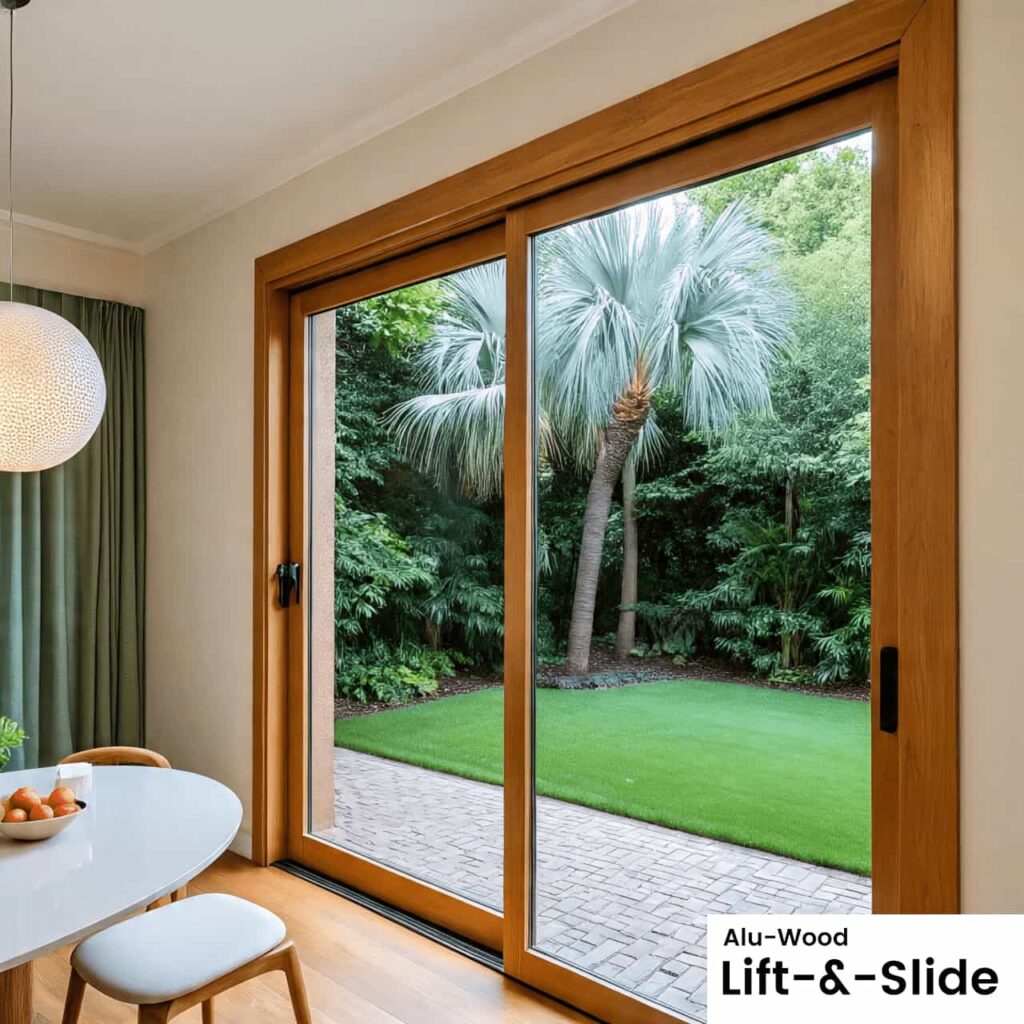
For projects where the aesthetic warmth of wood is desired without sacrificing the durability of aluminum, Alu-Wood systems offer the best of both worlds.
This hybrid construction features:
- Interior Wood Finish: The inside of the door is a beautiful, real wood surface (e.g., oak, walnut), providing a classic, warm aesthetic to the living space.
- Exterior Aluminum Armour: The outside is clad in a protective aluminum shell, shielding the wood from the elements and eliminating the need for frequent maintenance like sanding or staining.
Benefits of Alu-Wood Systems:
- Low Exterior Maintenance: The aluminum takes the brunt of the weather, ensuring the system’s longevity.
- Aesthetic Versatility: Combines the natural beauty of wood with the sleek lines and performance of modern aluminum.
- High Performance: These systems incorporate advanced thermal-break technology, offering the same superior energy efficiency as premium aluminum doors.
Choosing the Right Door for Your Project
The choice of a lift and slide door is a fundamental design decision that impacts both aesthetics and performance. For most applications, a Thermal-Break Aluminium system is the ideal choice, offering a perfect blend of sleek design, durability, and energy efficiency.
For projects where the timeless beauty of wood is a priority, the Alu-Wood system provides a no-compromise solution, marrying classic charm with modern, low-maintenance performance.
By understanding the mechanics and the critical role of materials, you can specify a lift and slide door that not only elevates a space but also delivers on its promise of long-term value and performance.
Related Articles


Featured



You May Also Like

Don’t Buy Aluminium Windows for Your Home Without This…

Rare Earth Minerals and Why China Controls the World’s…
What Is Raw Aluminum Ore (Bauxite)?
Aluminium Titanate (Al₂TiO₅): Technical Guide to Zero‑Expans…

Not Just Wings: Where Aluminium Hides on Airplanes.