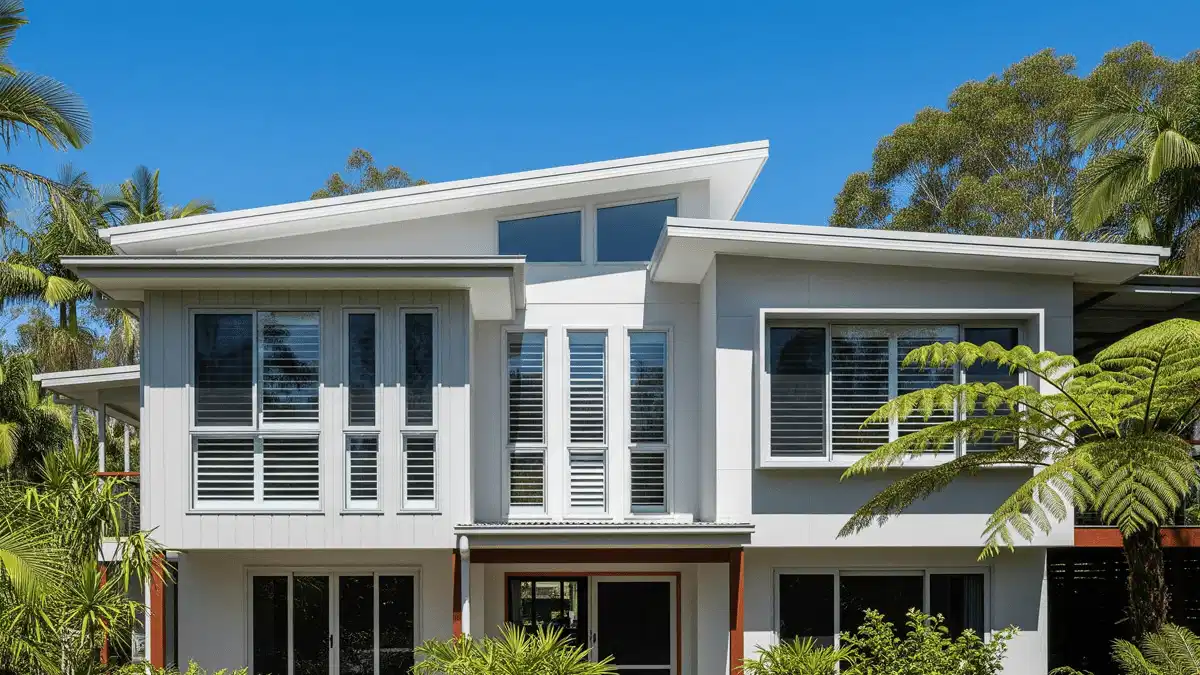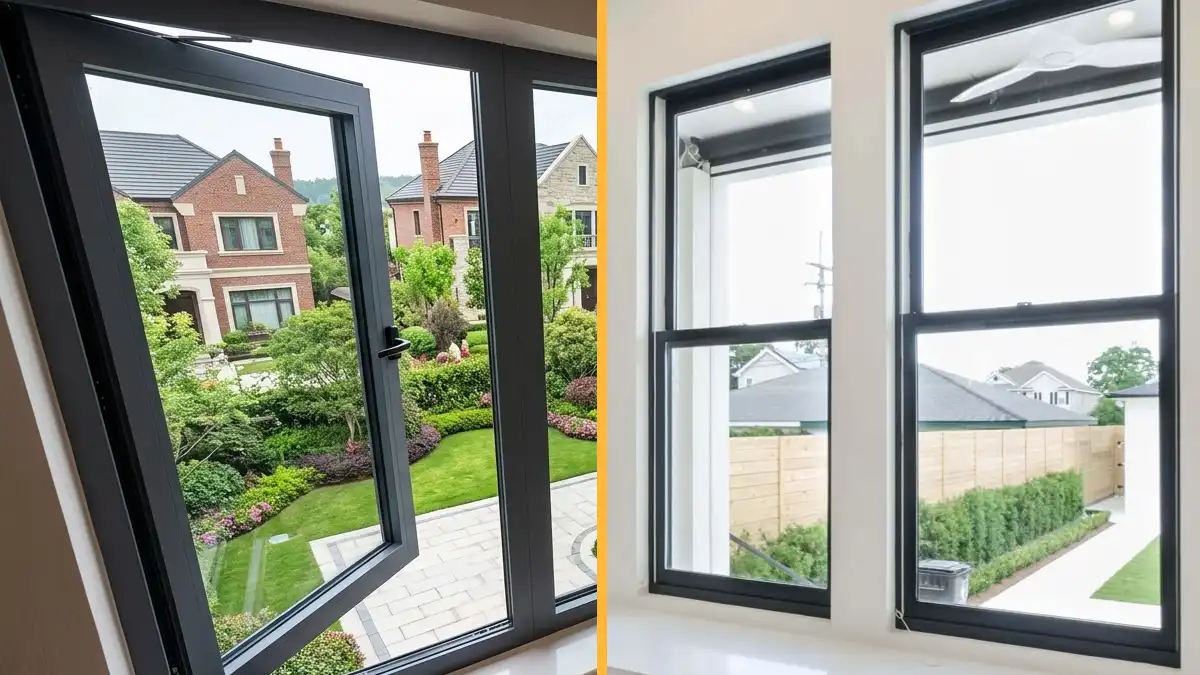
For homeowners comparing window styles, energy efficiency is often one of the biggest deciding factors. While both hung windows and casement windows can be designed to meet modern energy standards, they do not perform exactly the same way.
In most situations, casement windows are considered more energy efficient than hung windows because they create a tighter seal when closed. However, window efficiency is influenced by much more than operating style alone. Frame material, glazing package, weatherstripping quality, installation, and local climate all play important roles.
Energy Efficiency at a Glance
- ✓ Direct Compression Seal: Casement windows seal tightly against the frame like a door, reducing drafts.
- ✓ Track Clearance Gaps: Hung windows slide vertically in tracks, leaving tiny gaps that may permit slight air leakage.
- ✓ Wind Assistance: Strong winds naturally push a casement sash inward, tightening its protective weather seal.
- ✓ The Glass Factor: High-performance double or triple glazing matters just as much as the window’s operating style.
Quick Answer
- Casement windows are generally more energy efficient than hung windows.
- Casement windows seal tightly against the frame, reducing air leakage.
- Hung windows offer good performance but typically allow slightly more air infiltration.
- Modern double-pane or triple-pane glass can significantly improve either style.
- Proper installation often has a greater impact than the window style itself.
What Makes a Window Energy Efficient?
A window’s energy performance is determined by several factors:
- Air leakage resistance
- Glass insulation value (U-Factor)
- Solar Heat Gain Coefficient (SHGC)
- Frame material
- Weatherstripping quality
- Installation quality
While the operating style matters, it is only one part of the overall efficiency equation.
Air Leakage: The Biggest Difference
The primary reason casement windows often outperform hung windows is their sealing mechanism.
When a casement window closes, the sash presses firmly against the frame, creating a compression seal around the perimeter. Similar to a door, this design helps minimize drafts and unwanted air movement.
Hung windows operate differently. Their sashes slide vertically within tracks, which means small gaps must remain for movement. Even with modern weatherstripping, these sliding components can allow slightly more air leakage over time.
As a result, casement windows generally achieve lower air infiltration rates than single-hung or double-hung windows. For a deeper look at this performance difference, check out our comparison of casement vs sliding window efficiency.
Insulation and Glass Performance
Many homeowners assume window efficiency depends solely on the operating style, but glazing often has a larger impact.
A high-quality double-hung window with:
- Double-pane or triple-pane glass
- Low-E coatings
- Argon gas filling
- Insulated frames
can outperform a poorly manufactured casement window.
When comparing products, always review the window’s NFRC performance ratings rather than relying only on the window style.
Ventilation Comparison
Ventilation is another area where the two styles differ.
– Casement Windows
When fully open, casement windows can capture and direct airflow into the home. Because the sash acts like a sail, they are often considered one of the best window styles for natural ventilation. The orientation of the casement—whether it opens outward or inward—can affect airflow patterns. Learn more in our guide on outward vs inward casement windows and airflow.
– Hung Windows
Double-hung windows provide flexible ventilation by allowing the top sash, bottom sash, or both to open. This can improve airflow circulation and is particularly useful in traditional homes.
While casement windows typically move more air, double-hung windows offer greater ventilation flexibility.
Climate Considerations
1. Cold Northern Climates
In colder regions where heating costs are a major concern, casement windows often provide an advantage due to their tighter air seal and reduced heat loss.
2. Hot Southern Climates
Both window styles can perform well when combined with Low-E glass and proper solar control coatings.
3. Coastal Areas
Corrosion resistance, frame durability, and impact-rated glazing are often more important considerations than the operating style itself.
4. Windy Regions
Casement windows frequently perform better because strong winds can actually help push the sash tighter against the frame, improving the seal.
Maintenance and Durability
Hung windows contain balance systems, tracks, and multiple moving components that may require periodic adjustment or replacement.
Casement windows rely on hinges and crank mechanisms. While these components can eventually wear out, they generally provide reliable operation when properly maintained.
The maintenance difference is relatively small, but homeowners should consider long-term hardware replacement costs.
Casement vs Hung Windows Comparison
| Feature | Casement Windows | Hung Windows |
|---|---|---|
| Air Leakage | Excellent | Good |
| Energy Efficiency | Excellent | Good |
| Ventilation | Excellent | Very Good |
| Traditional Appearance | Moderate | Excellent |
| Ease of Cleaning | Good | Excellent (Double-Hung) |
| Weather Resistance | Excellent | Good |
| Modern Home Design | Excellent | Good |
| Historic Home Design | Moderate | Excellent |
Strengths
- Best for maximum structural air leakage resistance
- Great for catching and directing natural outdoor airflow
- Superior thermal seal for cold northern or windy climates
- Matches clean, minimalist lines in modern home designs
Weaknesses
- Perfect option for historic or traditional architecture
- Flexible ventilation by opening top or bottom sashes
- Easiest style for routine glass cleaning from indoors
- Maintains uniform exterior looks in historic neighborhoods
When Should You Choose Casement Windows?
Casement windows are often the better choice when:
- Energy efficiency is the top priority.
- You want maximum natural ventilation.
- Your area experiences strong winds.
- You are building a modern-style home.
- Reducing heating and cooling costs is important.
For a complete overview of casement window features and benefits, read our guide on aluminium casement windows.
When Should You Choose Hung Windows?
Hung windows may be the better option when:
- You prefer a traditional architectural appearance.
- You own a historic or heritage-style home.
- You want top-and-bottom ventilation flexibility.
- Easy cleaning is a priority.
- The surrounding homes commonly use hung windows.
The Verdict
For pure energy efficiency, casement windows generally outperform hung windows because they create a tighter seal against the frame and typically experience less air leakage.
However, the difference is not always dramatic. A well-manufactured and properly installed hung window with high-performance glass can still provide excellent energy performance.
If maximizing energy efficiency is your primary goal, casement windows are usually the stronger choice. If traditional appearance, architectural consistency, and ventilation flexibility are more important, modern hung windows remain an excellent option for many homes.
Related Articles

Featured

You May Also Like

Aluminum Billet Casting Equipment: A Complete Overview for M…

What is Aluminium Business Insurance? Benefits & Importa…

Solar Projects: Why Aluminium is the Strategic Backbone for …

Modern Shade Goals? Why Aluminum Patio Umbrellas Are the New…
Curtain Wall System Components: Mullions, Transoms, Anchors,…