
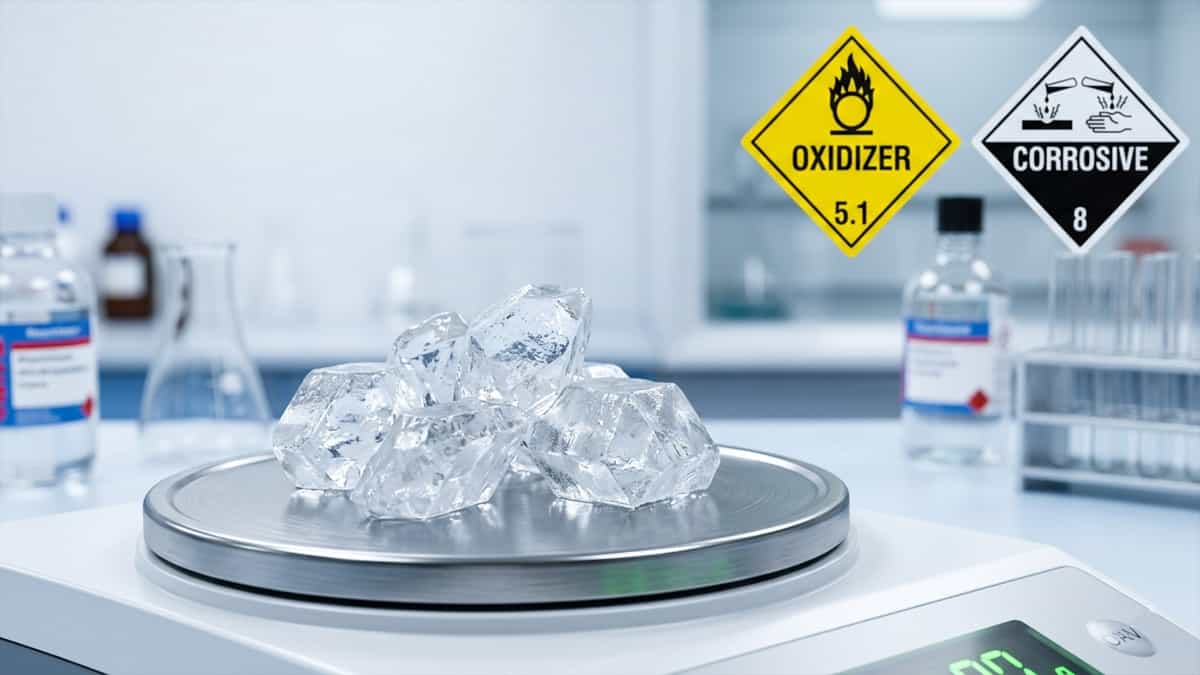
Aluminium nitrate is a highly soluble, deliquescent crystalline solid used as an oxidizing agent and a precursor for high‑purity alumina. It exists primarily as the nonahydrate (Al(NO₃)₃·9H₂O). Due to its strong oxidizing properties, it must be stored away from all organic and flammable materials.
1. Basic Identification
- Chemical Formula: Al(NO₃)₃ (anhydrous); common form: Al(NO₃)₃·9H₂O (nonahydrate)
- Alternative Names: Aluminium(III) nitrate
- Molecular Weight: 212.99 g/mol (anhydrous); 375.13 g/mol (nonahydrate)
- CAS Number: 13473-90-0 (anhydrous); 7784-27-2 (nonahydrate)
- Appearance: White to colorless crystalline solid
2. Physical Properties
| Property | Aluminium Nitrate (Nonahydrate) |
|---|---|
| Melting Point | 73.9 °C (165 °F) |
| Boiling Point | Decomposes ~135 °C, releasing NO₂ and O₂ |
| Density | 1.72 g/cm³ |
| Aqueous pH | ~2‑3 (strongly acidic) |
| Solubility | 63.7 g/100 mL water at 25 °C; soluble in ethanol and methanol |
The nonahydrate is deliquescent – it absorbs moisture from air until it dissolves into its own water of hydration, forming a puddle.
3. Chemical Behavior & Synthesis
3.1 Thermal Decomposition – Clean Alumina Precursor
When heated, aluminum nitrate decomposes to pure aluminum oxide, nitrogen dioxide, and oxygen:
4 Al(NO₃)₃ → 2 Al₂O₃ + 12 NO₂ ↑ + 3 O₂ ↑
The reddish‑brown NO₂ gas is toxic. The remaining Al₂O₃ is free of halides or sulfur, making it valuable for catalyst supports.
3.2 Synthesis
Aluminum hydroxide or alumina is digested in hot concentrated nitric acid:
Al₂O₃ + 6 HNO₃ → 2 Al(NO₃)₃ + 3 H₂O
The solution is cooled to crystallize the nonahydrate.
4. Industrial & Laboratory Applications
4.1 Alumina Precursor for Catalysis
Petroleum refineries use aluminium nitrate to coat ceramic supports. Upon heating, the nitrate decomposes to a uniform layer of pure Al₂O₃, which acts as a catalyst or catalyst support for cracking heavy oils. Unlike aluminum chloride or sulfate, nitrate leaves no corrosive or poisoning residues.
4.2 Uranium Extraction
In nuclear fuel reprocessing, aluminium nitrate acts as a “salting‑out” agent during solvent extraction, helping to separate uranium from other fission products.
4.3 Leather Tanning & Antiperspirants
Its astringent properties make it useful in specialized leather tanning. Historically, it has also been used in antiperspirant formulations.
5. Safety & Hazard Management
| GHS Symbol | Meaning |
|---|---|
| 🔥 GHS03 | Oxidizer |
| ❗ GHS07 | Irritant |
Critical Warning: Aluminium nitrate is a strong oxidizer. It does not burn, but it supplies oxygen to fires. Contact with organic materials (paper, wood, solvents, sugar) can cause spontaneous ignition or explosion.
5.1 Health Effects
| Route of Exposure | Effect |
|---|---|
| Inhalation | Respiratory irritation; high doses may cause methemoglobinemia (blood oxygen loss, bluish skin). |
| Skin Contact | Irritation and possible burns, especially with moisture. |
| Eye Contact | Severe irritation, corneal burns. |
| Ingestion | Toxic – gastric pain, vomiting, blood pressure drop, nitrate poisoning. |
5.2 Personal Protective Equipment (PPE)
- Respiratory: N95 or P100 mask.
- Hands: Neoprene or nitrile gloves.
- Eyes: Tight‑sealing goggles.
- Body: Fire‑resistant lab coat; avoid greasy or soiled clothing.
5.3 First Aid
- Skin: Wash with soap and large amounts of water.
- Eyes: Flush for at least 15 minutes; seek ophthalmologist.
- Ingestion: Drink large volumes of water. Do not induce vomiting. Seek immediate medical attention.
5.4 Firefighting
- Use: Flood with large quantities of water to cool and dilute.
- Do NOT use: Dry chemical, CO₂, or halon – these cannot stop an oxidizer‑driven fire.
6. Storage & Handling
- Container: Glass or plastic, tightly sealed to prevent deliquescence.
- Atmosphere: Dry environment.
- Location: Cool, dry, on non‑combustible shelving (concrete or metal – never wood).
- Incompatibles: All organic matter, reducing agents, cyanides, flammable liquids, metal powders.
6.1 Disposal
Never discard directly into trash containing paper or organics. In a fume hood, dissolve in excess water, then reduce with sodium thiosulfate or similar reducing agent to destroy oxidizing power. The neutralized slurry can be disposed as hazardous waste.
7. Environmental Impact
Aluminum nitrate is toxic to aquatic life. Its acidic nature kills fish directly, and the nitrate ions cause eutrophication – algal blooms that deplete oxygen and destroy aquatic ecosystems. Do not release into waterways.
8. Comparison with Other Aluminium Compounds
| Compound | Formula | Primary Nature | Primary Environmental Hazard |
|---|---|---|---|
| Aluminium Nitrate | Al(NO₃)₃ | Strong oxidizer | Eutrophication, acidic toxicity |
| Aluminium Sulfate | Al₂(SO₄)₃ | Coagulant/acid | pH disruption of lakes |
| Aluminium Chloride | AlCl₃ | Lewis acid | Releases HCl gas |
9. Frequently Asked Questions
Q: I put aluminum nitrate in a paper bag and it started smoking – why?
A: It is a strong oxidizer. It transferred oxygen to the cellulose, generating enough heat for spontaneous combustion.
Q: Why is there liquid in my jar of crystals?
A: The nonahydrate is deliquescent. It absorbed moisture from the air and partially dissolved.
Q: Why do refineries prefer this over aluminum sulfate?
A: Aluminum sulfate leaves sulfur residues that poison noble metal catalysts downstream. Nitrate burns away completely, leaving only pure alumina.
10. Summary Data Sheet
| Property | Value |
|---|---|
| Chemical Name | Aluminum Nitrate (Nonahydrate) |
| Formula | Al(NO₃)₃·9H₂O |
| Appearance | White or colorless, moist crystals |
| Melting Point | 73.9 °C |
| Defining Trait | Strong oxidizer, deliquescent |
| Primary Utility | Precursor for pure alumina catalyst supports |
| Hazard Note | Can ignite organics; flood fires with water |
Related Articles

Featured


You May Also Like

Do I Need Thermal-Break Windows for Better Energy Efficiency…

Which Mosquito Net is Best for Aluminium Roll-Up Frame?
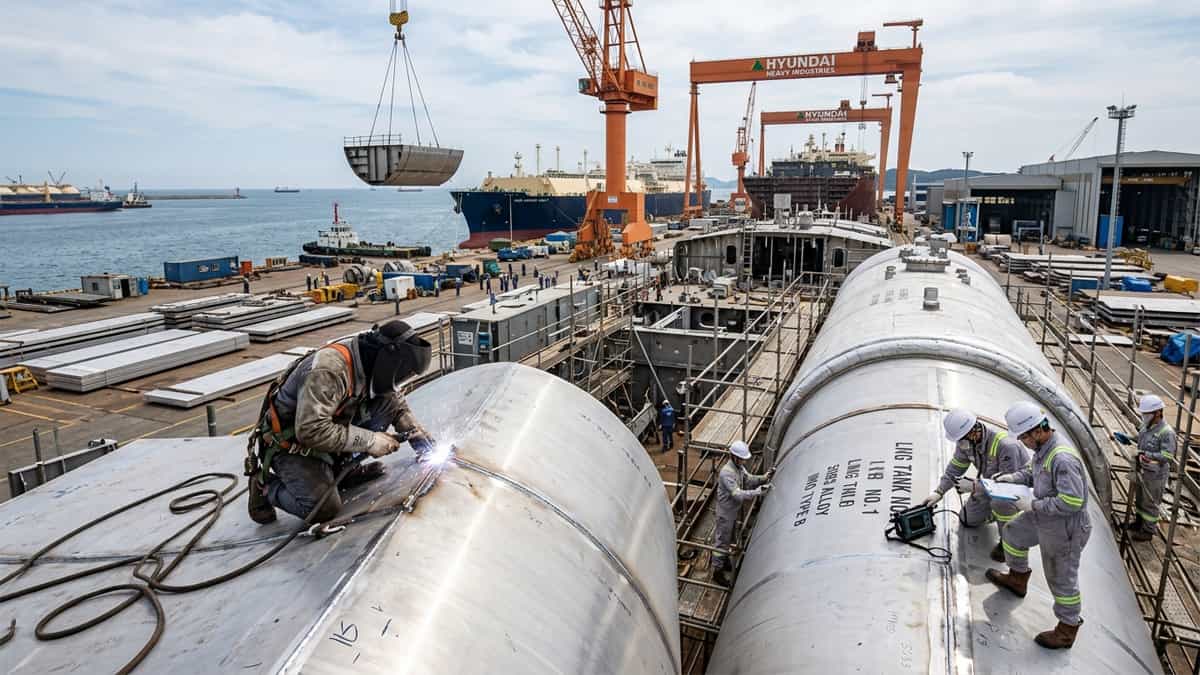
Aluminium 5083 (Aluminum 5083): The High‑Strength Marine All…

Is Aluminum a Magnetic Material?

Aluminium Bars & Rods: GST Rates & HSN Codes
