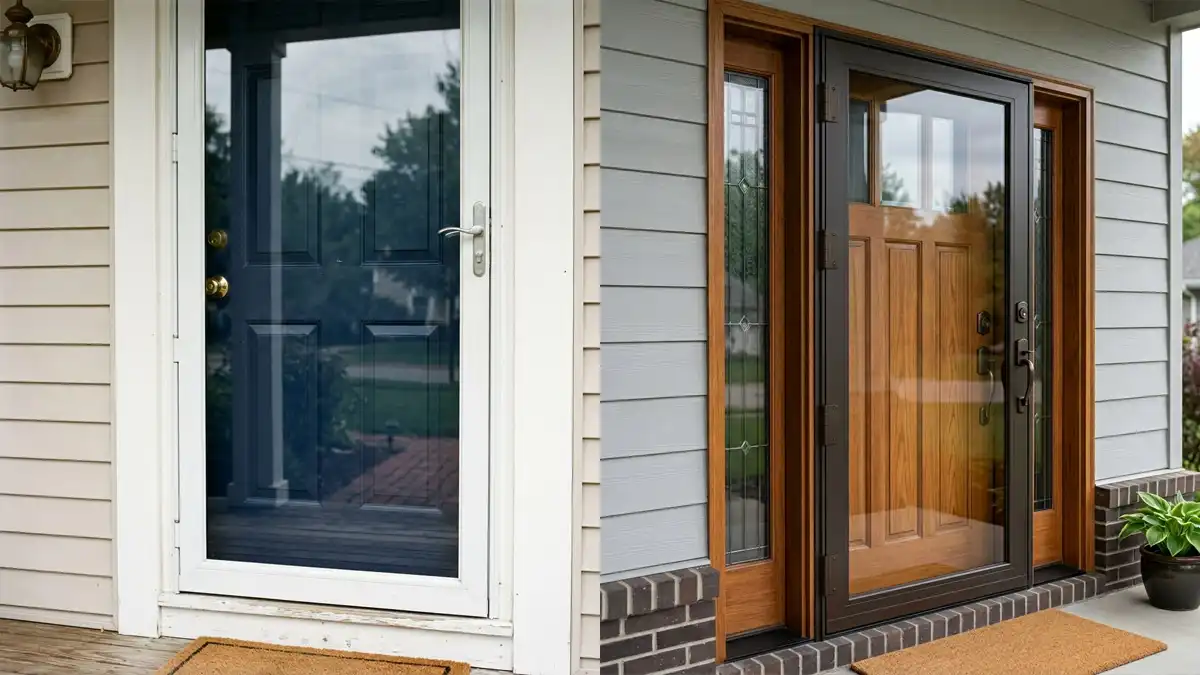
Your front entrance is the first thing people see—and the first place your home loses energy, invites noise, or shows weather damage. A high-quality aluminum storm door transforms that weak point into a protective asset.
But not all aluminum storm doors perform equally. Thin-gauge economy models dent easily and transfer heat. Heavy-duty extruded aluminum with thermal breaks and Low-E glass delivers decades of protection.
This guide cuts through marketing claims. You’ll learn exactly what separates premium storm doors from budget alternatives, which features matter for your climate, and how to match the right door to your specific front entrance.
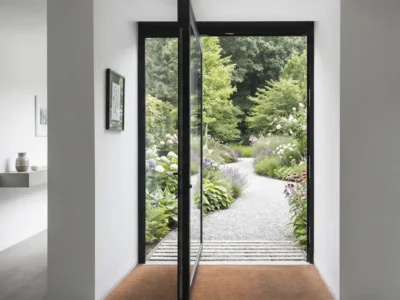
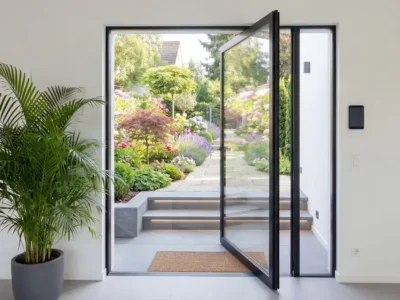
Full-glass Aluminum Storm Door


Full-screen Aluminum Storm Door


Full-Glass vs Full-Screen Storm Doors
A full-glass aluminum storm door provides better protection against strong wind, rain, and flying debris, while also helping maintain a more stable indoor temperature. However, standard glass can break if a hard object strikes it during a severe storm.
A full-screen aluminum storm door allows excellent airflow and can reduce the direct impact of wind while keeping insects out. Its screen is less likely to shatter like glass, but it should not be considered a barrier against flying debris during severe storms.
For maximum weather and debris protection: choose a properly rated full-glass storm door, especially where severe weather is a concern.
For ventilation and everyday use: a full-screen storm door can be the better choice.
For a closer look at the differences, see our Storm Doors vs. Screen Doors comparison.
Why Aluminum Dominates the Storm Door Category
Aluminum isn’t the only storm door material, but its combination of strength, low weight, weather resistance, and low maintenance makes it a popular choice for US homes.
- Flexible Designs: Available as full-glass, full-screen, and combination storm doors, allowing homeowners to choose between weather protection, ventilation, and insect control.
- Corrosion Resistant: Naturally forms a protective oxide layer and won’t develop red rust like steel.
- No Rot or Warp: Doesn’t absorb moisture, rot, swell, or warp like wood.
- Lightweight & Strong: Provides solid protection without making the door unnecessarily heavy.
- Low Maintenance: Powder-coated or anodized finishes need little more than occasional cleaning.
Economy vs. Premium: What You’re Actually Paying For
Walk into any big-box store, and you’ll see aluminum storm doors priced from $100 to $800. The difference isn’t just brand markup—it’s fundamental construction.
| Feature | Economy ($100–250) | Premium ($350–800) |
|---|---|---|
| Frame material | Thin-gauge aluminum (0.040–0.050″) | Heavy-duty extruded 6063-T5 alloy (0.080″+) |
| Thermal break | None | Polyamide strip between interior/exterior |
| Glass | Clear single-pane | Low-E coated, often double-pane |
| Weatherstripping | Basic vinyl bulb | Dual-fin bulb + closed-cell foam |
| Hinges | Two standard | Three heavy-duty with stainless pins |
| Deadbolt | Optional or plastic | Integrated steel deadbolt |
| Finish | Baked enamel (scratches easily) | Powder-coated or anodized |
| Lifespan | 5–10 years | 25+ years |
The takeaway: A $150 storm door looks fine on day one. But after three winters, the finish fades, weatherstripping cracks, and the frame begins to sag. A premium door costs more upfront but pays for itself in reduced energy bills and avoided replacement.
Critical Features to Look For
1. Extruded Aluminum Frame with Thermal Break
Skip any door that doesn’t specify “extruded” or “6063 alloy.” Rolled or stamped aluminum is weaker and prone to bending. True extruded aluminum has consistent wall thickness and structural rigidity.
The thermal break is non-negotiable if you live anywhere with real winters. This polyamide strip between the interior and exterior aluminum sections stops conductive heat loss. Without it, the frame itself becomes a cold radiator.
2. Low-E Glass
Low-E (low-emissivity) glass has a microscopic metallic oxide coating that reflects infrared heat while letting visible light pass through.
- Winter benefit: Reflects interior heat back into your home
- Summer benefit: Reflects exterior heat away from your home
- UV protection: Blocks 30–50% more UV than clear glass
For energy performance details, read our storm door insulation and energy efficiency guide.
3. Three Heavy-Duty Hinges
Most storm doors come with two hinges. That’s adequate for a screen door but insufficient for a 50-pound glass-filled storm door. Premium models add a third hinge at the center. Look for stainless steel pins and adjustable hinge plates that let you fine-tune alignment without removing the door.
4. Integrated Deadbolt
A basic latch is not security. A quality storm door includes a steel deadbolt that throws at least 1 inch into the frame. The handle and lock should be sealed against moisture—cheap locks freeze and fail after one winter.
5. Dual-Fin Weatherstripping
Inspect the seal around all four sides. Budget doors use a single vinyl bulb that compresses unevenly. Premium doors use dual fins or closed-cell foam that maintains contact even if the door settles slightly over time. The bottom sweep should be a flexible rubber or vinyl that contacts the threshold across the full width.
6. Interchangeable or Retractable Screen
A storm door should work year-round. In winter, you want full glass for insulation. In summer, you want full screen for ventilation.
Two approaches:
- Interchangeable panels: Remove glass, insert screen. Simple and reliable, but you need storage for the off-season panel.
- Retractable screen: Screen rolls down from a top cassette when needed and disappears when not. Cleaner aesthetic, but more moving parts to maintain.
Finish Options: Powder-Coated vs. Anodized
| Finish | Appearance | Durability | Best For |
|---|---|---|---|
| Powder-coated | Matte or gloss, unlimited colors | Good UV resistance, can scratch | Color matching, suburban homes |
| Anodized | Metallic sheen (bronze, clear, black) | Extremely hard, won’t peel | Coastal areas, high-traffic entries |
Powder coating applies a colored polyester or epoxy layer baked onto the aluminum. It’s tough but can scratch down to bare metal.
Anodizing creates a thick aluminum oxide layer through an electrochemical process. The finish is integral to the metal—it won’t peel or flake. Anodized surfaces resist salt air corrosion exceptionally well, making them the choice for Florida, coastal California, and the Gulf Coast.
For existing doors, we’ve covered how to maintain aluminum windows and doors—the same principles apply to storm door finishes.
Installation: DIY or Professional?
A storm door installation requires:
- Square frame alignment within 1/8 inch
- Proper drip cap placement to shed water
- Correct fastener selection (no drywall screws)
- Weatherstripping compression adjustment
DIY is realistic if you have experience with exterior trim work, own a level and drill, and can follow detailed instructions. Expect 2–4 hours.
Professional installation is worth the $100–150 if you’ve never installed a storm door. A misaligned frame won’t close properly, and a missing drip cap leads to water damage behind the door.
Top Brands to Consider
While specific product recommendations change frequently, look for these quality indicators:
- Larson – Widely available, good mid-range options, retractable screen models
- Andersen – Premium extruded aluminum, excellent weatherseals
- ProVia – Heavy-duty commercial-grade residential doors
- EMCO – Solid mid-range, good thermal break designs
Always verify the specific model includes extruded aluminum, thermal break (for cold climates), and Low-E glass before purchasing.
The Bottom Line
The best aluminum storm door for your front entrance isn’t the cheapest or the most expensive—it’s the one matched to your climate, primary door material, and aesthetic preferences.
For cold climates: full-view, thermal break, Low-E glass, powder-coated or anodized finish.
For hot-humid climates: ventilating model (glass top, screen bottom), anodized finish, retractable screen.
For coastal homes: anodized finish only—skip powder coating.
Invest in heavy-duty extruded aluminum with three hinges and a deadbolt. Skip thin-gauge economy doors. One quality storm door will outlast three cheap replacements and protect your expensive front door for decades.