
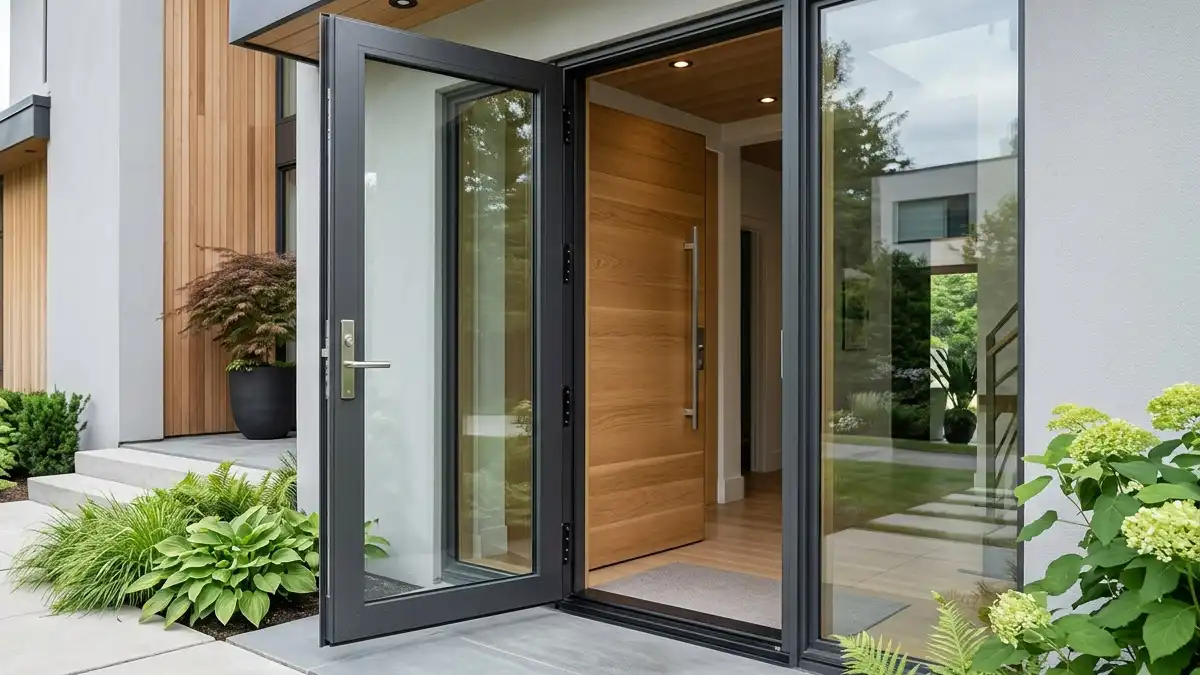
A storm door solves real problems. But it also introduces a few of its own. Honest buyers need both sides before spending $300–$800 on a product that will hang on their home for 20+ years.
The good news: nearly every disadvantage has an engineering solution. Modern extruded aluminum frames, ventilating designs, and Low-E glass address the classic complaints. You just need to know which features to look for.
Let’s run through the pros and cons honestly—then match each con to its fix.
The Advantages (Why 15+ Million US Homes Have One)
1. Extended Primary Door Life
Your front door takes abuse daily. UV rays break down clear coats and paint. Rain drives moisture into wood grain and behind fiberglass skins. Hail leaves permanent scars.
A storm door absorbs all of this. It’s the sacrificial layer. When the storm door’s finish eventually fades after 15 years, you replace a $400 door instead of a $2,500 mahogany entry door. That’s a 6x return before factoring in energy savings.
2. Measurable Energy Savings
As covered in our storm door energy guide, the dead-air space between doors adds effective R-value. Low-E glass reflects radiant heat back into your home. A thermally broken aluminum frame stops conductive heat loss.
The U.S. Department of Energy estimates 5–10% heating and cooling savings for homes with older, leaky entry doors. That’s real money every month.
3. Seasonal Ventilation Without Bugs
Spring and fall are perfect for fresh air—except for mosquitoes, flies, and gnats. A storm door’s interchangeable or retractable screen gives you bug-free airflow whenever you want it.
Full-view models let you slide the glass up or swap in a full-height screen. Ventilating models let you open just the top or bottom section. Either way, you control the airflow.
4. UV Protection for Interiors
Direct sunlight fades hardwood floors, area rugs, entryway furniture, and artwork. Clear glass blocks some UV-B but lets UV-A through. That UV-A causes most fading.
A storm door with tinted or Low-E glass adds an extra layer of UV reduction. For south- or west-facing entries, this protects your interior investments without blocking natural light.
5. Noise Reduction
The mass of a storm door’s glass panel and aluminum frame, combined with the air gap, attenuates mid- and high-frequency sounds. You won’t get soundproofing. But barking dogs, lawn mowers, and street traffic become noticeably quieter.
For homes near busy roads or corner lots, this quality-of-life improvement alone justifies the cost.
6. Added Security
Heavy-gauge extruded aluminum resists forced entry far better than a lightweight screen door. The deadbolt on a storm door is a second lock at a different height. Intruders face two barriers, twice the noise, and twice the time.
The Disadvantages (And Their Engineering Fixes)
Disadvantage #1: Heat Trapping with Full Glass
This is the biggest legitimate complaint. In hot, sunny climates, a full-glass storm door facing west or south creates a greenhouse effect between the glass and your main door. Dark-colored steel or fiberglass doors can reach 170°F. Paint blisters. Weatherstripping melts. The main door warps.
The fix: Choose a ventilating model or retractable screen. Ventilating storm doors let you open the top panel, bottom panel, or both. Hot air rises—open the top vent and heat escapes before it builds up. For extreme climates like Phoenix or Las Vegas, skip permanent glass entirely and use a retractable-screen-only storm door.
Disadvantage #2: Added Weight on Hinges
A quality extruded aluminum storm door with glass weighs 40–60 pounds. That’s not trivial. Over time, heavy doors can sag, causing misalignment and air leaks. Cheap hinges make this worse.
The fix: Look for doors with three heavy-duty hinges (most have two) and stainless steel pins. Some premium models use adjustable hinges that let you compensate for sag without removing the door. Also verify your existing door frame can handle the weight—older homes may need frame reinforcement.
Disadvantage #3: Maintenance and Cleaning
Storm doors have more moving parts than a basic screen door: glass panels, screen channels, tracks, weatherstripping, hinges, and a closer mechanism. All of it can collect dust, pollen, and debris over a busy season.
The fix: Choose a design with tool-free removable glass panels to make cleaning painless. For self-storing tracks, a quick vacuum out once a year prevents debris build-up.
Material Tip: Unlike wood that needs restaining or vinyl that yellows, high-quality powder-coated or anodized extruded aluminum frames require nothing more than a quick wipe down with soapy water once a year to keep their finish pristine for their 25+ year lifespan.
Disadvantage #4: Condensation Between Doors
In cold climates, warm humid indoor air can condense on the cold storm door glass. Frost forms. Water drips. Over time, this can damage the main door’s threshold or create mold in the gap.
The fix: A thermally broken aluminum frame reduces cold transfer to interior surfaces. Low-E glass stays warmer on the interior side. And simple habits help: run bathroom fans, use your range hood, and avoid storing wet items between doors. If condensation persists, a ventilating model with a small top vent allows air circulation to dry the gap.
Disadvantage #5: Aesthetic Interference
Some homeowners feel a storm door obscures a beautiful front door. Custom wood doors with intricate carvings or stained glass deserve to be seen—not hidden behind another door.
The fix: Full-view storm doors with clear Low-E glass are nearly invisible from ten feet away. The frame is thin, the glass is clear, and your primary door remains visible. If even that’s too much, consider a retractable screen storm door that rolls up completely, leaving no glass or screen in the way when not in use.
Disadvantage #6: Installation Complexity
DIY installation is possible but not trivial. If you misalign the frame, the door won’t close properly. If you over-tighten screws, you warp the frame. If you skip the drip cap, water leaks behind the storm door and rots your main door’s brick mold.
The fix: Pay for professional installation. The extra $100–150 ensures proper squareness, sealing, and drainage. Consider it part of the door’s cost, not an optional extra.
Pros and Cons Summary Table
| Aspect | Pro | Con | Engineering Fix |
|---|---|---|---|
| Door protection | Extends primary door life 2-3x | None | — |
| Energy savings | 5-10% reduction | Minimal if main door is new | Thermal break + Low-E |
| Ventilation | Bug-free airflow | None | Interchangeable screens |
| Heat in summer | — | Full-glass traps heat | Ventilating or retractable models |
| Durability | 25+ year lifespan | Heavy (40-60 lbs) | Three hinges, adjustable hardware |
| Maintenance | Low overall | More parts than screen door | Removable panels, yearly cleaning; powder-coated/anodized frames need only soapy water |
| Condensation | — | Frost risk in cold climates | Thermal break + air circulation |
| Aesthetics | Protects expensive doors | Can obscure view | Full-view clear glass |
| Installation | — | Moderate complexity | Professional install recommended |
The Balanced Verdict
A storm door is not for every home. If you live in a mild climate with a north-facing entry and an already energy-efficient fiberglass door, you may never miss having one.
But for most US homeowners—especially those with wood entry doors, extreme winters, hot summers, or noisy streets—the advantages outweigh the disadvantages by a wide margin. And every legitimate disadvantage has a fix: ventilating models for heat, thermal breaks for condensation, three hinges for weight, full-view glass for aesthetics.
The key is buying the right storm door for your specific climate and home configuration. Cheap vinyl or non-thermal break aluminum models deserve their bad reputation. Quality extruded aluminum with the right features delivers on every promise.
For a complete guide to choosing the right model, start with our best aluminum storm doors for USA homes and compare against aluminum screen doors if you only need ventilation.
Related Articles
Featured



You May Also Like

Triple Pane Windows Problems Every Aluminium Homeowner Shoul…
Awning Windows: Top 8 Pros and Cons for Your Home

Aluminium Element: Symbol, Properties, Uses, and Surprising …
The Great Decoupling: Why U.S. Aluminum Buyers Are Paying a …

Aluminium and Aluminium Business & Things
