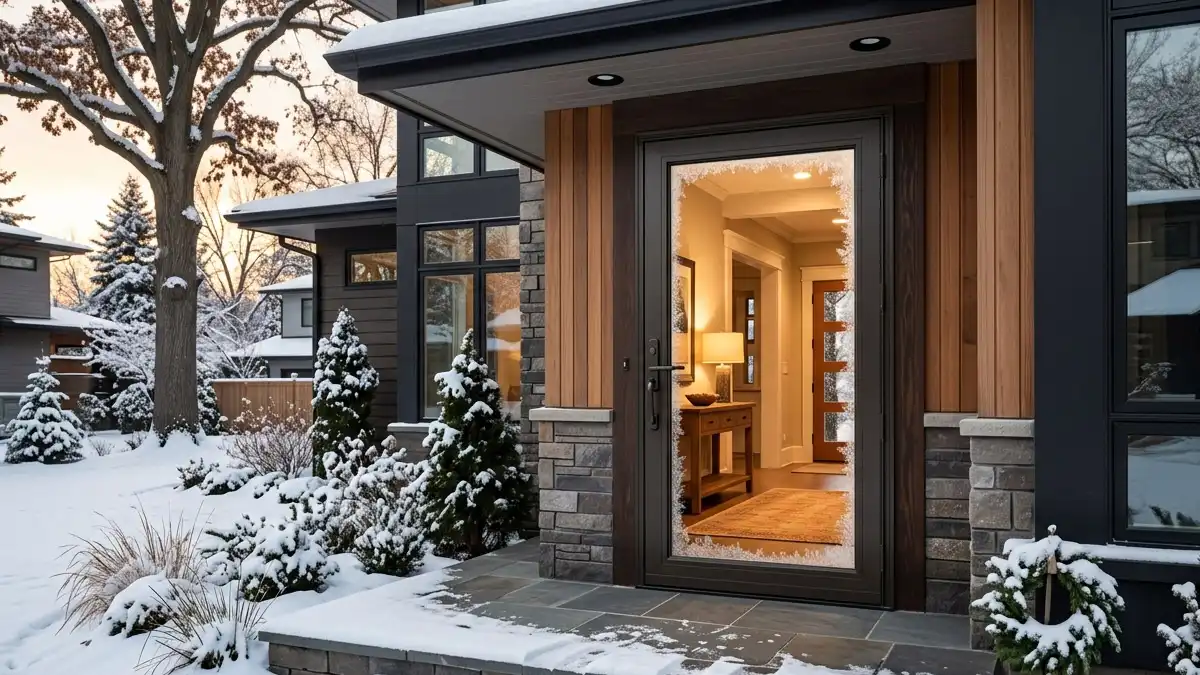
Your front door leaks more energy than you think. A standard entry door without a storm door can account for up to 10% of your home’s total air infiltration. In winter, that’s cold air seeping in around weatherstripping and conducting straight through the door panel.
A properly configured storm door changes this completely. But not all storm doors are created equal for energy performance. The difference comes down to three engineering concepts: the dead-air space, thermal breaks, and Low-E glass.
Let’s walk through how a storm door actually saves energy—and which features actually matter.
The Dead-Air Space: Your Free Insulation Layer
Between your primary door and the storm door sits a gap of roughly 1 to 3 inches. That trapped air is an excellent insulator if it can’t circulate.
When wind presses against the outside of a storm door, the air inside the cavity stays still. Still air has an R-value of about R-1 per inch. Three inches of dead air adds roughly R-3 to your entry system—on par with adding a layer of rigid foam insulation.
But the real benefit isn’t the R-value. It’s draft reduction. Even a well-sealed primary door loses heat through pressure differences. The storm door acts as a windbreak, reducing the pressure differential across the main door and cutting air infiltration by 40–60%.
Thermal Breaks: Why Aluminum Frames Need Them
Here’s the honest truth about aluminum: it conducts heat extremely well. A basic aluminum frame without a thermal break will transfer cold from the outside directly to the inside surface of the storm door.
That’s a problem. Condensation forms. Frost appears. And some of your heat escapes by conduction.
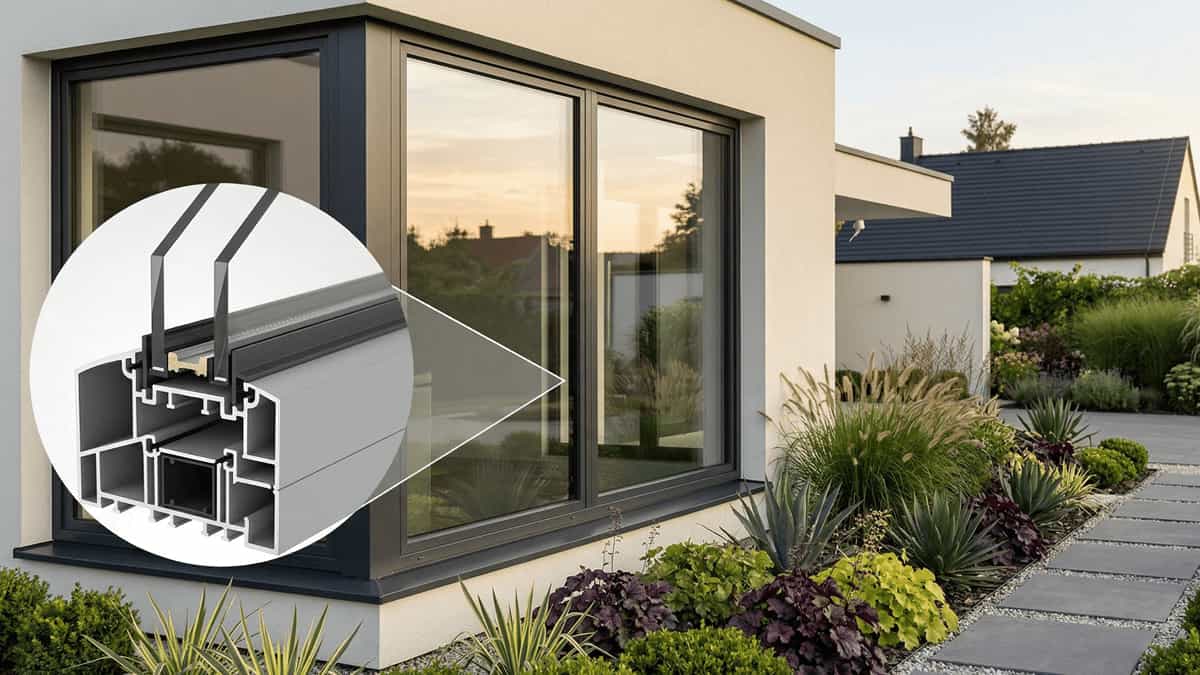
The engineering solution: A thermal break. This is a structural polyamide strip (nylon or similar) inserted between the interior and exterior aluminum sections of the frame. The polyamide has very low thermal conductivity, so it “breaks” the heat path.
A thermally broken aluminum storm door frame performs dramatically better in winter:
| Feature | Non-Thermal Break | With Thermal Break |
|---|---|---|
| Interior frame temperature (20°F outside) | 25–30°F (frost risk) | 45–55°F (no condensation) |
| U-factor | ~1.2 | ~0.6–0.8 |
| Condensation risk | High | Low |
| Winter comfort | Cold to touch | Neutral |
For homeowners in Zone 5 and above (think Chicago, Boston, Minneapolis), a thermal break is not optional if you want real energy savings. It’s the difference between a storm door that helps and one that still feels like a cold radiator.
Low-E Glass: The Invisible Coating That Works
Low-emissivity (Low-E) glass has a microscopic metallic oxide coating. This coating reflects long-wave infrared heat while allowing visible light to pass through.
In winter: Interior heat radiates toward the cold glass. Low-E coating reflects that heat back into your home. Meanwhile, solar energy (short-wave) passes through and warms the air gap.
In summer: The same coating reflects exterior infrared heat away from your home, reducing cooling load.
A storm door with Low-E glass cuts heat loss through the glass by 30–50% compared to clear single-pane glass. Some manufacturers offer double-pane Low-E storm door glass, though this is less common.
If you’re considering a best aluminum storm door for energy savings, look specifically for models labeled “Low-E” or “energy efficient” with published U-factor and solar heat gain coefficient (SHGC) ratings.
Weatherstripping: The Most Overlooked Component
All the thermal breaks and Low-E glass in the world won’t save you if air leaks around the edges. Weatherstripping is the first line of defense.
Quality storm doors use dual-fin bulb vinyl or closed-cell foam weatherstripping around all four sides. The material should compress fully when the door closes, creating an airtight seal without requiring a slam.
Check three critical points:
- Bottom sweep: A flexible vinyl or rubber sweep that contacts the threshold fully across the width
- Hinge-side jamb: Often neglected on cheap doors. Should have continuous gasketing
- Header: Top seal that prevents warm air from escaping upward
Replace weatherstripping every 5–7 years. Compression set and UV degradation eventually reduce effectiveness.
Winter Performance by Glass Type
| Glass Type | Visible Light | UV Block | Heat Retention | Best Paired Configuration |
|---|---|---|---|---|
| Clear single-pane | 90% | Low | Poor | Mild climates; budget-focused utility frames |
| Tinted | 50–70% | Moderate | Moderate | Sunbelt states; standard aluminum frames |
| Low-E single-pane | 75–80% | High | Good | Mixed climates; year-round architectural frames |
| Low-E double-pane | 70–75% | Very High | Excellent | Cold states; premium thermally broken aluminum frames |
For most US homeowners in zones 4–6, Low-E single-pane offers the best value. The coating pays for itself in energy savings within 2–3 heating seasons.
Energy Savings: What Can You Actually Expect?
Real-world data from the U.S. Department of Energy suggests a properly fitted storm door with Low-E glass and thermal break can save 5–10% on heating and cooling costs for homes with older, poorly insulated entry doors. For a typical home spending $2,000 annually on energy, that’s $100–$200 per year.
The savings are smaller if your primary door is already energy-efficient (fiberglass with foam core, proper weatherstripping). But the draft reduction remains noticeable.
Installation Mistakes That Ruin Efficiency
A great storm door installed poorly performs worse than a mediocre door installed correctly. Common errors:
- Over-tightening the frame (warps the door, creates gaps)
- Skipping the drip cap (water runs behind the frame)
- Using wrong screws (strips out, door sags)
- No foam filler in frame cavities (heat bypasses thermal break)
If you’re not confident in DIY, pay for professional installation. The extra $100–150 is worth avoiding efficiency-killing gaps.
The Bottom Line
A storm door saves energy by creating dead-air space, reducing drafts, and reflecting radiant heat. But only if you choose the right features: extruded aluminum with thermal break, Low-E glass, and high-quality weatherstripping installed correctly.
Skip the cheap vinyl or non-thermal break models. They look similar from the street but perform like a screen door in January. Invest in the engineering. Your heating bill will thank you.
For a broader look at aluminum’s role in home energy efficiency, see our energy-saving thermal break aluminum windows guide.
Related Articles
Featured
You May Also Like

Aluminium vs Stainless Steel Pressure Cookers – Which One’s …

Aluminium Flat Bar – Types, Sizes Chart
Thermal Break Windows vs Double Glazing: Why You Need Both f…

10 Unexpected Aluminum Foil Hacks You’ll Use Every Day

Which Mosquito Net is Best for Aluminium Roll-Up Frame?