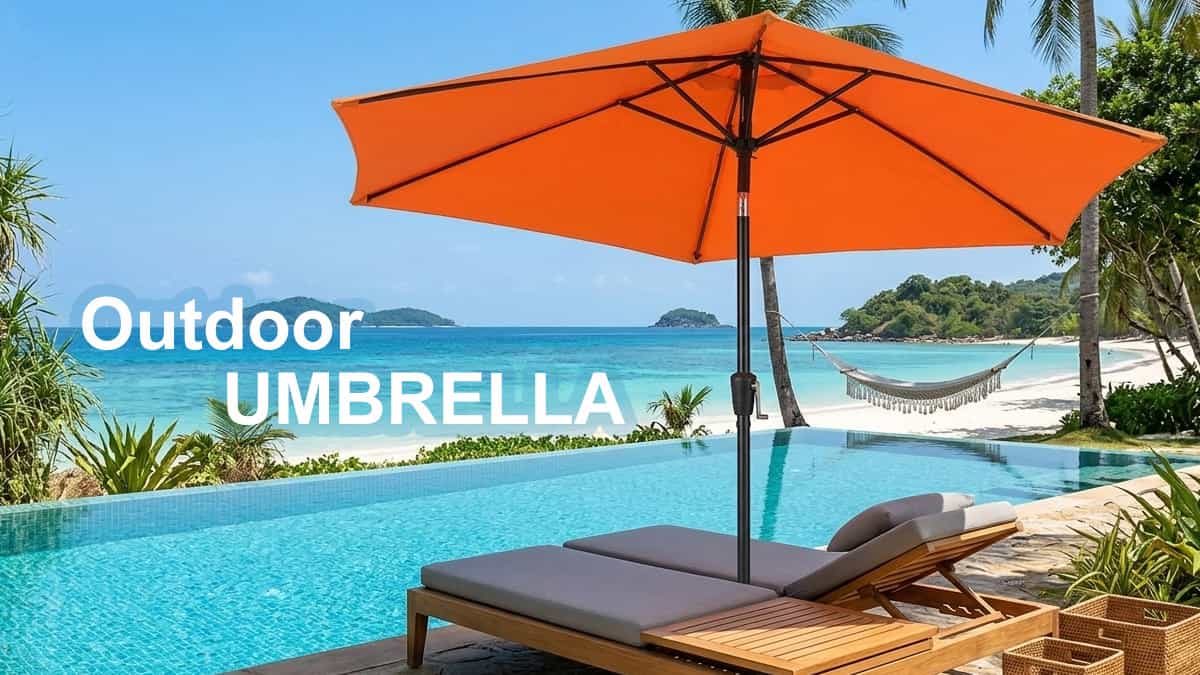
1. What Is an Aluminium Outdoor Umbrella Business?
An aluminium outdoor umbrella business involves designing, manufacturing, or distributing shade solutions where the structural frame—hub, ribs, pole, and crank mechanism—is primarily fabricated from aluminium extrusions and tubes. Unlike traditional wooden or steel umbrellas, aluminium variants offer corrosion resistance, lightweight portability, and structural rigidity.
This business serves everyone from luxury resorts to homeowners with a poolside patio. Because aluminium is infinitely recyclable, these products also align with modern sustainability mandates.
“Aluminium is the backbone of the premium outdoor furniture industry—not just for umbrellas, but for entire outdoor living ecosystems.”
2. Why Aluminium Is Commonly Used in Outdoor Umbrellas
Aluminium (used 60% of the time in this guide) dominates this niche for seven engineering reasons:
- High strength-to-weight ratio – Easy to move, hard to break.
- Corrosion resistance – Naturally forms a protective oxide layer.
- Extrudability – Complex hollow sections for crank mechanisms are easy to produce.
- Recyclability – 75% of all aluminium ever produced is still in use.
- Thermal performance – Stays cooler than steel in direct sunlight.
- Aesthetic versatility – Accepts powder coating in any RAL colour.
- Cost stability – Less volatile than timber or stainless steel.
For deep technical reading on how aluminium performs in building envelopes, see this guide on why aluminium is used in curtain wall systems.
3. Difference Between Patio, Pool, and Outdoor Umbrellas
| Type | Primary Use | Aluminium Frame Spec |
|---|---|---|
| Patio Umbrella | Dining shade | 1.5mm–2.0mm wall thickness |
| Pool Umbrella | UV protection near water | Marine-grade 6063 alloy |
| Cantilever Umbrella | Offset shading | Heavier 2.0mm+ with counterweight |
Poolside umbrellas face chlorine fumes and splashing, requiring anodized or heavy powder-coated finishes—not just paint.
4. Who Buys Aluminium Outdoor Umbrellas?
- Homeowners with decks, patios, or pools.
- HOAs for community pool areas.
- Hotels & Resorts requiring 50–200 units per property.
- Restaurants & Cafes with sidewalk or rooftop seating.
- Event rental companies needing durable, stackable inventory.
- Property developers furnishing luxury outdoor amenity spaces.
Each segment has different quality expectations. Resorts demand 5–7 year frame warranties. Rental companies want repairable designs with replaceable fabric.
5. Residential vs Commercial Outdoor Umbrella Market
Residential (higher volume, lower margin per unit):
- Retail price: $150–$500
- Focus on aesthetics and compact packaging
- Sold via Amazon, Wayfair, big-box stores
Commercial (lower volume, higher margin):
- Retail price: $600–$2,500+
- Focus on wind rating, fabric UV stability, replaceable parts
- Sold via contract furniture dealers or direct B2B sales
Many successful manufacturers run both lines: residential through mass merchants, commercial through specification sales to architects.
6. Types of Aluminium Outdoor Umbrellas
Cantilever Umbrellas
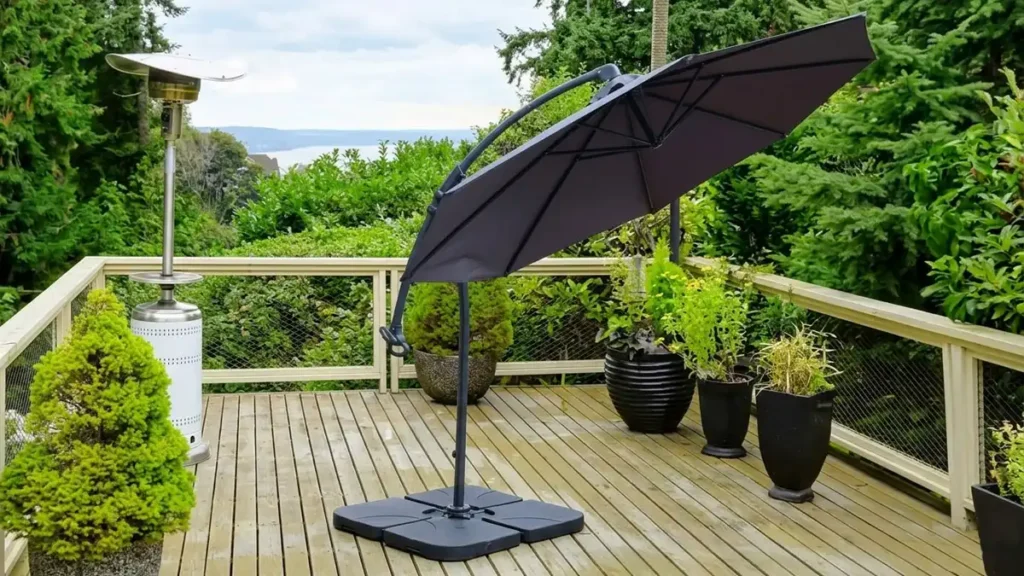
Offset pole design allows shade without a central post blocking furniture. Requires heavier aluminium ribs (6061-T6) and a robust hinge mechanism.
Poolside Umbrellas
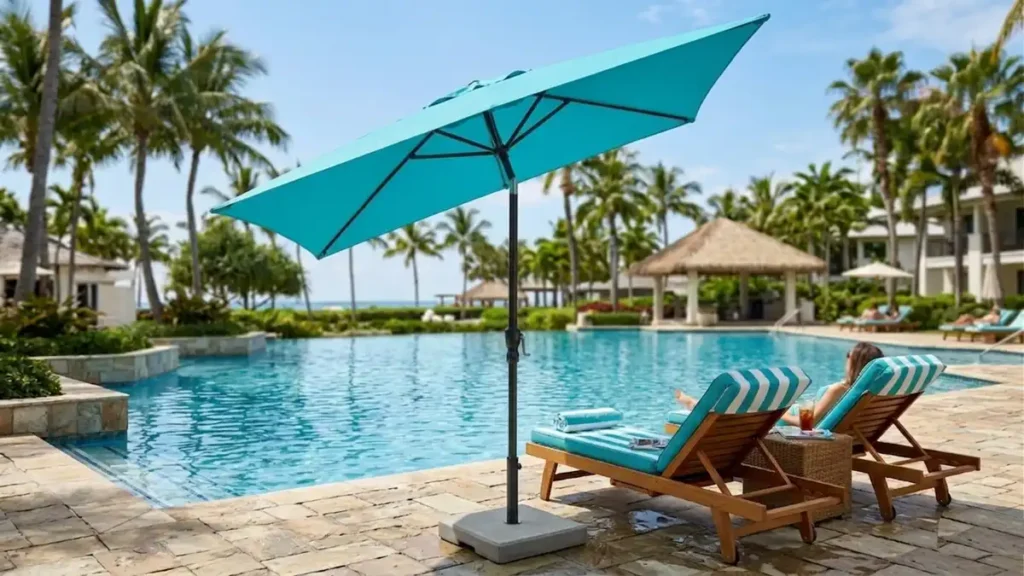
Shorter height (7–8 feet), wider canopy (9–10 feet). Often includes a tilt mechanism. Aluminium pole must be anodized to resist chlorine corrosion.
Patio Dining Umbrellas (Center Pole Umbrellas)
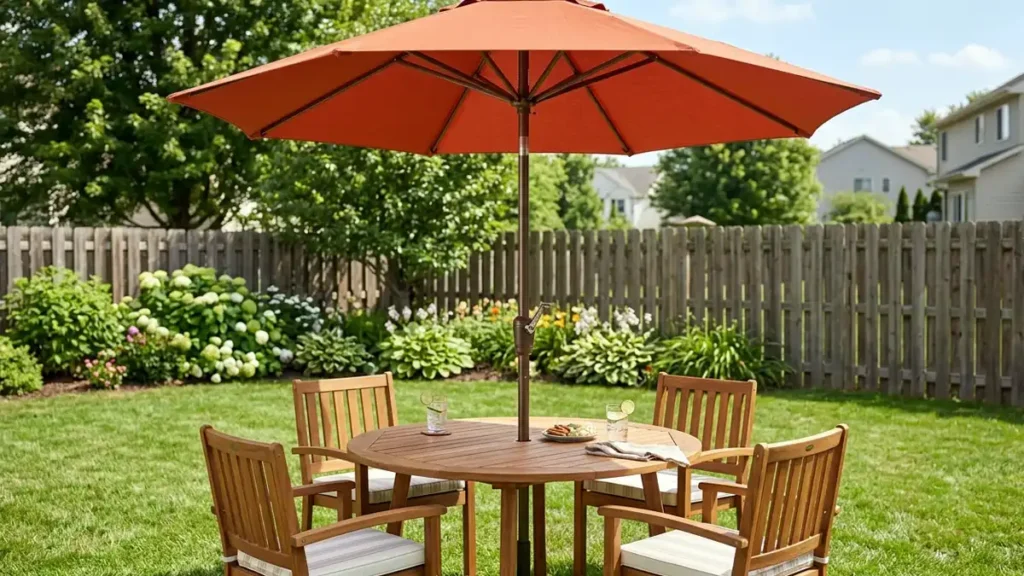
Classic design with pole through the table. Lightest frame, lowest cost, easiest to manufacture. Standard 9-foot diameter, crank lift, 1.5″ pole. Typically sold in sets with dining tables.
Resort & Hotel Umbrellas
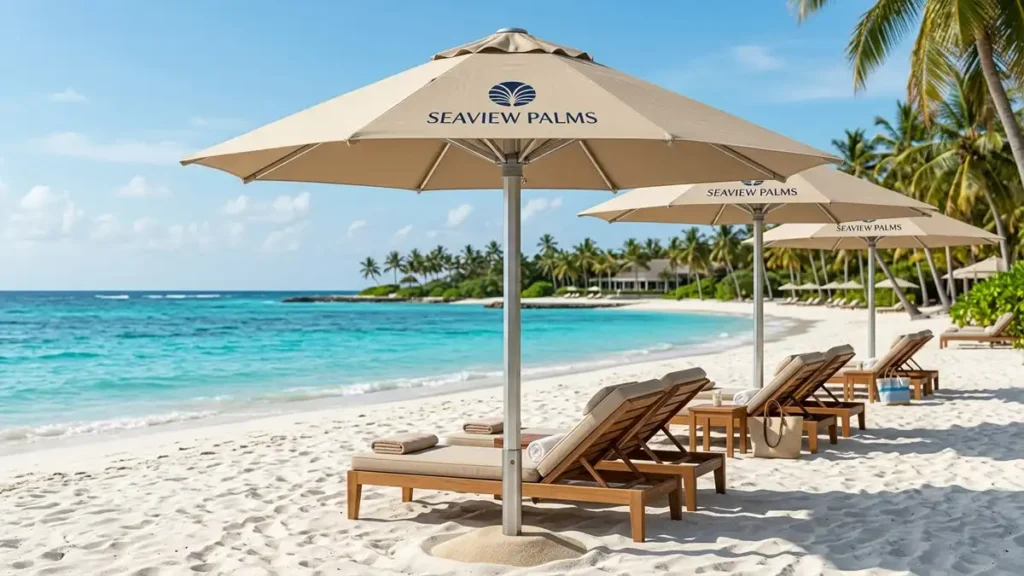
Custom branding, heavier fabric (240–280 GSM), sand-weighted or in-ground sleeve mounting. These often use aluminium 6063 alloy extrusions for complex pole shapes.
7. Why Climate Conditions Matter Before Manufacturing
Before cutting a single aluminium tube, answer these five climate questions:
- Is the target market coastal (salt air)?
- Does the region see 40°C+ summers (UV degradation)?
- Are there high wind events (hurricanes, typhoons)?
- Does it freeze (water ingress cracking)?
- Is humidity constantly above 70% (mould on fabric)?
Each answer changes your material choices, coating specs, and fabric selection.
8. Coastal Humidity Problems in Outdoor Aluminium Products
Salt spray is the #1 killer of aluminium outdoor furniture. While aluminium is naturally corrosion-resistant, salt deposits + moisture create galvanic cells at fastener points.
Solutions:
- Use marine-grade 6061 or 5083 alloy for poles.
- Specify stainless steel 316 hardware, not 304.
- Apply thick-film anodizing (Class I, 18–25 microns) before powder coating.
- Avoid threaded aluminium-to-aluminium connections (use nylon washers).
For more on how coating systems fail in aggressive environments, read about powder coating failure on aluminium and how to fix it.
9. Heat, UV Exposure, and Powder Coating Performance
In Arizona, Spain, or Australia, UV radiation breaks down organic pigments in standard polyester powder coatings within 18–24 months.
For high-heat markets:
- Use PVDF coatings (70% fluoropolymer) for 10+ year colour retention.
- Specify UV-stable clear coat over metallic finishes.
- Avoid dark colours (black, navy) on direct-sun exposed poles—surface temps exceed 80°C, degrading powder adhesion.
10. Rainy Climate Challenges for Patio Umbrellas
In tropical or monsoon regions (Florida, Kerala, Queensland), standing water on umbrella canopies leads to:
- Fabric rot (if polyester)
- Algae growth on powder coating
- Seam failure at rib pockets
Design fix: Add a centre vent or double-vented canopy. Specify solution-dyed acrylic fabric (Sunbrella-style) that breathes and resists mould.
11. Wind Resistance and Frame Stability
Engineer for 30 mph standard, 50 mph coastal. Weak points:
- Hub connection (die-cast vs fabricated)
- Rib-to-pole hinge (stainless rivets vs aluminium)
- Pole wall thickness (1.2mm fails, 1.8mm survives)
Test protocol: Lift umbrella to 45°, lock, apply side load equivalent to 35 mph wind. Measure permanent deflection. Zero deflection = pass.
12. Cold & Snowy Region Considerations
Aluminium becomes less ductile below -20°C. Snow load on a closed umbrella can snap frozen ribs.
Solution: Use tempered 6061 alloy (T6 temper) rather than standard 6063. Educate customers to close and store umbrellas before first freeze.
13. Choosing the Right Aluminium Grade for Outdoor Use
| Aluminium(Alloy) | Temper | Best for | Weldability |
|---|---|---|---|
| 6061 | T6 | High-stress poles, cantilever arms | Excellent |
| 6063 | T5/T6 | Decorative extrusions, standard poles | Good |
| 5083 | H321 | Marine/coastal extreme corrosion | Very good |
| 3003 | H14 | Ribs, low-cost frames | Fair |
The industry standard: 6063-T6 for 80% of applications. Upgrade to 6061-T6 for cantilever arms. Use 5083 only for permanent seaside installations.
See also: aluminium 6061-t6 alloy properties, machining, and applications guide.
14. Powder Coated vs Anodized Aluminum Frames
| Property | Powder Coated | Anodized |
|---|---|---|
| Colour options | Unlimited (RAL) | Bronze, black, clear only |
| Scratch resistance | Good | Excellent |
| UV resistance | Good (with PVDF) | Excellent |
| Coastal suitability | Good with primer | Excellent |
| Cost per sq ft | $2–$4 | $3–$6 |
| Repair field | Difficult | Impossible |
Recommendation: Anodize frames for coastal/high-humidity markets. Powder coat for residential/short-lifecycle products.
For deeper comparison, read powder coating vs anodizing for aluminium.
15. Importance of Stainless Steel Hardware & Fasteners
Galvanic corrosion occurs when stainless steel (cathodic) contacts aluminium (anodic) in the presence of an electrolyte (salt water).
Prevention:
- Use nylon or Teflon washers between dissimilar metals.
- Apply anti-seize compound on all threaded stainless connections.
- Specify 316 stainless (higher molybdenum) for coastal products.
- Never use zinc-plated steel—it corrodes in weeks.
16. Outdoor Fabric Selection for Different Climates
| Fabric | UV life | Water resistance | Breathability | Best climate |
|---|---|---|---|---|
| Polyester | 2–3 years | Good | Poor | Dry, mild |
| Solution-dyed acrylic | 5–8 years | Moderate | Excellent | Humid, coastal |
| Olefin | 3–5 years | Good | Good | Rainy |
| Vinyl-laminated polyester | 5–7 years | Excellent | None | Commercial, rainy |
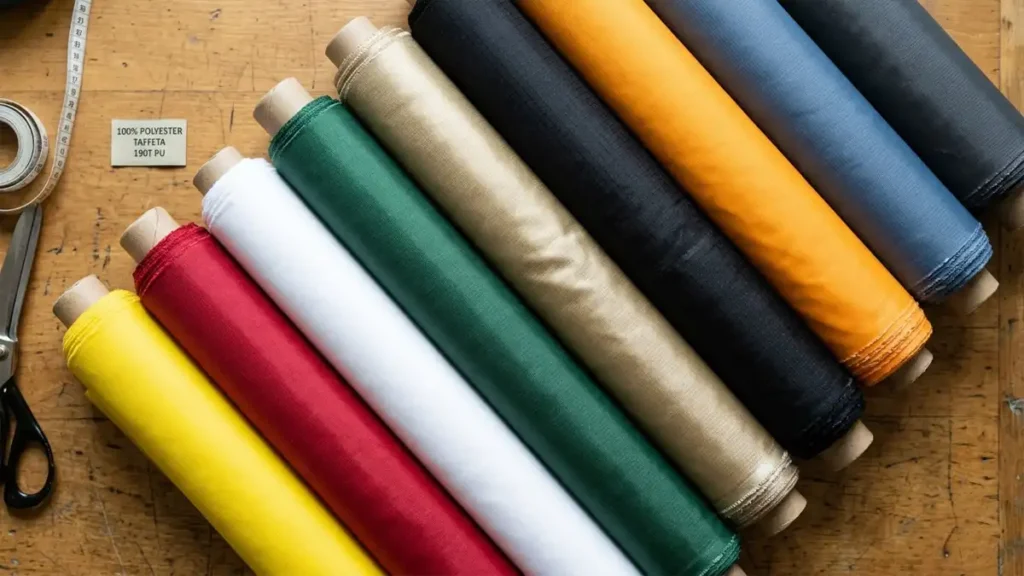
Premium choice: Solution-dyed acrylic (Sunbrella, Tempotest). It breathes, resists mould, and won’t rot even if left wet.
17. Common Mistakes New Manufacturers Make
- Underspecifying wall thickness – 1.2mm poles wobble after one season.
- Ignoring galvanic corrosion – Aluminium + stainless steel without isolation = failure.
- Using standard polyester powder coating – Fades in 12 months under UV.
- No wind testing – Lawsuits when umbrellas become missiles.
- Cheap hub castings – Die-cast zamak hubs snap; forged aluminium lasts.
18. Why Cheap Outdoor Umbrellas Fail Quickly
Entry-level umbrellas (under $100 retail) use:
- Steel ribs (rust)
- Aluminium 1050 (too soft)
- Polyester powder (chips)
- Nylon hubs (UV degradation)
A buyer’s first cheap umbrella fails in one season. Their second purchase is a premium aluminium umbrella. The market rewards quality over price in this category.
19. Product Testing Before Market Launch
Minimum test regime:
- Salt spray (ASTM B117): 500 hours minimum, 1000 hours for coastal SKUs
- UV exposure (ASTM G154): 1000 hours, measure colour change
- Wind load (static): 50 lb side force, no permanent deformation
- Cycle test (open/close): 2000 cycles, no failure
- Fabric tension: 50 lb pull on rib pocket seam
20. Understanding Regional Demand Differences
| Region | Dominant product | Key spec |
|---|---|---|
| USA (Florida/Texas) | Cantilever, pool | 316 hardware, vented canopy |
| Europe (Mediterranean) | Café, dining | Compact, stackable |
| Middle East | Resort, large parasol | Light-colour fabric, ground sleeve |
| Australia/Queensland | Poolside | High UV rating (UPF 50+), see Queensland aluminium sash windows for climate parallels |
| India | Rooftop dining | Low cost, manual crank |
21. Best Markets for Aluminium Outdoor Umbrella Businesses
- USA – Largest market, replacement-driven
- Germany – Highest quality expectations
- Australia – High UV awareness, premium pricing
- UAE – Hospitality boom, large-format umbrellas
- India – Volume growth, price-sensitive
22. Aluminium Outdoor Umbrella Demand in Coastal Areas
Coastal buyers (Miami, Gold Coast, Mediterranean) are your best customers because:
- They already accept premium pricing for corrosion-resistant goods
- They replace cheap steel umbrellas every 12 months
- They value anodized finishes and marine-grade alloys
Market to coastal property managers with a “5-year corrosion warranty.”
23. Poolside Umbrella Business Opportunities
Pool umbrellas are a distinct subcategory requiring:
- Chlorine-resistant anodizing
- Wider canopies (10ft+ for lounge chairs)
- Tilt mechanisms to track afternoon sun
- Sand-weighted or water-filled bases
Pricing: $400–$1,200 commercial grade. Margins: 35–50%.
24. Hospitality Industry Demand
Hotels replace 100% of pool/patio umbrellas every 3–5 years. They need:
- Custom printing (hotel logo)
- Flame-retardant fabric (NFPA 701)
- Wind-rated engineering
- White-glove delivery and setup
Build relationships with hotel procurement groups and FF&E (Furniture, Fixtures & Equipment) specifiers.
25. Rooftop Cafes & Outdoor Dining Trends
Post-2020, outdoor dining exploded. Rooftop venues need:
- Heavy base plates (wind at height)
- Quick-deploy design for unpredictable weather
- Compact storage off-season
Restaurant owners will pay 2x for a crank umbrella that deploys in 10 seconds vs 60 seconds.
26. Resort & Luxury Property Demand
Resorts want:
- Matching sets (umbrellas, loungers, cabanas)
- Bespoke colours (brand identity)
- In-ground sleeves (no trip hazards)
- 5-year comprehensive warranty
This is a specification-driven, high-ticket sale. One resort contract can be $50k–$200k.
27. OEM Manufacturing Opportunities
OEM (Original Equipment Manufacturer) means producing umbrellas for another brand to sell under their name.
To win OEM contracts:
- Maintain ISO 9001 certification
- Offer 50+ powder coat colours
- Provide 3D CAD of custom frames
- Stock common fabric colours (beige, navy, terracotta)
Your margin as OEM: 15–25%. But volume is steady and predictable.
28. Private Label Outdoor Umbrella Business
Private label is OEM with your branding on the box. You control design, they control sales channel.
For whom:
- Garden centre chains
- Pool supply retailers
- Online patio furniture stores
Private label margins: 30–40%. You take inventory risk; they take sales risk.
29. Importing vs Local Manufacturing
| Factor | Import (China/Vietnam) | Local manufacturing |
|---|---|---|
| MOQ | 500–1000 units | 50–100 units |
| Lead time | 60–120 days | 14–30 days |
| Cost per unit | $30–$60 (FOB) | $80–$150 |
| Quality control | Difficult | Direct |
| Tariff risk | High | None |
Strategy: Import standard SKUs. Locally manufacture custom, high-mix, low-volume products for commercial clients.
30. Sourcing Aluminium Tubes, Fabric & Hardware
Aluminium tubes: 6000 series extruded, 1.5–2.0mm wall. Source from mills with ISO 9001.
Fabric: Solution-dyed acrylic from USA (Glen Raven), Europe (Sattler), or China (generic).
Hardware: 316 stainless steel from Taiwan or India. Never compromise on fasteners—it’s the #1 warranty claim.
For related sourcing guidance, see where to purchase aluminum profiles in bulk for business.
31. Manufacturing Setup Requirements
Minimum viable factory (5,000 sq ft):
- Cutting station (cold saw for aluminium)
- CNC machining (hub drilling, end forming)
- Welding booths (TIG for aluminium)
- Powder coating line (or outsourced)
- Sewing section (canopy fabrication)
- Assembly & packing line
Capital required (developing market): $150k–$300k.
32. Machinery Used in Aluminium Umbrella Production
| Machine | Purpose | Approx cost (new) |
|---|---|---|
| Aluminium cold saw | Tube cutting | $3,000–$8,000 |
| CNC mill | Hub machining | $25,000–$60,000 |
| TIG welder (AC/DC) | Frame welding | $2,000–$5,000 |
| Powder coating booth + oven | Coating | $30,000–$100,000 |
| Industrial sewing machine | Canopy | $1,500–$4,000 |
Lease or outsource powder coating initially to reduce capital requirement.
33. Frame Fabrication & Welding Basics
Aluminium welding requires AC TIG with high-frequency start. Critical joints:
- Rib-to-hub (stress concentration)
- Crank housing (torque load)
- Pole base (bending moment)
Common defect: Porosity from contaminated filler rod. Use 4043 or 5356 filler. Clean with acetone before welding.
See aluminium 4043 alloy filler wire guide for technical specifications.
34. Powder Coating Setup Requirements
To do powder coating in-house:
- Pre-treatment (wash, phosphate, or chromate conversion)
- Drying oven (remove moisture)
- Spray booth (reclaim system)
- Curing oven (10–20 minutes at 180–200°C)
- Quality lab (adhesion, thickness, salt spray)
Outsource if annual volume under 50,000 frames. Build in-house at 100,000+ units.
35. Packaging & Shipping Challenges
Umbrellas are dimensional weight (DIM weight) nightmares. A 9ft umbrella in a 5ft box ships expensively.
Solutions:
- KD (Knock-Down) design: Pole in 3 sections, ribs detachable, fabric separate. Box size reduces 40%.
- Flat-pack canopy: Fold rather than roll to reduce cylinder volume.
- Partial assembly at destination: Include assembly tools and QR code video.
One manufacturer reduced shipping cost from $45/unit to $22/unit by switching to KD design.
36. Outdoor Product Certifications & Safety Standards
| Market | Certification | Requirement |
|---|---|---|
| USA/Canada | ANSI/BIMAA | Wind rating, fabric flammability |
| Europe | EN 13561 | External blinds and awnings |
| Australia | AS/NZS 4494 | Wind and UV |
| Global | ISO 9001 | Quality management system |
| Hospitality | NFPA 701 | Flame retardant fabric |
Cost for certification: $5k–$20k per product family. But without it, commercial buyers won’t touch you.
37. Pricing Factors in Aluminium Patio Umbrellas
Cost breakdown for a standard 9ft aluminium umbrella (mid-quality):
- Frame (tube, hub, hardware): $22
- Powder coating: $6
- Fabric canopy: $14
- Labour assembly: $8
- Packaging: $4
- Total landed cost: $54
Wholesale price: $108 (keystone margin)
Retail price: $199–$249
Premium version (6061 frame, 316 hardware, PVDF coating, acrylic fabric):
- Total cost: $95
- Wholesale: $190
- Retail: $399–$499
38. Profit Margins in Outdoor Umbrella Business
| Business model | Gross margin | Net margin |
|---|---|---|
| Import & retail (online) | 50–60% | 15–25% |
| OEM manufacturer | 25–35% | 8–12% |
| Private label brand | 40–50% | 10–18% |
| B2B commercial specifier | 30–40% | 12–20% |
Key to healthy margin: Control the powder coating process. It’s the single highest value-add operation.
39. Online vs Offline Sales Channels
Online (DTC):
- Lower overhead
- Returns: 10–15% (assembly issues, damaged in shipping)
- Customer acquisition cost: $15–$40 via Meta/Google
Offline (retail, B2B):
- Higher per-order value
- Returns: 2–5%
- Longer sales cycle (30–90 days)
Best practice: Online for residential. Offline sales rep for commercial.
40. B2B vs Retail Outdoor Umbrella Selling
| Aspect | B2B | Retail (DTC) |
|---|---|---|
| Order value | $2k–$50k | $150–$500 |
| Sales cycle | 2–6 months | 5 minutes |
| Customization | Heavy | None |
| Recurrence | High (hotels replace) | Low |
| Support cost | Medium (specs, samples) | High (assembly, returns) |
B2B is harder to start but builds asset value. DTC scales faster but has thinner moats.
41. How Suppliers & Distributors Operate
Tier 1 distributors (Alside, ABC Supply) buy container loads and sell to contractors.
To get listed:
- Prove 2 years of sales history
- Provide EPD (Environmental Product Declaration)
- Offer net-60 terms
- Maintain 98% fill rate
Smaller manufacturers skip tier 1 and go direct to regional patio furniture stores.
42. Common Buyer Questions Before Purchase
- “Will the frame rust?” – No, aluminium does not rust. Stainless hardware prevents galvanic corrosion.
- “How long does the colour last?” – PVDF coating: 10 years. Standard polyester: 2–3 years.
- “What wind speed is it rated for?” – Our standard frame: 35 mph. Coastal upgrade: 50 mph.
- “Can I replace the canopy?” – Yes, our design uses replaceable slip-on canopies.
- “Where is it manufactured?” – Be transparent. “Assembled in [country] from global components” is acceptable.
43. Why Climate-Ready Products Build Better Reputation
A single umbrella that fails after one coastal season generates negative reviews for years. A product that lasts five seasons generates referrals.
Data point: On Amazon, a $199 aluminium umbrella with a “salt spray tested” badge converts 22% higher than identical product without the badge.
Build marketing content around climate testing: videos of salt spray chambers, wind tunnel footage, UV fade charts. This pre-sells quality.
44. Future Trends in Outdoor Living Products
- Solar umbrellas – Integrated photovoltaic fabric for device charging.
- Motorization – Bluetooth-enabled open/close, wind sensors auto-retract.
- Sustainable materials – Recycled aluminium frames (post-consumer scrap), fabric from recycled PET.
- Modular systems – Umbrellas that connect to pergolas with shared drainage.
- Smart bases – Water-filled bases with leak sensors and auto-fill valves.
Early adopters of solar umbrellas are seeing 40% gross margins. The technology is ready; the market is catching up.
45. Related Aluminium Business Opportunities
If you manufacture umbrella frames, you can easily extend into:
- Aluminium pergolas – Same extrusion, larger scale. See aluminium pergolas global standard structural grades.
- Outdoor railings – Use same powder coating line.
- Pool fencing – Requires glass infill but same frame fabrication.
- Patio structures – Louvered roofs, gazebos.
- Outdoor furniture frames – Chaise lounges, dining chairs.
Diversification reduces seasonality. Umbrellas sell summer; pergolas sell year-round.
46. Final Thoughts on Starting an Aluminium Outdoor Umbrella Business
The aluminium outdoor umbrella business is not a get-rich-quick venture. It requires metallurgy knowledge, climate engineering, supply chain management, and B2B sales persistence.
But the opportunity is real:
- Global patio furniture market: $28 billion, growing 6% annually
- Aluminium frame share: Increasing from 35% to 50% as wood and steel decline
- Replacement cycle: Every 3–5 years creates recurring revenue
Your competitive advantage will not be price. It will be climate engineering. The manufacturer who can say, “Our umbrella is designed specifically for coastal salt air” will win Florida, the Gulf, and every seaside market globally.
Start small. Perfect one product for one climate. Then expand.