The ascendancy of the aluminium pergola is not a matter of trend, but of engineering superiority. By 2025-2026, this transition from a decorative garden feature to a high-performance architectural element is complete. Driven by demands for durability, low lifecycle costs, and smart integration, aluminium pergolas have become the default specification for residential, commercial, and hospitality projects worldwide. This report details the technical and market forces that have solidified their global standing.
Article Index
Material Composition
Alloys, Thickness, and Structural Grades Used Worldwide
Not all aluminium is created equal. The structural integrity of a pergola hinges on the specific alloy and temper used. The global industry predominantly relies on the 6000 series, specifically:
- Alloy 6061-T6: Favoured for its high strength-to-weight ratio and excellent corrosion resistance, making it ideal for primary beams and columns in high-load or large-span applications.
- Alloy 6063-T5/T6: Known for its superior extrudability, it is often used for intricate louver blades, decorative elements, and standard residential profiles where complex shapes are required.
Wall thickness is a critical metric, with structural profiles typically ranging from 2.0mm to 3.0mm+. The choice depends on span requirements and local snow/wind load calculations. This precision in material science is akin to the standards required for high-performance applications like those detailed in our guide to Aluminium Grades for Processor Heat Sinks.
Manufacturing Excellence
Extrusion, Tempering, and Powder-Coating Systems
The manufacturing process is a trilogy of precision:
- Extrusion: Billets of the chosen alloy are heated and forced through a die to create the specific profile shape. This allows for limitless custom designs.
- Tempering (T5/T6): The extruded profiles are heat-treated to achieve the specified temper, dramatically increasing their yield strength and hardness.
- Surface Pre-Treatment & Coating: Profiles undergo a multi-stage cleaning and chemical pre-treatment (often chromate or zirconium-based) before the application of a powder coat. This process, essential for longevity, is governed by stringent Global Coating Standards (ECCA, ASTM, EN, AAMA) that define adhesion, film thickness, and durability.
Global Certification & Compliance Standards (ASTM, EN, AS/NZS, ISO)
A globally accepted product must meet global benchmarks. Premium aluminium pergola systems are certified to:
- ASTM International (USA): For structural load capacity, wind resistance, and material standards.
- EN (European Norm): Governing mechanical properties, tolerances, and safety across the EU.
- AS/NZS (Australia/New Zealand): Critical for cyclone and high-wind zone compliance.
- ISO 9001 / 14001: Ensuring quality management and environmental responsibility in manufacturing.
Structural Engineering
Load Ratings, Wind Resistance & Snow Capacity
Engineering is non-negotiable. Reputable manufacturers provide certified calculations for:
- Snow Load: Capacities often exceed $1.5 \text{ kN/m}^2$ (approx. $31.3 \text{ psf}$ or $150 \text{ kg/m}^2$), suitable for most temperate and alpine regions.
- Wind Load: Systems are tested for uplift and shear forces, with ratings for specific wind zones (e.g., up to $180 \text{ km/h}$).
- Dead Load: The structure’s self-weight plus any permanent additions like integrated lighting or speakers.
Types of Aluminium Pergolas
Fixed, Louvered, Retractable & Hybrid Systems
- Fixed Roof: The economical choice for permanent shade. Often uses polycarbonate panels or fixed aluminium laths.
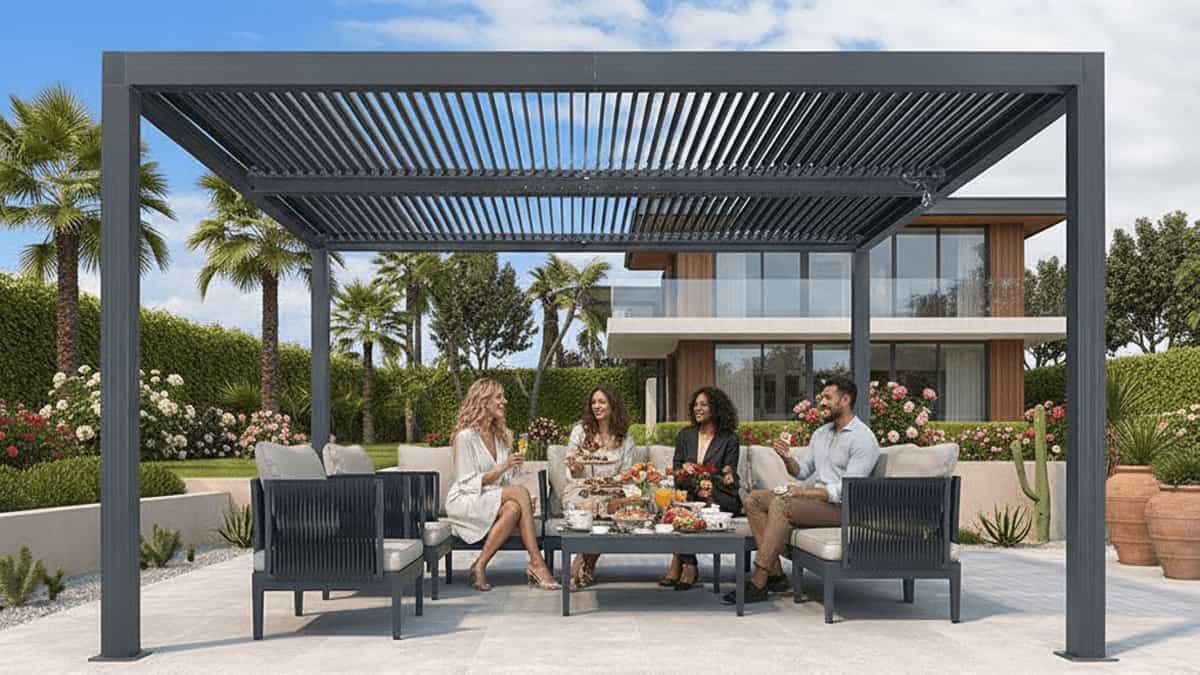
- Louvered Roof (Rotating): The premium segment. Motorized louvers rotate $0-165$ degrees, offering adjustable shade and rain protection.
- Retractable Fabric: A hybrid system where a PVC or acrylic fabric canopy retracts into the aluminium frame.
- Fully Integrated Systems: Combine louvers with integrated gutters, LED lighting, and perimeter channels for glass or screen enclosures.
Surface Coating Technologies
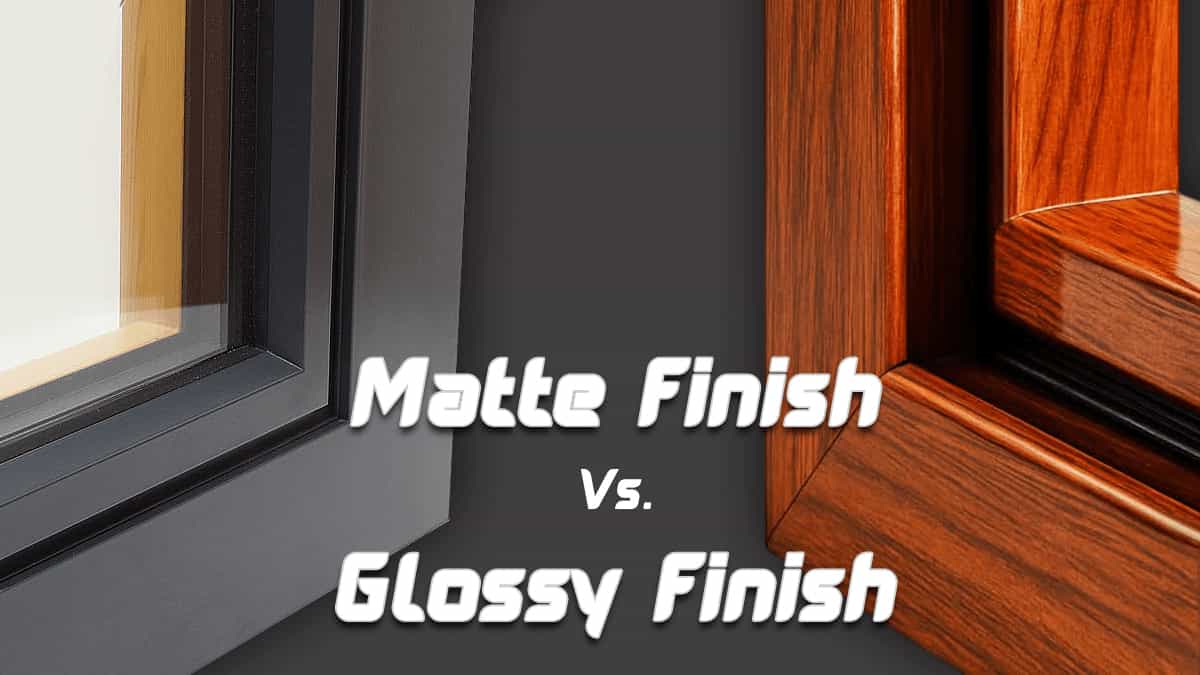
PVDF, AkzoNobel, Anodised, Wood-Finish
The finish is the first line of defense.
- Superior Polyester / FEVE (PVDF): The industry benchmark for exterior durability, offering exceptional UV and chemical resistance. Brands like AkzoNobel provide resins used in top-tier systems.
- Anodised: An electrochemical process that creates a hard, non-organic oxide layer. Excellent abrasion resistance but offers a limited color palette.
- Wood-Effect Coatings: Advanced printing or coating techniques that replicate the texture and grain of wood on aluminium, combining aesthetics with performance.
Climate Performance Across Regions
(Tropics, Coastal, Dry, Snow, Desert)
Aluminium’s inherent stability makes it universally applicable:
- Coastal & Tropical: High resistance to salt spray corrosion and humidity.
- Arid & Desert: Powder coatings are formulated to resist UV degradation and sand abrasion.
- Snow & Cold Temperate: Structural integrity is maintained at low temperatures, with coatings resisting freeze-thaw cycles.
Corrosion Resistance Comparison
Aluminium vs Steel vs Timber
| Material | Corrosion Mechanism | Lifespan (Exterior) | Maintenance |
| Aluminium | Forms a self-protecting oxide layer | 25+ years | Low (Rinse) |
| Steel | Oxidizes (Rust) without coating | 10-15 years (with coating) | Requires repainting |
| Timber | Biological decay (Rot, Fungi) | 5-10 years (with staining) | Annual sealing/sanding |
Thermal Behaviour & Heat Management
The Science Behind Louvers
A key advantage of louvered systems is passive climate control. The adjustable blades allow for precise management of solar gain:
- Open: Maximizes air circulation and light.
- Partially Closed: Creates shade while allowing hot air to escape upwards (stack effect).
- Fully Closed: Blocks direct solar radiation, reducing the heat load on the underlying space. This principle of managing solar heat gain is central to designing for Hot Climates with Energy-Efficient Windows.
Automation & Smart SystemsMotors, Sensors, IoT Controllers
Modern pergolas are IoT-enabled structures. Systems can include:
- 24V/230V Motors: For smooth, quiet louver operation.
- Rain & Wind Sensors: Automatically close the louvers upon detecting precipitation or high winds.
- IoT Controllers: Enable control via smartphone apps, voice commands (Alexa/Google Assistant), and integration with broader home automation systems.
Integration Possibilities
Glass Enclosures, Sliding Systems, Panels & Blinds
The pergola becomes a true outdoor room through integration:
- Sliding Glass Panels: Create a fully enclosed, all-weather conservatory.
- Motorized Privacy/Sun Screens: Drop down from the perimeter beam.
- Infrared Heaters & LED Lighting: Integrated into the structure for comfort and ambience at night.
Installation Requirements
Footings, Mounting, Sizes & Engineering Checks
Professional installation is critical. Requirements include:
- Foundations: Concrete footings sized according to local soil conditions and structural loads.
- Fixing Brackets: High-grade stainless steel ($\text{A2}/\text{A4}$) to prevent bi-metallic corrosion.
- Site-Specific Engineering: A certified engineer must verify loadings and installation methods for the specific site.
Cost Structure (Global)
Material, Labour, Logistics & Long-Term ROI
| Cost Component | Typical Share | Notes |
| Material (System) | $50-60\%$ | Varies by complexity, automation, and size. |
| Labour & Installation | $25-35\%$ | Highly skilled task requiring engineering sign-off. |
| Logistics & Ancillaries | $10-15\%$ | Shipping, customs, concrete, etc. |
| Long-Term ROI | – | Derived from near-zero maintenance, proven property value increase (typically $5-10\%$ of total project cost), and extended outdoor living utility. |
Common Use Cases Across Continents
(Homes, Resorts, Cafes, Rooftops)
- Residential: Backyard living rooms, poolside covers, carports.
- Hospitality: Outdoor dining areas for cafes and restaurants, pool bars at resorts.
- Commercial: Rooftop terraces on apartment buildings, corporate retreats.
Maintenance Lifecycle
Cleaning, Coating Durability & Replacement Cycles
Maintenance is minimal but structured:
- Regular Cleaning: Bi-annual wash with water and mild detergent.
- Coating Inspection: Annual check for any mechanical damage to the powder coat.
- Mechanical Service: Lubrication of moving parts and motor check every $2-3$ years.
- Coating Durability: A quality PVDF coating can last $20+$ years before a recoat may be considered. This low-maintenance profile is a key benefit, similar to that of modern Aluminium Sliding Window Designs.
Sustainability & Recycling
Why Aluminium Wins Globally
Aluminium is a quintessential material for the circular economy. At end-of-life, an aluminium pergola is $100\%$ recyclable without loss of its inherent properties. The recycling process uses only $5\%$ of the energy required for primary production. This aligns with the industry-wide push for sustainability, as seen in initiatives like Sustainable Aluminium Packaging for a Green Future.
Future Trends
Solar Louvers, Smart Weather Automation & Modular Living
The next generation is already emerging:
- Building-Integrated Photovoltaics (BIPV): Louvers with integrated solar cells, turning the pergola into a power generator.
- AI-Driven Weather Automation: Systems that sync with hyperlocal weather forecasts to auto-adjust for optimal comfort and protection.
- Modular & Prefabricated Systems: For faster installation and reconfigurability.
The aluminium pergola has transcended its category. It is no longer a simple shade structure but a engineered, durable, and intelligent architectural system. By offering an unparalleled combination of longevity, minimal maintenance, climate adaptability, and smart functionality, it represents a true lifetime investment. For architects, developers, and homeowners, specifying an aluminium pergola is a decision backed by global standards, material science, and a clear-eyed view of long-term value.
Explore cutting-edge design and integration ideas for aluminium pergolas in our visual gallery.
View Innovative Pergola Projects on Pinterest →
Featured
You May Also Like
Thinking of Bifold Doors? 10 Things You Gotta Know Before Yo…
Aluminium 6082 (Aluminum 6082): The Highest‑Strength 6xxx St…
Curtain Wall Profiles: Types, Shapes, Materials & Applic…

Cheap Aluminium Windows in Cape Town: Real Prices, Buying Ti…
Discover the Best UK Regions for Aluminium Windows Based on …