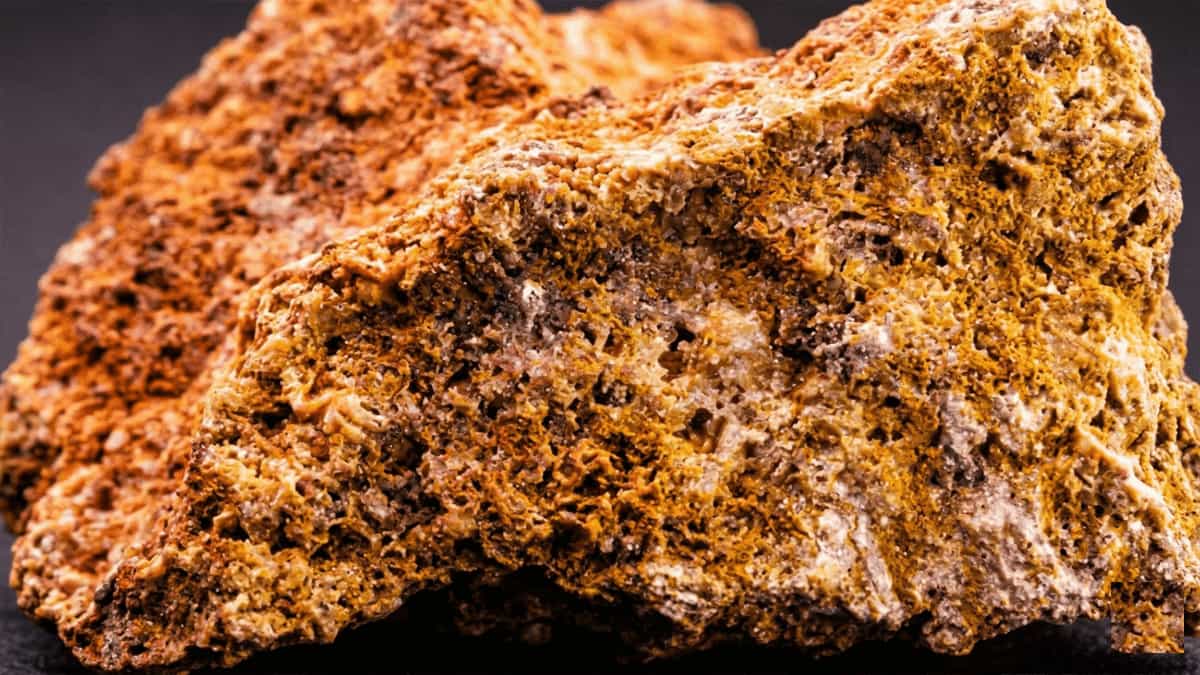
Raw aluminum ore, commonly known as bauxite, is the world’s primary source of aluminium. This naturally occurring sedimentary rock is the starting point for the entire industry, containing the metal-bearing minerals that are refined into the versatile material used across modern society.
Unlike many metallic ores that contain the target metal in its pure form, bauxite is a mixture of hydrated aluminium oxides, along with various other minerals and impurities. Its unique properties and abundance make it the most economically viable source of aluminum production globally.
Characteristics of Bauxite
| Property | Description |
| Appearance | Typically reddish-brown, yellow, or white, depending on the concentration of iron oxides |
| Primary Composition | Aluminium hydroxide minerals: gibbsite (Al(OH)3), boehmite (γ-AlO(OH)), and diaspore (α-AlO(OH)) |
| Common Impurities | Silica (SiO2), iron oxides (Fe2O3), titanium dioxide (TiO2), and clay minerals |
| Texture | Variable—ranges from soft, clay-like earthy masses to hard, compact, or porous, pisolitic structures |
| Density | Relatively low compared to other metallic ores, typically 2.5–3.5 g/cm³ |
| Alumina Content | Commercial-grade bauxite contains 40–60% aluminum oxide (Al2O3) |
Geological Formation
Bauxite forms through a process called lateritic weathering, which occurs in tropical and subtropical regions with high rainfall and consistent warm temperatures. The formation process involves:
- Parent Rock Weathering: Aluminum-rich rocks, such as granite, basalt, or feldspar-rich igneous rocks, undergo intense chemical weathering.
- Intense Leaching: Heavy rainfall percolates through the rock, dissolving and removing soluble elements like silica and alkalis.
- Residual Concentration: Less soluble aluminium and iron compounds remain behind, becoming concentrated over millions of years.
- Maturation: Continued weathering transforms these residual deposits into bauxite, often forming thick layers near the surface, making it suitable for open-pit mining.
Global Bauxite Reserves and Production
Bauxite is abundant, with reserves distributed across several continents. The leading producing countries dominate global supply:
| Country | Role in Global Supply |
| Australia | World’s largest producer; extensive mining operations in Queensland and Western Australia |
| Guinea | Holds the world’s largest bauxite reserves; a major exporter to China and the Atlantic market |
| China | Significant producer; increasingly relies on imports of aluminium ore from Guinea and Australia |
| Brazil | Major producer with large deposits in the Amazon region and Minas Gerais |
| India | Key contributor with deposits concentrated in Odisha, Gujarat, and Jharkhand |
Key Insight: Approximately 85% of bauxite mined globally is refined into alumina, which is then smelted into aluminum metal. The remaining 15% is used in non-metallurgical applications.
From Bauxite to Aluminium: The Processing Journey
Bauxite undergoes two critical transformation stages to become usable aluminum metal:
- Bayer Process: Bauxite is refined to produce alumina (aluminium oxide, Al2O3). This chemical process dissolves the metal content while leaving impurities behind.
- Hall-Héroult Process: Alumina is smelted through electrolysis to produce pure aluminum metal.
For every 4 kilograms of bauxite mined, approximately 2 kilograms of alumina are produced, yielding 1 kilogram of primary aluminium.
-Ads-
Uses of Bauxite
While bauxite’s primary application is aluminium production, it also serves other industries:
Primary Use (Metallurgical Grade):
- Feedstock for alumina refining
- Source material for primary aluminum production
Non-Metallurgical Applications:
- Refractories: High-alumina bauxite is used in furnace linings.
- Abrasives: Calcined bauxite is processed into aluminium oxide abrasives for grinding and cutting.
- Cement Production: Bauxite is a raw material in specialty cement formulations.
- Chemical Industry: Source of aluminum compounds for water treatment and catalysts.
Environmental Considerations
Bauxite mining presents specific environmental challenges that the industry is working to mitigate:
- Land Disturbance: Open-pit mining alters landscapes and requires careful rehabilitation.
- Red Mud: The Bayer process generates bauxite residue (red mud)—a highly alkaline byproduct.
- Industry Response: Leading aluminium companies are investing in progressive mine rehabilitation, reforestation, and research into “Red Mud” utilization for construction materials and carbon capture.
Bauxite is the foundational resource upon which the global aluminum/aluminium industry is built. Understanding its characteristics, formation, and processing is essential for anyone involved in materials science or industrial supply chains. As the world increasingly relies on lightweight, recyclable aluminum for sustainable development—from electric vehicles to renewable energy infrastructure—bauxite’s strategic importance continues to grow.