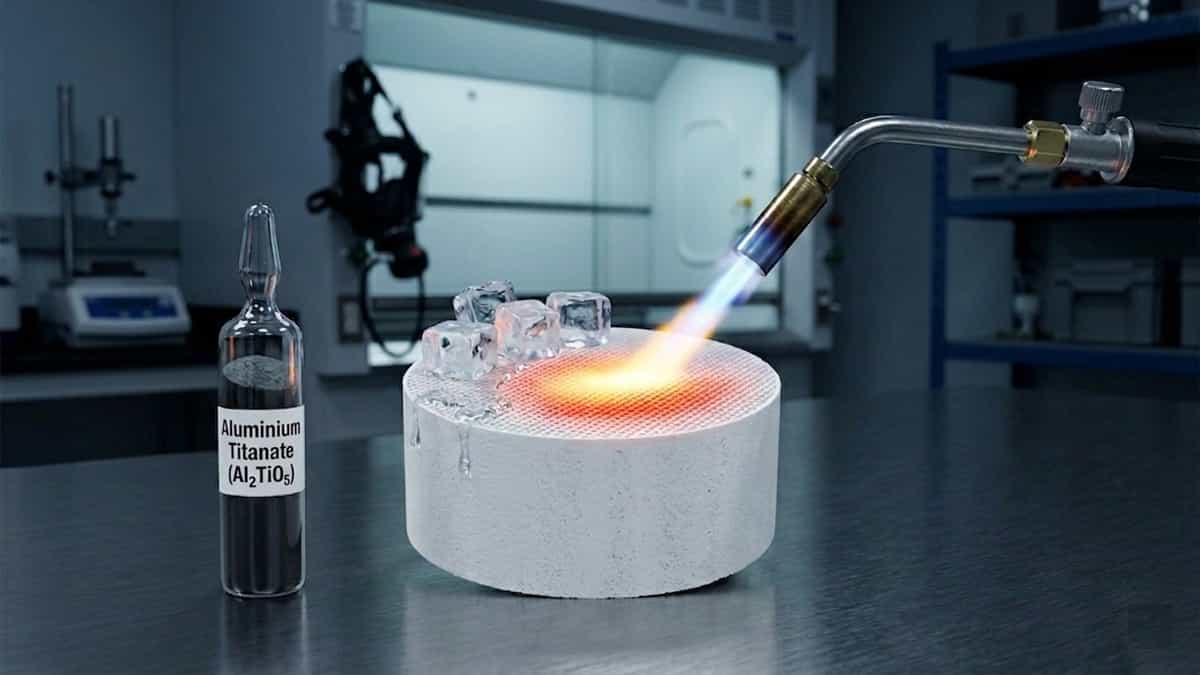
Aluminium titanate is a high‑performance engineered ceramic with an exceptionally low coefficient of thermal expansion. It is a stoichiometric blend of alumina and titania, appearing as a white to pale yellow, porous, lightweight ceramic. It excels in environments prone to thermal shock, making it the gold standard for diesel particulate filters and molten metal handling.
1. Basic Identification
- Chemical Formula: Al₂TiO₅ (also written as Al₂O₃·TiO₂)
- Alternative Names: Aluminium(III) titanate, Tielite
- Molecular Weight: 181.83 g/mol
- CAS Number: 12004-39-6
- Appearance: White powder; fired components are porous, pale yellow‑white ceramic
2. Physical Properties
| Property | Aluminum Titanate |
|---|---|
| Melting Point | ~1860 °C (3380 °F) |
| Thermal Expansion Coefficient | Near zero: 0.2 – 1.5 × 10⁻⁶ /K |
| Density | ~3.7 g/cm³ (theoretical); commercial parts are porous and lighter |
| Thermal Conductivity | Very low (excellent insulator) |
| Solubility | Insoluble in water and strong acids |
Finished blocks feel light and chalky due to engineered micro‑porosity. The material insulates so effectively that one side can be heated red‑hot while the opposite side remains cool enough to hold.
3. Chemical Behavior & Synthesis
3.1 The Micro‑Cracking Mechanism – Zero Thermal Expansion
During manufacturing, as the ceramic cools, internal crystals shrink in different directions, creating millions of microscopic cracks throughout the structure. When heated later, the individual crystals expand into these empty cracks, leaving the overall dimensions unchanged. This unique mechanism allows aluminum titanate to resist thermal shock that would shatter ordinary ceramics.
3.2 Synthesis
Al₂O₃ + TiO₂ + Heat → Al₂TiO₅
High‑purity alumina and titania powders are blended, pressed into shape, and fired above 1400 °C. Magnesium oxide (or other stabilizers) is often added to prevent decomposition back into alumina and titania at lower temperatures.
4. Industrial Applications
4.1 Diesel Particulate Filters (DPFs)
Modern diesel engines produce soot. To meet emissions standards, exhaust passes through a porous aluminum titanate honeycomb block. Soot traps in the pores. During regeneration, fuel is injected into the filter to burn off soot at ~800 °C. The near‑zero expansion of aluminum titanate allows it to survive these extreme thermal cycles without cracking.
4.2 Molten Metal Foundries
When pouring molten aluminum (700 °C), normal metal pipes melt and standard ceramics shatter from thermal shock. Aluminum titanate is used for pouring spouts, ladles, and riser tubes, enabling smooth, clean metal transfer without fracturing.
5. Safety & Hazard Management
General Safety: Aluminum titanate is chemically inert and non‑toxic, similar to crushed rock.
| Route of Exposure | Effect |
|---|---|
| Inhalation | Nuisance dust; prolonged exposure may cause mechanical irritation. |
| Skin Contact | Inert; may act as a drying abrasive. |
| Eye Contact | Physical scratching hazard (like grit). |
| Ingestion | Non‑toxic; passes through unabsorbed. |
PPE: N95 dust mask (when cutting/grinding), safety goggles, standard gloves.
First Aid: Flush eyes with water; rinse skin; leave dusty area if inhaling.
6. Storage & Handling
- Container: Shrink‑wrapped pallets or cardboard boxes for finished filters
- Atmosphere: Normal air; unaffected by humidity
- Location: Standard industrial warehousing
- Disposal: Virgin ceramic is non‑hazardous. Used DPF filters contain trapped soot and oils and must be recycled or solvent‑washed at authorized facilities.
7. Environmental Impact
Virgin aluminum titanate is environmentally benign – composed of common elements (aluminum, titanium, oxygen). Its primary environmental benefit is preventing vast quantities of diesel soot from entering the atmosphere.
8. Comparison with Other Refractory Aluminum Compounds
| Compound | Formula | Primary Nature | Defining Thermal Trait |
|---|---|---|---|
| Aluminum Titanate | Al₂TiO₅ | Porous advanced ceramic | Near‑zero thermal expansion |
| Aluminum Silicate | Al₂SiO₅ | Dense ceramic brick | High melting point |
| Aluminum Nitride | AlN | Dense electrical insulator | High thermal conductivity |
9. Frequently Asked Questions
Q: Why does the DPF have to be porous?
A: If the ceramic were solid, exhaust gases could not pass through, choking the engine. The porosity allows gases to flow while trapping soot particles.
Q: If it’s so heat‑resistant, why not build entire engines from it?
A: Aluminum titanate trades mechanical strength for thermal stability. The micro‑cracks that enable zero expansion also make it brittle and prone to fracture under impact or mechanical stress.
10. Summary Data Sheet
| Property | Value |
|---|---|
| Chemical Name | Aluminum Titanate |
| Formula | Al₂TiO₅ |
| Appearance | White powder / porous yellow‑white ceramic |
| Melting Point | 1860 °C |
| Defining Trait | Near‑zero thermal expansion, thermal shock resistance |
| Primary Utility | Diesel particulate filters, molten metal handling |
| Hazard Note | Biologically safe; physical dust hazard only |