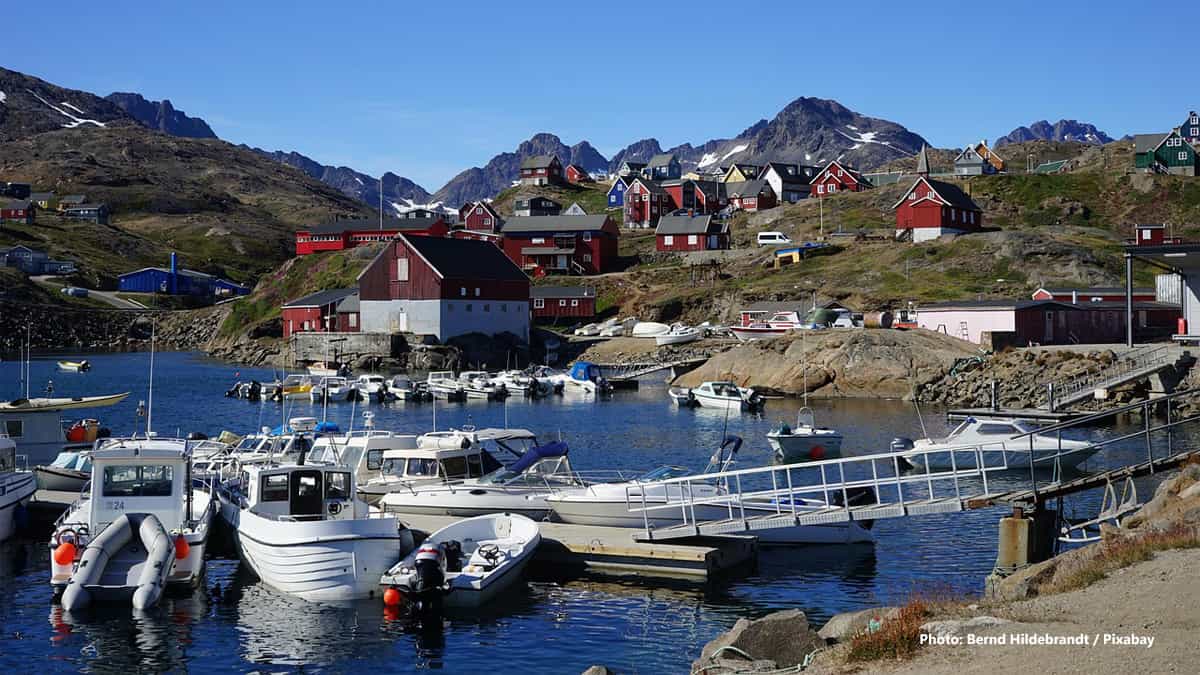
NUUK/WASHINGTON, Sept. 20, 2026 — President Donald Trump’s newly announced agreement with Denmark and Greenland is putting the Arctic island back at the center of global strategic attention — and its mineral resources could become increasingly relevant to the aluminum industry.
The United States, Denmark and Greenland have reached an agreement aimed at expanding the U.S. security presence on the island and restricting sensitive investments by countries considered U.S. adversaries. Denmark and Greenland have stressed that the arrangement will not compromise Greenland’s sovereignty, while several details of the agreement remain undisclosed ahead of an expected formal signing. (Reuters)
While the agreement itself is primarily about Arctic security rather than mining, an Aluminium Magazine review of Greenland mining projects, geological research and current U.S. metals policy shows a clear industrial connection: Greenland hosts significant aluminium-rich anorthosite resources at a time when Washington is placing renewed emphasis on aluminum supply security and domestic production.
Greenland’s Anorthosite Creates an Aluminum Connection
Anorthosite is a light-colored rock composed predominantly of plagioclase feldspar and containing aluminium-bearing minerals.
Research published by the Geological Survey of Denmark and Greenland, or GEUS, has examined anorthosite as a potential alternative raw material for aluminium production.
GEUS notes that experiments have demonstrated that anorthosite can technically be processed as a raw material for aluminum, although conventional bauxite remains the dominant commercial source. (GEUS’ publikationer)
That makes Greenland relevant to the aluminum supply conversation — but not a replacement for established bauxite and alumina supply chains.
The more immediate significance lies in the scale of some Greenland deposits and the continuing development of projects targeting the mineral.
Greenland Project Reports 52.5 Million Tonnes of Anorthosite
Greenland Anorthosite Mining, or GAM, says its Majoqqap Qaava deposit contains a current mineral resource of 52.5 million tonnes of anorthosite, which the company estimates could support at least 50 years of production.
The project is located approximately 125 kilometers southeast of Nuuk and around 12 kilometers from the ice-free coast. GAM describes the deposit as having high aluminium grades and low levels of alkali metals. (Greenland Anorthosite Mining)
The project has also moved beyond early-stage exploration.
The Government of Greenland granted GAM a 30-year exploitation licence in May 2025. The company must submit its mining and closure plans by the end of 2026, with exploitation activities currently required to begin no later than December 31, 2028 unless otherwise approved. (GovMin)
According to GAM, planned infrastructure includes a processing plant, haul road, storage facilities and port infrastructure for bulk shipping.
Trump’s U.S. Aluminum Tariffs Add Strategic Context
The renewed focus on Greenland comes as the Trump administration is also reshaping U.S. metals policy through Section 232 tariffs and incentives for domestic production.
In April 2026, Trump increased Section 232 protection on aluminum, steel and copper products. The proclamation established a 50% tariff on many primary metal products, with separate rates applying to derivatives and specified product categories. Further adjustments followed in June. (The White House)
In July, the administration went a step further by creating an incentive framework for companies willing to build, expand or refurbish aluminum smelters in the United States.
Companies with approved onshoring plans may become eligible to import a corresponding amount of primary aluminum at a reduced Section 232 tariff rate.
The Greenland agreement does not give the United States ownership of Greenland’s mineral resources, and no publicly disclosed provision currently links its anorthosite deposits directly to U.S. aluminum production.
Still, the overlap is notable.
Washington is simultaneously focusing on Arctic security, foreign strategic investment, aluminum tariffs and domestic smelting capacity.
Europe Is Watching Greenland’s Minerals Too
Greenland is also important to European raw-material strategy.
The European Commission says 25 of the 34 raw materials it identifies as critical are found in Greenland, and the EU has established cooperation with Greenland covering sustainable raw-material value chains.
That means future Greenland mineral projects could develop within a broader competition — and cooperation — involving European, North American and Greenlandic interests.
What the Aluminum Industry Should Watch
For now, Greenland remains a developing mining jurisdiction rather than a major source of aluminium raw materials.
But the ingredients are beginning to align: substantial mineral resources, new mining licences, improved geopolitical visibility and growing concern in both the United States and Europe over secure mineral supply chains.
Trump’s Greenland agreement has not created an aluminum project.
It has, however, put one of the world’s most mineral-rich Arctic regions back under an unusually bright spotlight at exactly the moment when aluminum supply security has become a major U.S. industrial-policy issue.
For the global aluminum and aluminium industries, that makes Greenland a market to watch.
Related Articles

Featured



You May Also Like

Aluminium Acetate (Al(C₂H₃O₂)₃): The Complete Guide

10 Essential Software Solutions for Aluminum Industry

Aluminum Foil Food Storage: Myths & Truths You Should Kn…

Thinking of Installing Aluminium Sliding Windows? Check Thes…
Water Leakage at Aluminium Window Frame-Wall Joints: A Step-…