
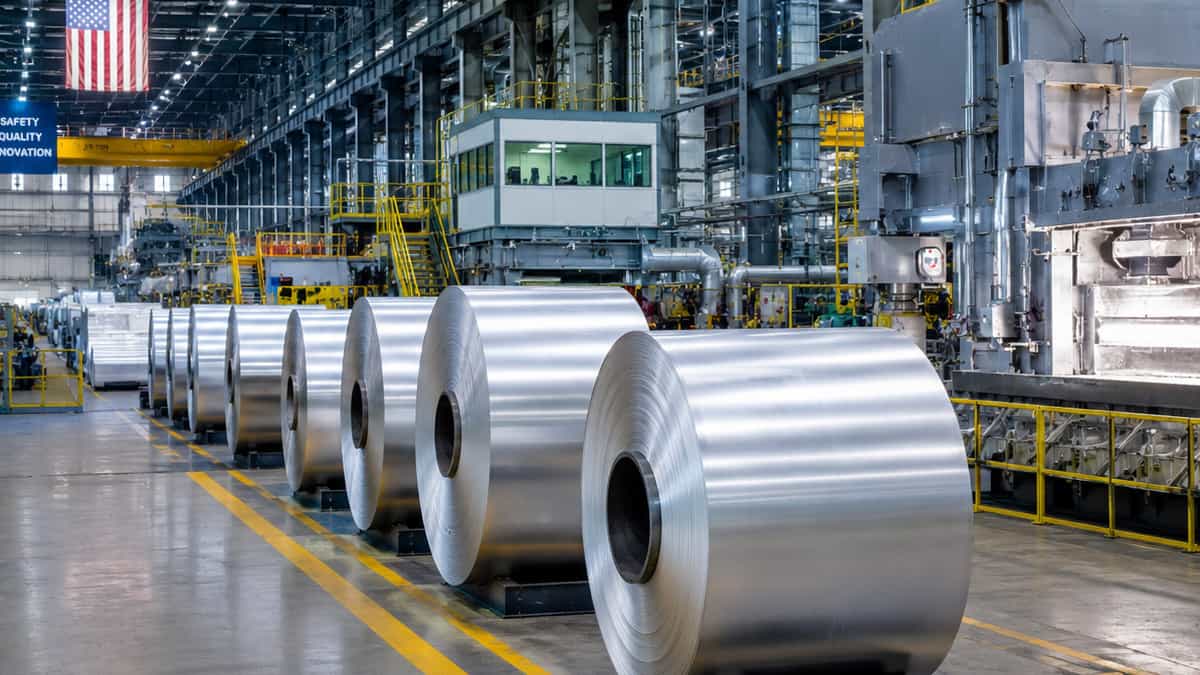
US aluminium faces a difficult balancing act as tariffs, domestic smelting projects, Midwest pricing and changing supply routes reshape the market.
The US aluminium industry is facing a difficult balancing act. Washington wants to rebuild domestic primary aluminium production and reduce dependence on foreign supply, while manufacturers are dealing with higher metal costs and an increasingly complicated trade environment.
Recent developments around the Midwest Premium, the proposed Inola smelter in Oklahoma and possible changes to US-Canada aluminium tariffs all point to the same underlying problem: protecting domestic aluminium production is only one part of the challenge.
The US also needs a supply chain that can provide aluminium at competitive prices to the manufacturers that depend on it.
The Midwest Premium Has Become a Major Issue
Nearly 60 members of the US House of Representatives have asked the Department of Commerce to investigate the way aluminium pricing is handled in the US market.
At the centre of the dispute is the Midwest Premium, a regional aluminium price used alongside the global benchmark. Lawmakers argue that the premium reflects the effect of the US Section 232 aluminium tariff and can increase the price paid by American manufacturers even when their aluminium is sourced domestically.
The issue has attracted particular attention from industries that use recycled aluminium.
US beverage-can manufacturers rely heavily on recycled material, and industry groups argue that tariff-related pricing effects can still influence the cost of cansheet even when the underlying recycled metal is not directly subject to the same import tariff.
S&P Global Platts, which publishes the Midwest Premium assessment, has rejected the characterization of the pricing mechanism as an irregularity. The company says the premium is an independent market reference based on activity in the physical aluminium market.
That disagreement matters because the debate is no longer simply about whether aluminium is expensive. It is about how aluminium prices are formed and whether the current system creates unintended costs for downstream manufacturers.
For US aluminium users, the concern is straightforward. If domestic aluminium is protected from imports but the resulting market price remains significantly above global levels, American manufacturers can face higher input costs than overseas competitors.
That creates a difficult policy question for Washington. A tariff can encourage investment in domestic production, but it can also increase costs for the companies that turn aluminium into finished products.
The US Wants More Aluminium Made at Home
The pricing debate is happening while the US is trying to rebuild its primary aluminium industry.
The country remains dependent on imported aluminium, particularly from Canada and other international suppliers. Rebuilding primary smelting capacity would therefore represent a major change for the US market, but new capacity cannot be created overnight.
The proposed aluminium smelter in Inola, Oklahoma, is one of the most significant projects in that effort.
The project is being developed by Century Aluminum and Emirates Global Aluminium and is expected to become one of the largest new primary aluminium investments in the United States in decades. The developers have targeted operations around 2030.
But the project has also become a test of how difficult it can be to rebuild energy-intensive manufacturing capacity in the US.
Local opposition has focused on environmental concerns, including potential hydrogen fluoride emissions, as well as the enormous amount of electricity required by an aluminium smelter. The project has faced a temporary local moratorium while those concerns are examined.
That matters because primary aluminium production is extremely energy intensive. A new US smelter needs more than investment and government support. It also needs reliable, competitively priced electricity, suitable infrastructure, financing, permits and local support.
The Inola debate therefore highlights a problem that tariffs alone cannot solve.
Washington can make imported aluminium more expensive, but it cannot make a new smelter economically successful unless the project can operate competitively once it is built.
Tariffs Are Being Linked to New Capacity
US trade policy is also evolving.
The administration has introduced a mechanism under which companies pursuing approved investments in US aluminium production can potentially qualify for lower tariff treatment on certain imports. The broader objective is to connect trade policy with actual investment in domestic capacity.
The reasoning is straightforward: tariffs can change the economics of imports quickly, while a new aluminium smelter can take years to finance, permit and construct.
The policy is therefore attempting to bridge the gap between today’s supply requirements and tomorrow’s domestic production.
But it raises another question. If the US provides incentives for new primary aluminium capacity while domestic prices remain elevated, will additional production eventually reduce costs for downstream manufacturers?
That will depend on how much capacity is actually built and how competitive that production becomes.
Canada Remains Critical to US Aluminium Supply
While new American smelters are still years away, Canada remains an important source of aluminium for the US market.
That makes the latest US-Canada tariff discussions particularly important for aluminium buyers on both sides of the border.
Recent reports have pointed to a possible reduction in US tariffs on Canadian aluminium and steel from 50% to 25%. However, the details of any agreement remain uncertain, and the final treatment of Canadian aluminium could still depend on the structure of the deal.
For US manufacturers, lower tariffs on Canadian aluminium could ease some pressure on supply costs.
For Canadian producers, however, a more attractive US market could change where their aluminium is sold. That matters because European buyers have also increased their reliance on Canadian aluminium as disruptions affected other sources of supply.
A change in the economics of Canadian exports could therefore influence aluminium flows well beyond the US-Canada border.
Europe Is Watching Canadian Aluminium Flows
European aluminium buyers have increasingly looked toward Canada for supply, including lower-carbon aluminium, as disruptions in other producing regions affected the market.
That has made the potential change in US-Canada trade policy relevant to European buyers as well.
If Canadian producers find the US market more attractive after a reduction in tariffs, some material could be redirected toward North America.
That does not automatically mean Europe will face a shortage, but it could tighten particular parts of the European market, especially where buyers are looking for specific low-carbon material.
The situation is further complicated by reduced availability from some other sources, including Mozambique’s Mozal aluminium smelter, which has moved into care and maintenance.
The result is a market where a trade-policy decision in Washington can influence aluminium availability and pricing in other regions.
The Bigger Problem Is the Whole Aluminium Value Chain
The US aluminium debate is increasingly moving beyond the question of whether tariffs are good or bad.
For primary producers, stronger protection can improve the economics of investing in US capacity.
For downstream manufacturers, the same policy can mean higher raw-material costs.
For recyclers and users of recycled aluminium, the Midwest Premium debate raises questions about whether tariff-related market pricing can affect material that is not itself imported primary aluminium.
And for international suppliers, changes in US tariffs can determine where aluminium flows.
These interests do not always point in the same direction.
The proposed Inola smelter demonstrates the scale of investment required to rebuild US primary aluminium production. The Midwest Premium dispute demonstrates the cost pressure already being felt by downstream users. The Canada discussions show why the US cannot quickly remove itself from the international aluminium market simply by encouraging new smelters.
All three developments are connected.
The US Still Needs Aluminium Before New Smelters Arrive
The biggest challenge for US aluminium policy is the gap between today’s supply needs and tomorrow’s production capacity.
A new smelter may eventually add substantial primary aluminium production, but American manufacturers cannot wait several years for that capacity to arrive. They need competitive metal now.
That leaves the US dependent on a combination of domestic production, recycled aluminium and imports while new projects move through development.
It also means that changes to tariffs, regional premiums and international supply routes will continue to matter.
The real test for Washington will be whether its aluminium policy can achieve two goals at the same time: encourage enough new domestic production to improve supply security while keeping aluminium affordable enough for the manufacturers that depend on it.
Protecting the metal industry and protecting the broader manufacturing base are not necessarily the same thing.
For US aluminium, that may be the hardest part of the equation.
Aluminium suppliers in Australia, Canada, the US or UK: List your business free in the Aluminium Supplier Directory — no registration, no sign-up required.
Aluminium suppliers in AU, CA, US or UK: List your business free in the Aluminium Supplier Directory — no registration, no sign-up required. List Your Business →
Related Articles



Featured



You May Also Like
Aluminium 4032 (Aluminum 4032)

Home Window Tinting: The Benefits You May Not Know About

Top 25 Real-World Problems with Aluminium & Aluminum Win…
Aluminum Cotter Pin Vs. Steel Cotter Pin

Aluminium Bathroom Windows That Suit Australia’s Weather Con…
