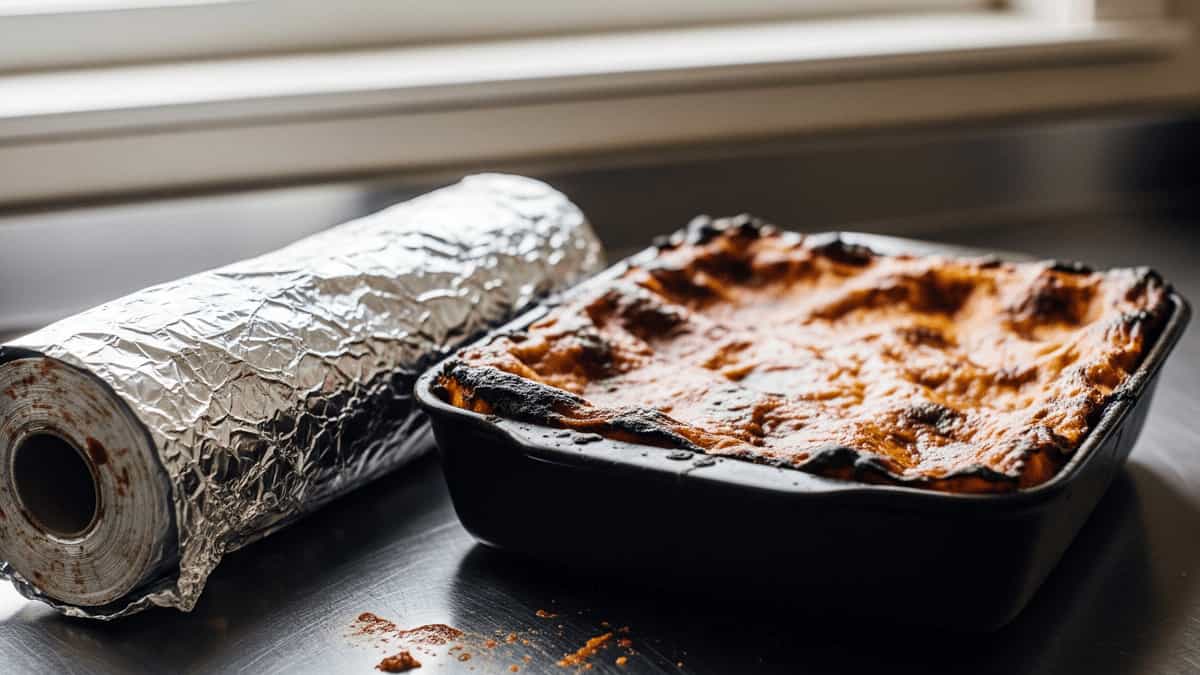
Aluminium foil is a kitchen staple, a versatile hero we reach for almost daily. But what if some of your go-to habits with this shiny wrap are actually sabotaging your food, damaging your appliances, or even creating safety hazards? It’s true! Seemingly harmless actions can have significant negative consequences.
Here are five common aluminum foil mistakes you need to stop doing right now, along with what to do instead.
Mistake 1: Using Foil in the Microwave
This is perhaps the most critical mistake on the list.
Why it’s a mistake: Placing aluminum foil in a microwave oven is highly dangerous. The electromagnetic fields of the microwaves induce electric currents in the foil, leading to high potentials at sharp points. If the potential is sufficiently high, it causes electric arcing, sparks, and even small fires. This can damage the microwave’s interior, including its magnetron tube (the component that generates the microwaves), and result in uneven cooking.
What to do instead: Always use microwave-safe containers made of glass or ceramic, or parchment paper for covering and steaming food in the microwave.
Mistake 2: Wrapping Acidic or Salted Foods for Extended Storage
Why it’s a mistake: Acidic ingredients, such as those found in tomato- or vinegar-based dishes, citrus fruits, or marinades containing citrus juices, can corrode aluminium foil. This corrosion causes aluminum to leach into the food, potentially imparting an unpleasant metallic taste. Prolonged contact with moisture, acids, or salts can also degrade the foil over time. Furthermore, aluminum foil does not provide an airtight seal, leading to moisture loss, dried-out food, and freezer burn during extended storage.
What to do instead: For acidic leftovers, it’s best to use glass containers. For general food storage where an airtight seal is important, consider plastic wrap or dedicated airtight containers for better freshness.
Mistake 3: Lining the Bottom of Your Oven with Foil
Why it’s a mistake: While it might seem like a convenient way to catch drips, lining the bottom of your oven with foil is strongly discouraged by most oven manufacturers. Foil reflects heat, which can disrupt the oven’s temperature regulation and cause overheating. This excess heat can damage the oven’s thermostat and heating elements, leading to inaccurate temperature readings, potential permanent appliance damage, and even a fire risk.
What to do instead: Rely on traditional oven cleaning methods. If you wish to catch spills, place foil on a rack above the pan, covering only slightly more than the pan, to ensure proper airflow and heat distribution.
Mistake 4: Using Foil as a Lid for Long Oven Cooking (especially with acidic foods)
Why it’s a mistake: Using foil as a makeshift lid doesn’t create a tight seal, leading to significant moisture loss and extended cooking times. Its heat retention is poor compared to a proper, tight-fitting lid, making it unsuitable for long cooking durations in the oven, particularly when acidic foods are involved, which can also lead to aluminum leaching.
What to do instead: For optimal results, use tight-fitting lids or covers specifically designed to lock in moisture and heat during cooking.
Mistake 5: Using Regular Foil for Direct Contact with Open Flames (e.g., on a grill)
Why it’s a mistake: Although aluminum foil has a high melting point of 1220°F, prolonged exposure to direct, intense heat from open flames, such as on a grill, can cause the foil to weaken, melt, or even burn. This process may release toxic fumes or particles and increase the leaching of aluminum into your food, posing potential health risks over time. Regular, thinner foil is particularly susceptible compared to heavy-duty foil. Direct flame exposure can also impede airflow around food, leading to hot spots and uneven cooking.
What to do instead: For grilling, it’s recommended to use heavy-duty foil, grill-safe mats, or other grill-specific tools. Employing indirect cooking techniques can also mitigate these risks.
By being aware of these common pitfalls, you can use aluminum foil safely and effectively, ensuring your food comes out perfectly cooked and your appliances stay in top condition.
Quick Reference Guide: Aluminum Foil Do’s & Don’ts
| Action | Do/Don’t | Why |
|---|---|---|
| Microwave Use | DON’T | Causes sparks, arcing, fire hazard, damages microwave. |
| Store Acidic/Salted Foods (Extended) | DON’T | Can corrode foil, leach aluminum, impart metallic taste, and lead to dried-out food. |
| Line Oven Bottom | DON’T | Disrupts heat, damages heating elements, fire risk. |
| Use as Oven Lid (Long Cook) | DON’T | Poor seal, moisture loss, extended cooking times, potential leaching with acidic foods. |
| Direct Contact with Open Flames (Regular Foil) | DON’T | Can weaken, melt, burn; releases fumes, increases leaching. |
| High-Heat Cooking (Oven/Grill) | DO | Excellent heat conductor, withstands high temperatures, retains moisture. |
| Lining Baking Sheets/Pans | DO | Prevents sticking, aids cleanup, promotes even browning. |
| Wrapping Juicy Meats/Veggies | DO | Retains moisture, prevents drying out. |
| Polishing Metals (Silver/Chrome) | DO | Reacts electrolytically to remove tarnish/rust. |
| Sharpening Scissors/Knives | DO | Metal helps clean and hone blades. |
| Recycling | DO | Saves energy (95%), conserves resources, reduces landfill waste. Must be clean and balled. |
Do you have any other kitchen habits you’re unsure about?
Related Articles

Featured
You May Also Like

Start an Aluminium Windows & Doors Dealer or Distributor…

Navigating the Maze to Savings: Your Full-Frame vs. Pocket W…

Aluminium Sliding Windows for QLD’s Heat & Humidity: Sta…
Which Products Are Made of Aluminium? Ever Noticed These Aro…

Are Awning Windows Actually a Good Choice? Here’s the Real A…