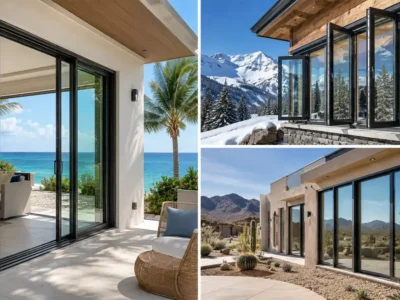
Aluminium bifold doors have become a hallmark of contemporary Australian living, seamlessly blending indoor and outdoor spaces while offering unparalleled versatility.
For homeowners in New South Wales, understanding the nuances of these sophisticated systems – from their panel configurations to the material’s inherent advantages and tailored climate solutions – is key to making an informed choice. This guide, brought to you by aluminiummagazine.com, delves into why aluminium bifolds are the perfect fit for the NSW lifestyle.
The Art of Operation: Understanding Your Bifold Foldable Panels
Aluminium bifold doors operate on a clever track system, where individual panels are hinged together and slide smoothly to neatly stack at one or both ends of the opening, much like a concertina. The number of panels dictates the width of your opening and the stacking footprint:
- 3-Panel Bifold: Ideal for smaller openings, offering a complete fold to one side. Often configured with a “traffic door” on one end, allowing for convenient everyday access without having to fold back all panels.
- 4-Panel Bifold: Provides a wider opening. Common configurations include all four panels folding to one side, or a 3+1 split where three panels fold one way and a single traffic door opens in the opposite direction. A 2+2 split, resembling French doors in the middle with panels folding to either side, is also popular.
- 5-Panel Bifold: Offers significant expanse. Can fold entirely to one side (5+0) or be split into various configurations like 4+1 (four panels folding one way, one traffic door the other) or 3+2 (three panels folding one way, two the other).
- 6-Panel Bifold: Creates a grand opening. Common options include all panels folding to one side (6+0), a 5+1 split, or a symmetrical 3+3 split, providing a central opening similar to French doors with three panels folding back on each side.
- 7-Panel Bifold: Designed for very large apertures, delivering a dramatic wall of glass. Configurations can vary greatly, such as 7+0 (all to one side), 6+1, 5+2, or 4+3, offering ultimate flexibility in how much of your space you wish to open.
Regardless of the panel count, the inherent strength of aluminium allows for slim sightlines, maximising the glass area and your connection to the outdoors. High-quality rollers and tracks ensure effortless operation, even with larger, heavier panels.
Why Choose Aluminium for Your Bifold Folding Doors?
Aluminium stands out as the superior choice for bifold doors in NSW for several compelling reasons:
- Exceptional Durability and Strength: Aluminium is inherently robust, resisting warping, cracking, or rotting, unlike timber. Its strength allows for slimmer frames and larger glass panels, providing expansive views while maintaining structural integrity. It stands up to Australia’s varied and sometimes harsh weather conditions.
- Low Maintenance: Unlike other materials that require regular painting or staining, aluminium bifolds come with durable powder-coated finishes that resist fading and corrosion. A simple wash with soap and water is typically all that’s needed to keep them looking pristine.
- Weather Resistance: Aluminium frames are highly resistant to moisture, UV radiation, and extreme temperatures, making them ideal for coastal environments or areas prone to harsh sun and rain in NSW.
- Contemporary Aesthetics: The sleek, minimalist profile of aluminium frames complements modern architectural designs, offering a sophisticated and clean look. A wide range of colours and finishes allows for seamless integration with any home style.
- Security: Despite their elegant appearance, aluminium bifold doors are incredibly secure. Their inherent strength, combined with multi-point locking systems and reinforced hardware, provides robust protection for your home.
- Sustainability: Aluminium is a highly recyclable material, making it an environmentally conscious choice for homeowners.
Climate-Specific Considerations for NSW: Thermal-Break Profiles
New South Wales experiences a diverse range of climates, from humid summers in the north to cooler, temperate conditions in the south and alpine extremes inland. This climatic variation significantly impacts the performance requirements of your bifold doors.
For optimal comfort and energy efficiency, especially in areas with distinct hot and cold seasons, thermal-break aluminium profiles are highly recommended. A thermal break is a non-conductive barrier, typically made of polyamide or polyurethane, inserted between the inner and outer aluminium sections of the door frame.
Why Thermal Breaks Matter in NSW:
- Energy Efficiency: Aluminium is a good conductor of heat. Without a thermal break, external temperatures (hot or cold) can easily transfer through the frame, impacting your home’s internal climate. Thermal breaks significantly reduce this heat transfer, keeping your home cooler in summer and warmer in winter. This means less reliance on air conditioning and heating, leading to substantial energy savings and reduced utility bills.
- Reduced Condensation: In cooler months, warm, moist indoor air can condense on cold single-glazed windows and non-thermal broken frames, leading to moisture build-up, mould growth, and potential damage. Thermal breaks keep the internal frame surface warmer, virtually eliminating condensation.
- Enhanced Comfort: By maintaining a more stable indoor temperature, thermal breaks eliminate cold spots near the doors in winter and excessive heat gain in summer, improving overall living comfort.
- Noise Reduction: The barrier within a thermal break can also contribute to improved acoustic performance, reducing external noise transmission.
For homes in Sydney’s warm temperate zone, particularly those with west-facing aspects or large glass areas, thermal breaks are highly beneficial. In the cooler Southern Highlands or Blue Mountains, they are almost essential for year-round comfort and energy management. Even in the hot, humid northern regions, they help in keeping cool air conditioned interiors stable.
Glazing Options: Single vs. Double Glazed
The choice of glazing directly impacts your bifold door’s thermal and acoustic performance:
- Single Glazing: Consists of a single pane of glass. While more affordable upfront, it offers minimal insulation against heat transfer and sound. In NSW, single glazing is generally only suitable for internal doors or external applications in very mild, protected environments where energy efficiency and noise reduction are not primary concerns.
- Double Glazing: Features two panes of glass separated by a sealed cavity, often filled with inert gas like argon. This air or gas gap acts as an excellent insulator.
Benefits of Double Glazing in NSW:
- Superior Thermal Performance: Significantly reduces heat gain in summer and heat loss in winter, directly contributing to lower energy bills.
- Enhanced Sound Insulation: The sealed gap between panes effectively dampens outside noise, creating a quieter indoor environment, important for homes near busy roads or urban areas.
- Reduced Condensation: Keeps the inner pane of glass warmer, preventing condensation.
- Increased Security: Two panes of glass are inherently more difficult to break than one.
For almost all external bifold door applications in NSW, double glazing is the recommended standard. It provides a better return on investment through energy savings and vastly improves comfort and liveability.
Location-Specific Quality: Tailoring Your Bifold Doors
The best quality bifold door for your home depends heavily on its specific location and function:
Bifold Door for a Bedroom in a Top Floor (e.g., North Shore, Sydney):
- Thermal-Break Profiles are highly recommended: Top floor rooms are more susceptible to solar heat gain in summer and heat loss in winter. A thermal break will ensure consistent temperatures and energy efficiency.
- Double Glazing (Low-E Recommended): Essential for thermal insulation and noise reduction (especially if facing a street). Low-emissivity (Low-E) coatings on the glass will further reflect unwanted heat in summer and retain warmth in winter.
- Enhanced Security: Multi-point locking mechanisms across all panels, strong hinges, and robust hardware are important for peace of mind in a bedroom. Consider laminated safety glass for added security and breakage resistance.
- Privacy Options: Integrate blinds (integrated within the double-glazed unit or external), or choose tinted/frosted glass for privacy while still allowing light.
- Smooth Operation: Given potential daily use, high-quality rollers and tracks are vital for effortless opening and closing.
Bifold Door as a Patio Door (e.g., Central Coast, NSW):
- Thermal-Break Profiles (Highly Recommended): Patio doors are exposed to the full force of the elements. A thermal break will prevent significant heat transfer, important for maintaining comfortable indoor temperatures year-round, particularly with the Central Coast’s warm summers.
- Double Glazing (Standard): Essential for energy efficiency and comfort. If facing direct sun, consider solar control glass to reduce glare and heat gain.
- Robust Weather Sealing: High-quality seals around all panels are paramount to protect against driving rain, strong winds, and dust common in outdoor-facing areas.
- Durability for High Traffic: Patio doors often see heavy use. Choose a system with durable hardware and robust aluminium extrusions to withstand frequent opening and closing.
- Flush Threshold Option: For a seamless transition between indoor and outdoor living areas, a flush or low-profile threshold minimizes trip hazards and enhances aesthetic flow.
- Security: As a primary access point, multi-point locking systems, anti-lift devices, and toughened or laminated safety glass are vital.
In conclusion, aluminium bifold doors offer an exceptional combination of style, functionality, and durability for NSW homes. By understanding the operation of various panel configurations, appreciating the benefits of aluminium, and carefully selecting thermal-break profiles and glazing options based on your specific location and climate needs, you can invest in a solution that not only enhances your living space but also contributes to long-term comfort and energy savings.