When you’re selecting high‑performance doors and windows, you’ll often come across the term Kelvin (K) . But there’s a common misunderstanding: Kelvin is frequently mistaken for a measure of thermal performance. In reality, it serves a completely different purpose.
Let’s clear up the confusion—and then focus on the numbers that actually matter for energy efficiency, comfort, and durability.
What Kelvin (K) Actually Measures
Kelvin is often misunderstood in windows — it only describes light colour, not heat performance.
In architectural and interior contexts, Kelvin defines the colour temperature of light:
- 2700K – 3000K → Warm, yellowish glow (cozy, residential feel)
- 5000K – 6500K → Cool, bluish light (task‑oriented, commercial spaces)
So when someone asks about the “Kelvin value” of a window, they’re asking about the light source behind it—not how well the window insulates your home.
The Real Metrics: U‑Factor, SHGC, and VT
To evaluate how a window or door performs, professionals rely on three key numbers. These determine whether a building stays comfortable, energy‑efficient, and cost‑effective.
1. U‑Factor (Thermal Transmittance)
The U‑factor measures how much heat escapes through a window, door, or skylight.
- It includes heat transfer through the glass, the frame, and the edges.
- Lower is better – a low U‑factor means superior insulation and lower energy bills.
For thermally broken aluminium systems, a low U‑factor is a direct indicator of quality.
2. Solar Heat Gain Coefficient (SHGC)
SHGC measures how much solar radiation (heat from the sun) passes through a window.
- It ranges from 0 to 1 – a lower value means less solar heat enters.
- Low SHGC is ideal for hot climates (like Australia, Texas, or the Middle East) to reduce cooling loads.
- High SHGC can be beneficial in cold climates where passive solar heating is desired.
3. Visible Transmittance (VT)
VT indicates how much visible light comes through the glass.
- High VT = more daylight, less need for artificial lighting.
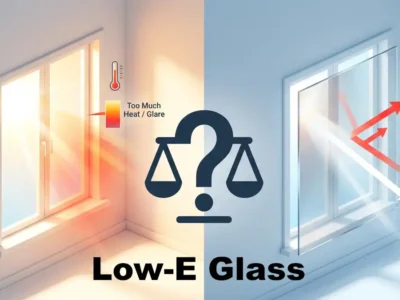
- It’s often a balancing act: low‑E coatings may lower SHGC (good for heat control) but can slightly reduce VT.
The Bottom Line: Looks vs. Feel
In short: Kelvin controls how your home looks, while U‑factor and SHGC control how your home feels.
When specifying or buying aluminium windows, always ask for the U‑factor, SHGC, and VT data. These numbers tell you the real story about energy efficiency, comfort, and climate suitability—whether you’re installing bifold doors in Queensland or thermal‑break windows in Canada.