
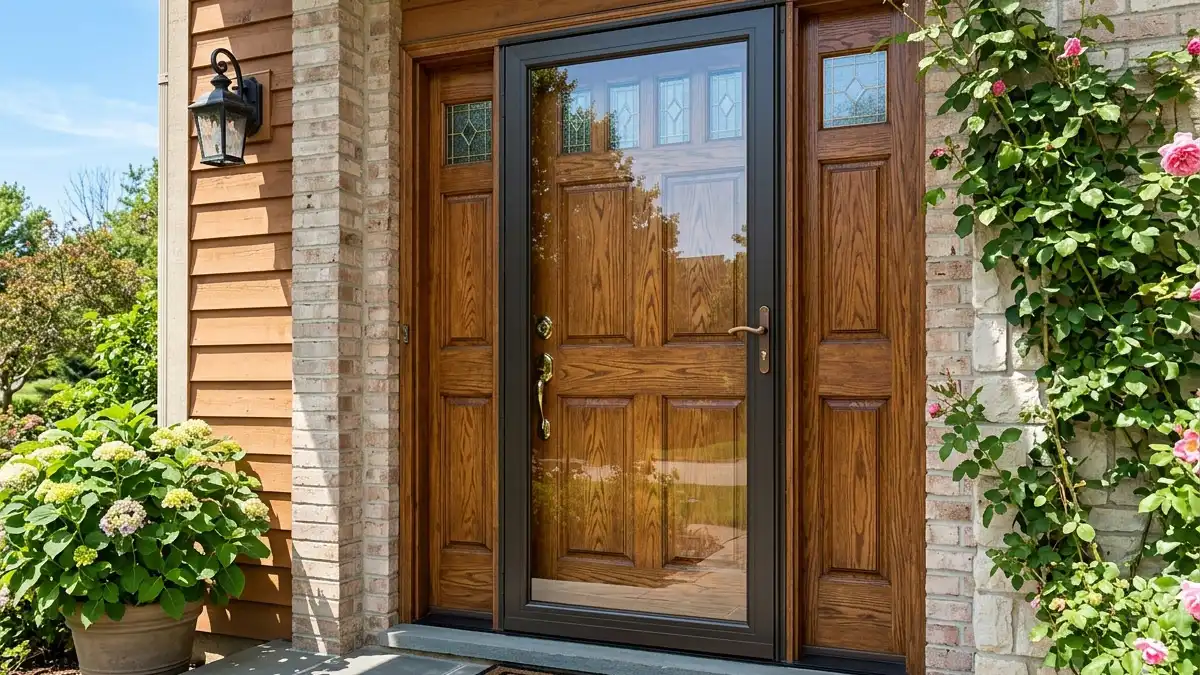
A storm door is not a second thought. It’s a dynamic protective barrier engineered to take punishment so your actual front door doesn’t have to. Rain, snow, UV radiation, wind pressure, and even attempted forced entry—the storm door intercepts all of it.
But beyond brute defense, modern extruded aluminum storm doors actively improve your home’s energy performance, natural lighting, and seasonal comfort. Let’s examine exactly how each component works, from the weather seal to the dead-air space.
Acting as a Sacrificial Weather Shield
Your primary entry door—whether solid wood, fiberglass, or steel—costs anywhere from $800 to $4,000 installed. Direct weather exposure shortens that lifespan dramatically.
Driving rain forces moisture into wood grain and behind weatherstripping. Snow loads melt and refreeze, prying open microscopic gaps. Wind shear creates pressure differentials that suck warm air out and cold air in.
A storm door takes 100% of that physical impact. Its extruded aluminum frame sheds water like a roof. The glass panel blocks wind-driven rain from ever touching your main door’s surface. When hail strikes, the storm door’s tempered glass or polycarbonate panel absorbs the energy.
The result: Your primary door’s finish lasts 2–3 times longer. Paint doesn’t peel. Wood doesn’t swell. Fiberglass doesn’t fade. The storm door is sacrificial by design—and far cheaper to replace than your entry door.
For homeowners with expensive custom wood doors or historic homes, this protection alone justifies the investment.
The Physics of the Dead-Air Buffer Zone
Between your primary door and the storm door sits a gap of roughly 1 to 3 inches. That trapped layer of air is a surprisingly effective insulator—but only if it remains still.
When wind presses against the exterior of a storm door, the air inside the cavity doesn’t circulate. Still air has an R-value of approximately R-1 per inch. Three inches of dead air adds R-3 to your entry system, comparable to adding a layer of rigid foam board.
But the real value is draft reduction. Even a well-sealed primary door loses heat through air leakage. The storm door acts as a windbreak, reducing the pressure differential across the main door. Laboratory tests show a quality storm door can cut air infiltration by 40–60%.
In winter, that means no cold blast every time someone walks past the door. In summer, it keeps hot outdoor air from pushing inward. Combined with a thermally broken aluminum frame, the dead-air space transforms your entry from a thermal weak point into a neutral zone.
For a deeper understanding of thermal barrier technology, see our guide on energy-saving thermal break aluminum windows—the same principles apply to storm door frames.
Managing Passive Ventilation and Solar Heat Build-up
A storm door isn’t a static barrier. It’s a seasonal tool.
Spring and autumn: Remove the glass panel or slide it open, and you expose a full-height screen. Fresh air flows through your home without inviting mosquitoes, flies, or pollen. This passive cooling costs nothing—no AC, no fan, no electricity. In temperate US regions, homeowners can delay turning on their air conditioning for weeks by simply ventilating through a storm door.
Summer: Direct sun turns a full-glass storm door into a greenhouse. That’s a problem if your main door is dark-colored and the entry faces west or south. Surface temperatures can exceed 170°F, blistering paint and melting weatherstripping.
The fix: Use a ventilating storm door (glass only on top, screen below) or a retractable-screen model. Open the top panel—hot air rises and escapes before it builds up. Low-E glass coatings also help by reflecting infrared heat back outside while letting visible light through.
Winter: Close the glass panel fully. The sealed air gap and Low-E coating now work in reverse, reflecting interior radiant heat back into your home. A single storm door adapts to all four seasons.
Enhancing Entryway Structural Security
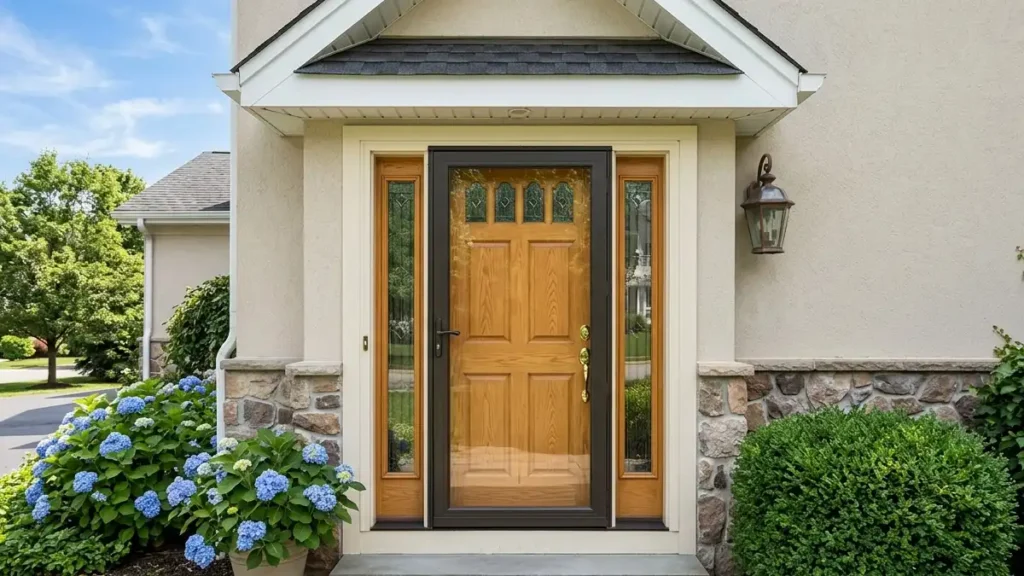
A lightweight aluminum screen door offers minimal resistance. A heavy-gauge extruded aluminum storm door is a different category entirely.
Premium storm doors use 6063-T5 extruded aluminum alloy with minimum tensile strength of 22,000 PSI. The frame depth often reaches 65mm—substantially thicker than screen door frames. Dual-stage quenching during manufacturing increases yield strength to 240 MPa.
What that means in practice: The frame won’t flex or bend when someone leans against it or attempts to force it open. The deadbolt mechanism (standard on quality models) adds a second lock at a different height than your main door’s lock.
For forced entry attempts, two locked doors take twice as long to breach. The noise of breaking through tempered glass or prying a reinforced aluminum frame often sends intruders looking for an easier target.
Compare this to a basic screen door with a simple latch—there’s no contest. For more on this distinction, see our aluminum screen vs. storm doors comparison.
Maximizing Natural Light Without UV Degradation
Natural light makes entryways feel larger and more welcoming. But direct sunlight destroys interior finishes over time.
Standard clear glass blocks some UV-B but allows significant UV-A transmission. That UV-A penetrates deeper into materials and causes most fading—on hardwood floors, area rugs, entryway furniture, and artwork.
A storm door with Low-E or tinted glass adds an extra layer of UV reduction. The glass absorbs or reflects UV radiation before it ever reaches your primary door’s windows or sidelights. Meanwhile, visible light passes through freely, keeping your entry bright.
For south- or west-facing homes, this UV protection preserves thousands of dollars in interior finishes over the life of the storm door.
When and Where Entryways Benefit Most
A storm door is not universally necessary. But in these scenarios, it’s a non-negotiable asset:
- Houses with no porch overhang: The main door gets direct rain and sun exposure. A storm door is essential.
- Older, drafty entry doors: Single-pane glass, worn weatherstripping, or thin wood panels all benefit from the dead-air buffer.
- Expensive custom wood doors: Mahogany, oak, or fir doors cost thousands. A storm door protects that investment.
- Homes in high-wind or freeze-thaw climates: The storm door reduces pressure differentials and prevents ice damming around thresholds.
- Busy streets: Noise reduction from the added mass and air gap improves quality of life.
Lower utility scenarios:
- North-facing entries with a modern energy-efficient fiberglass door and a deep porch overhang may see minimal benefit.
- Desert Southwest homes with west-facing dark doors may need ventilating models only (no permanent glass).
For a complete list of best aluminum storm doors for USA homes, review our top recommendations by climate and budget.
Conclusion: Maximizing Home Investment Value
A storm door does not add square footage or change your home’s layout. But it quietly multiplies the value of your entryway in five distinct ways: weather protection, energy savings, passive ventilation, structural security, and UV defense.
The key is choosing a door built from extruded aluminum with a thermal break, Low-E glass, and a deadbolt lock. Cheap vinyl or non-thermal break models fail to deliver these benefits. Quality materials and engineering pay for themselves in extended door life and lower energy bills.
Install one storm door. Protect your home for decades.
Related Articles
Featured

You May Also Like

Top 5 Reasons to Choose Aluminum Sliding Windows

Powering Everyday Life: The Uses of Aluminium Wire

Aluminum Water Bottles vs. Stainless Steel: Which Hydration …

ISO 9001 14001 45001 Elevate Aluminium Coating Quality and S…
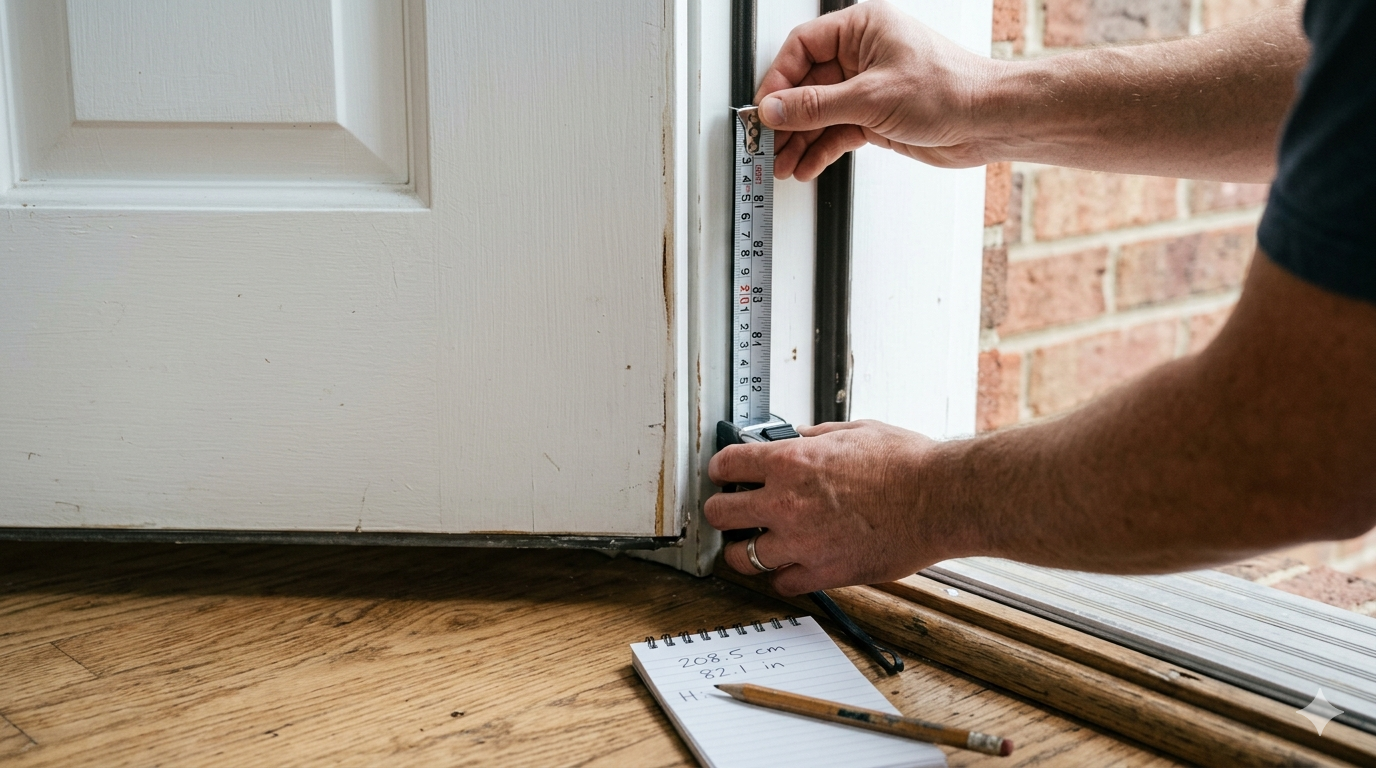
How to Measure for a Storm Door Correctly
