
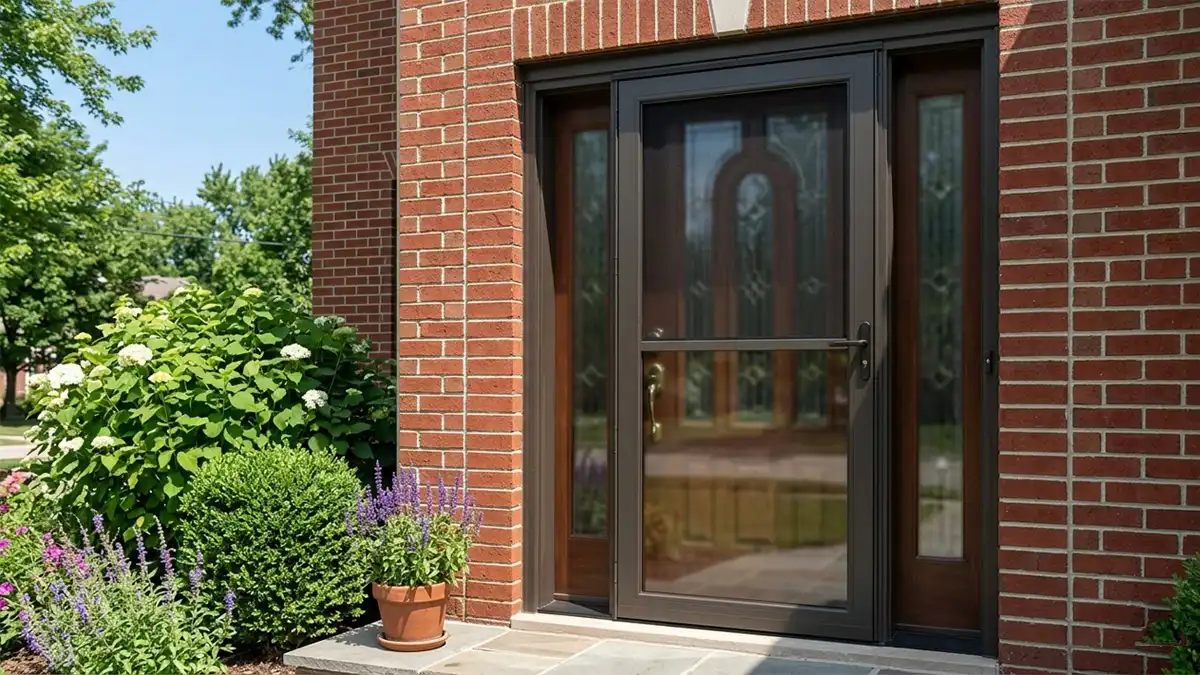
A retractable screen storm door solves one of the oldest frustrations of homeownership: swapping heavy glass panels twice a year.
Instead of storing a glass panel in the garage for summer and a screen panel in the closet for winter, a retractable screen lives hidden inside the door’s top header. Pull it down when you need ventilation. Let it roll up when you want insulation or an unobstructed view.
This engineering marvel sounds simple. But the mechanism, housing, and frame quality determine whether your retractable screen lasts 20 years or jams after two seasons.
This guide explains exactly how retractable screens work, where they excel, where they fall short, and what to look for in a long-lasting aluminum-framed model.
How a Retractable Screen Storm Door Actually Works
The system has four core components:
1. Top header (cassette housing)
A slim aluminum box mounted at the top of the storm door frame. Inside: a spring-loaded roller tube, the screen mesh rolled around it, and guide tracks on both sides.
2. Spring mechanism
A torsion spring (or constant-force spring) maintains tension on the roller. When the screen is up, the spring holds it tight inside the header. When you pull down, the spring resists slightly, then pulls the screen back up when released.
3. Mesh screen
Typically fiberglass or polyester with fine weave (18×16 or tighter). The mesh attaches to the roller at the top and a bottom pull bar at the bottom.
4. Side guides (tracks)
Vertical channels on both sides of the door frame. The screen edges run inside these guides, keeping the mesh flat and preventing wind from pushing it inward.
Operation: Grasp the bottom pull bar. Pull down until the latch engages at the threshold. To retract, release the latch. The spring automatically rolls the screen back into the header.
For a visual understanding of how this compares to traditional interchangeable screens, see our storm doors vs. screen doors guide.
Key Components That Determine Quality
The Header Housing
Cheap retractable screens use plastic or thin aluminum headers. Heat warps them. Cold makes them brittle. The screen jams.
Premium headers are extruded aluminum with minimum wall thickness of 0.060 inches. The housing is integral to the storm door frame—not a snap-in accessory. This prevents warping and ensures the spring mechanism stays aligned.
Spring System
Two spring types dominate:
| Spring Type | Pros | Cons |
|---|---|---|
| Torsion spring | Strong, consistent tension, long life | More expensive, professional replacement |
| Constant-force spring | Cheaper, easier to replace | Loses tension faster, shorter lifespan |
Torsion springs last 15–20 years with normal use. Constant-force springs often need replacement after 5–8 years.
Mesh Material
- Fiberglass mesh – Standard. Inexpensive, doesn’t rust. Can tear if abused.
- Polyester mesh – Slightly stronger, better UV resistance.
- Stainless steel mesh – Security grade. Heavy, requires stronger spring. Overkill for most residential use.
For standard home ventilation, fiberglass or polyester is fine. For homes with pets, consider heavy-duty polyester.
Bottom Pull Bar
The bar should be aluminum or reinforced plastic—not hollow plastic that snaps. It must engage positively with the latch at the threshold. A magnetic latch is smoother than a mechanical one but can weaken over time.
Pros of Retractable Screen Storm Doors
1. Instant switching
No hunting for the stored glass panel. No lifting 30 pounds of glass out of tracks. Pull the screen down or let it retract in seconds.
2. Clean, minimalist aesthetic
When retracted, the screen is completely invisible. No permanent mesh blocking your view. No screen frame visible. Just clear glass and a slim top header.
3. No storage space needed
Interchangeable panels require garage or closet space for the off‑season panel. Retractable screens store themselves.
4. Preserves full-view glass
You enjoy maximum natural light and unobstructed views year‑round. The screen only appears when you want ventilation.
5. Good for modern home design
The slim top housing (2–2.5 inches) integrates cleanly into full‑view storm doors. No bulky add‑ons.
For homes with modern architecture, see our best full view storm doors for modern homes guide.
Cons of Retractable Screen Storm Doors
1. Higher upfront cost
Retractable models cost $100–200 more than comparable interchangeable‑panel doors. The spring mechanism and precision tracks add manufacturing expense.
2. More moving parts to fail
Springs lose tension. Tracks accumulate dust. The pull bar latch can misalign. Repairs are more involved than simply replacing a screen panel.
3. Screen repairs are harder
If the mesh tears, you can’t just buy a $20 replacement panel. You often need to replace the entire screen cartridge or send the door back to the manufacturer.
4. Not ideal for extreme climates
In very cold winters, the spring can become sluggish. In hot, humid summers, the mesh may sag slightly. Premium doors use temperature‑compensated springs to mitigate this.
5. Requires occasional maintenance
Tracks need cleaning every 6–12 months. The spring may need lubrication. Not difficult, but more than the zero maintenance of interchangeable panels.
Lifespan: What to Expect
| Component | Expected Lifespan |
|---|---|
| Extruded aluminum frame | 25+ years |
| Torsion spring | 15–20 years |
| Constant‑force spring | 5–8 years |
| Fiberglass mesh | 10–15 years (if not torn) |
| Bottom pull bar latch | 10–15 years |
| Side guides (tracks) | 20+ years (with cleaning) |
A quality retractable screen storm door from a reputable brand (Larson, Andersen, ProVia) should last 15–20 years before any component needs replacement. The aluminum frame itself will outlast the spring mechanism.
Repairability note: Some brands sell replacement spring cartridges or screen cassettes as user‑serviceable parts. Others require factory service. Check before buying.
Maintenance for Long Life
Annual maintenance (15 minutes):
- Vacuum the side tracks with a brush attachment
- Wipe the bottom pull bar and latch with a damp cloth
- Lubricate the track channels with dry silicone spray (not oil)
- Check the mesh for small tears; patch with screen repair tape
Every 3–5 years:
- Inspect spring tension (screen should retract fully without hesitation)
- Tighten any loose screws on the header housing
- Replace the pull bar latch if engagement feels weak
What not to do:
- Never use oil‑based lubricants (attracts dust, gums up tracks)
- Never force the screen if it jams (find the obstruction first)
- Never leave the screen down in high winds (the door is not a wind sail)
For general care of aluminum frame components, see our how to maintain aluminum windows and doors guide.
Retractable vs. Interchangeable: Which Should You Choose?
| Factor | Retractable | Interchangeable |
|---|---|---|
| Switching time | 5 seconds | 2–3 minutes |
| Storage needed | None | Yes (glass or screen panel) |
| Aesthetic (screen hidden) | Yes | No |
| Upfront cost | Higher | Lower |
| DIY repairability | Lower | Higher (swap panels yourself) |
| Lifespan | 15–20 years | 20–25 years |
| Best for | Modern homes, convenience‑lovers | Budget, extreme climates, DIYers |
Our recommendation: Choose retractable if you value convenience, clean aesthetics, and instant switching. Choose interchangeable if you’re on a tighter budget, live in extreme climates, or want the simplicity of zero moving parts.
For a complete starting point, see our best aluminum storm doors for front entrances buyer’s guide and filter for retractable models.
The Bottom Line
A retractable screen storm door is a premium convenience feature, not a necessity. But for homeowners who want instant ventilation, unobstructed glass views, and a minimalist exterior, it’s worth every extra dollar.
Focus on:
- Extruded aluminum header housing (not plastic)
- Torsion spring for longevity
- Replaceable screen cartridge for repairability
- Reputable brand with available parts
Skip cheap retractable doors with plastic components. The spring will fail, the tracks will warp, and you’ll be back to swapping panels within five years. Invest in quality aluminum engineering, and your retractable screen will outlast your mortgage.
Related Articles
Featured

You May Also Like

Career in Aluminium Extrusion Press Operation: Jobs, Skills,…

Why Aluminum is Classified as a Nonrenewable Resource
Aluminium Windows: Improper Glass Installation Orientation –…

“I Hate My Low-E Windows!” – 10 Real Homeowner S…
Aluminium 7020 Alloy: Properties, Weldability, and Military-…
