Defining Versatility in Structural Aluminum
If one aluminium alloy could be crowned the universal standard for fabricated structural components and machined parts, Aluminium 6061 would be the undisputed champion. As the most commonly specified heat-treatable aluminum alloy globally, 6061 represents the perfect intersection of good strength, excellent corrosion resistance, superior weldability, and unmatched versatility.
When taken to its peak performance state as 6061-T6, it becomes the default “go-to” material for engineers, fabricators, and machinists across every industry—from aerospace prototypes to custom bicycle frames. This alloy doesn’t just fill a niche; it defines the broad middle ground of high-performance aluminum, making sophisticated fabrication accessible and reliable.
Quick Facts: Aluminium 6061
- ✓ Alloy Series: 6xxx (Aluminum-Magnesium-Silicon)
- ✓ Most Popular Temper: 6061-T6
- ✓ Key Strength: High strength + excellent weldability + corrosion resistance
- ✓ Tensile Strength: ~310 MPa (T6)
- ✓ Common Forms: Plate, Sheet, Bar, and Tube
- ✓ Best For: Structural components, precision machining, and prototypes
Composition and Metallurgy: The Recipe for Adaptability
Aluminium 6061 is part of the 6xxx series (Aluminum-Magnesium-Silicon alloys). Its strength is achieved through precipitation hardening, a heat treatment process that forms fine precipitates of Magnesium Silicide ($Mg_2Si$) within the aluminum matrix.
Primary Composition:
- Aluminium (Al): Balance (approx. 95.8 – 98.6%)
- Magnesium (Mg): 0.8 – 1.2% — Key for strength and formability.
- Silicon (Si): 0.4 – 0.8% — Combines with Magnesium to form the strengthening $Mg_2Si$ phase.
- Copper (Cu): 0.15 – 0.40% — Enhances strength and improves machinability.
- Chromium (Cr): 0.04 – 0.35% — Controls grain structure and improves toughness.
This balanced chemistry allows 6061 to achieve a wide range of mechanical properties through different tempers.
The Power of Temper: From -O to -T6
The temper designation is critical for 6061. The difference between “O” and “T6” is the difference between soft, pliable metal and rigid, structural material.
The “T6” Process:
- Solution Heat Treatment: The metal is heated to ~530°C (990°F) and rapidly quenched.
- Artificial Aging: It is then reheated to ~160-180°C (320-355°F) for a sustained period to precipitate the $Mg_2Si$ particles, dramatically increasing strength.
| Temper | Process | Tensile Strength (MPa) | Yield Strength (MPa) | Elongation (%) | Key Characteristic |
| 6061-O | Annealed | ~125 | ~55 | 25+ | Maximum ductility & formability. |
| 6061-T4 | Solution Heat-Treated & Naturally Aged | ~240 | ~145 | 22 | Good formability; ages slowly toward T6. |
| 6061-T6 | Solution Heat-Treated & Artificially Aged | ~310 | ~276 | 12-17 | Optimal all-purpose strength & machinability. |
| 6061-T651 | T6 + Stress-Relieved | ~310 | ~276 | 12-17 | Premium plate/bar; minimal internal stress for stable machining. |
Why Engineers Choose 6061-T6
- The Ultimate Workhorse: It offers one of the best balances of strength, corrosion resistance, weldability, and machinability among all aluminum alloys.
- Zero Compromises: A single material can be machined, welded, anodized, and used outdoors reliably.
- The Industry Default: For many engineers, it is the immediate default choice before considering expensive specialty alloys like 2024 or 7075.
Core Properties of 6061-T6: Why It’s the Default Choice
- High Strength-to-Weight Ratio: With a tensile strength rivaling mild steel at one-third the density, it is ideal for weight-sensitive structures.
- Comparison: Aluminum 6061 vs. 6063.
- Excellent Corrosion Resistance: Demonstrates very good resistance to atmospheric and chemical exposure, far superior to the 2xxx or 7xxx aerospace series.
- Superior Weldability: Can be welded easily by all common techniques (TIG, MIG). While the heat of welding reduces strength in the Heat Affected Zone (HAZ), post-weld aging can restore much of it.
- Exceptional Machinability: In the T6 temper, 6061 is the benchmark for “free-machining” aluminum. It produces small, broken chips and achieves excellent surface finishes.
- Anodizing Response: It produces a high-quality, durable anodic oxide layer for both corrosion protection and aesthetics (though 6063 is slightly better for architectural visuals).
- Learn More: Powder Coating vs. Anodizing.
Ubiquitous Applications: Where You Find 6061-T6
1. Aerospace & Transportation
- Aircraft landing mats and wing ribs.
- Bicycle Frames: The most famous application for 6061-T6 tubing.
- Automotive suspension components and chassis parts.
2. High-Performance Machinery
- Robotic arms and industrial automation bases (due to stability).
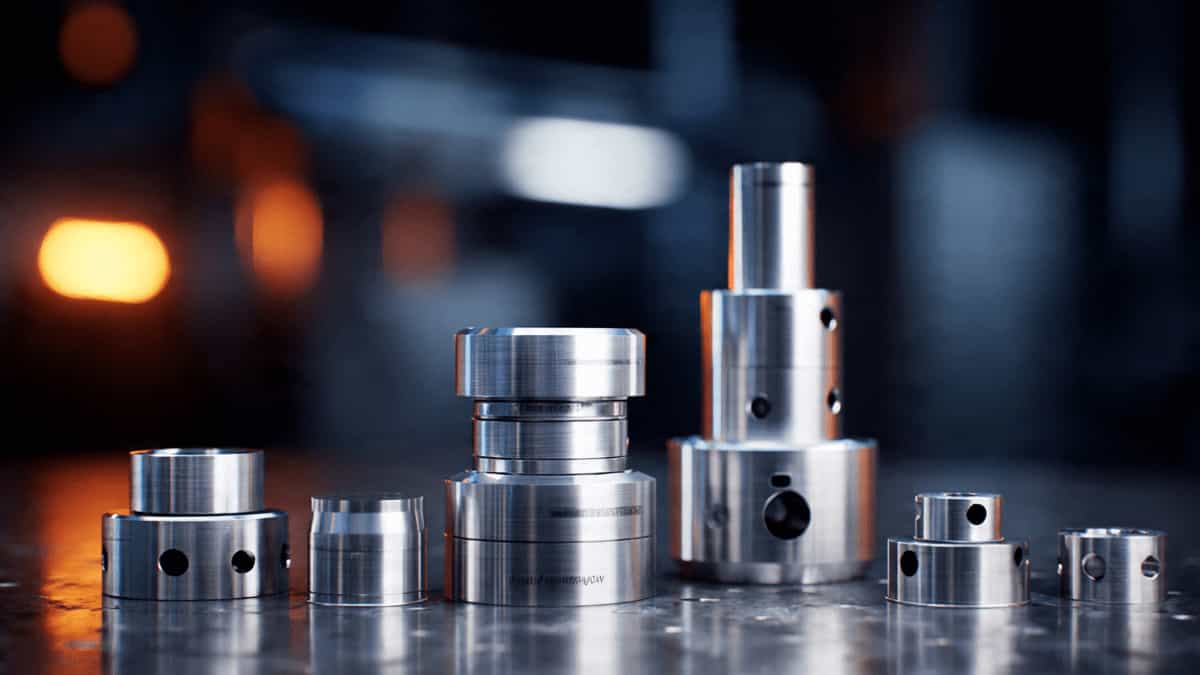
- Precision machined valves, couplings, and hydraulic manifolds.
3. Construction & Architecture
- Structural framing for balconies and walkways.
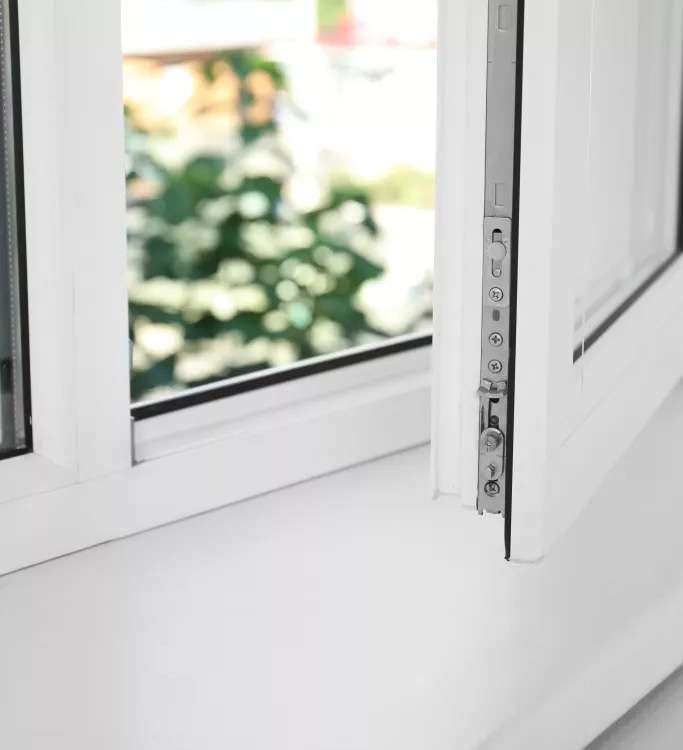
- Window and door frames where structural loads are high.
4. The Maker & Prototyping World
- The single most popular material for CNC-machined prototypes due to its availability and forgiving machining characteristics.
Strategic Comparison: When to Choose 6061-T6
| Alloy / Temper | 6061-T6 | 6063-T5/T6 | 2024-T3 | 7075-T6 |
| Strength | High | Moderate | Very High | Extremely High |
| Corrosion | Very Good | Excellent | Poor | Fair |
| Weldability | Excellent | Excellent | Poor | Poor |
| Machinability | Excellent | Good | Very Good | Good |
| Best For | Structural, Machining, Welding | Extrusions, Trim, Windows | Riveted Aircraft Parts | High-Stress Gears/Shafts |
ADVANTAGES
- ✓ Excellent balance of structural properties
- ✓ Outstanding CNC machining quality
- ✓ Can be welded easily by common techniques (TIG/MIG)
- ✓ Very good resistance to atmospheric corrosion
- ✓ Available worldwide in sheets, plates, and bars
LIMITATIONS
- ✕ Lower absolute strength compared to aerospace 7075-T6
- ✕ Difficult to bend or form in the rigid T6 condition
- ✕ Structural strength decreases in the welded zones (HAZ)
- ✕ Anodized architectural finish is slightly behind alloy 6063
Choose 6061-T6 when you need:
- A one-stop-shop alloy for a project involving welding, machining, AND finishing.
- A reliable material with predictable performance and extensive supplier availability (Plate, Sheet, Bar, Tube).
- Structural integrity in an outdoor environment without heavy protective coatings.
Fabrication Essentials for 6061-T6
- Machining: Use sharp, positive-rake carbide tools. Coolant is recommended for high-quality finishes.
- Forming: 6061-T6 is difficult to bend without cracking (small radius). For significant forming, use 6061-O, form the part, and then heat treat to -T6.
- Welding: Use 4043 filler for general purposes (better fluidity) or 5356 filler for higher shear strength and color matching during anodizing.
- Re-Working: Parts can be locally annealed for re-work by heating to ~415°C (775°F) and air cooling.
Sustainability & The Unassailable Legacy
Aluminium 6061 is a pillar of the circular economy. It is highly valued in scrap streams and is easily recycled back into new 6xxx series products, supporting sustainable building (LEED) and transport initiatives.
The Verdict:
Aluminium 6061-T6 is more than just an alloy; it is a foundational engineering material. It democratized high-performance metal fabrication, offering strength without brittleness and weldability without weakness. While newer alloys emerge for extreme niches, 6061-T6 remains the trusted, versatile workhorse at the heart of modern manufacturing.