The windows in your home are designed to bring in light and offer a view, but they should never bring in a cold draft or leak your expensive heat and air conditioning. Air leaks around windows are one of the single biggest culprits for high utility bills and poor home comfort. If you’ve been feeling chilly near a closed window or your energy bills are unexpectedly high, your windows are likely the source. You may also want to investigate a few other reasons why your windows are cold.
But where exactly are those invisible drafts coming from? We’ve broken down the top causes of air leakage and how to find and fix them.
Top 5 Causes of Air Leaks Around Windows
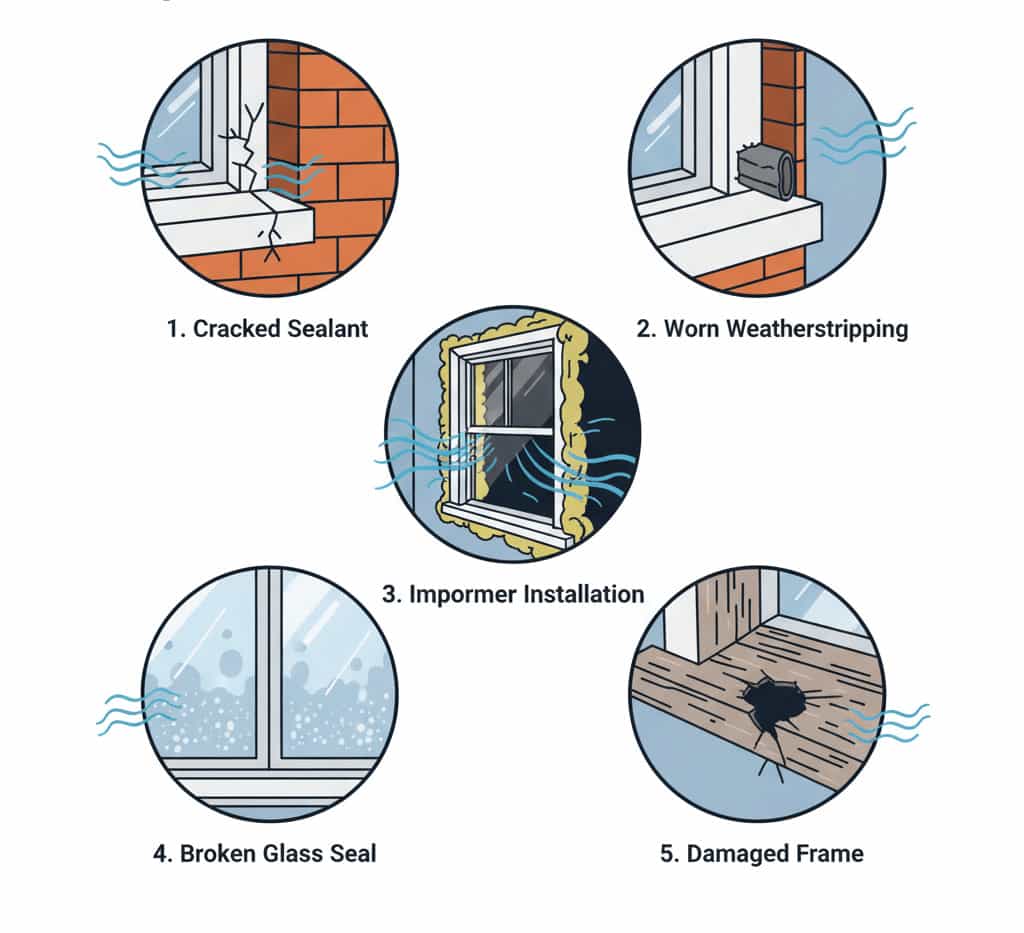
Air leaks are rarely caused by the glass itself (unless it’s broken). They almost always occur where different materials meet, creating tiny gaps that allow air to pass through.
1. Worn-Out or Cracked Sealant (Caulk)
Caulking is the flexible material applied to seal non-moving gaps, most commonly where the window frame meets the exterior siding and on the interior where the frame meets the trim. Over time, UV exposure, heat, and cold cause this sealant to dry out, shrink, and crack.
- The Cause: The cracked lines of caulk act like tiny, open highways for air to rush in and out of your home.
- The Fix: Remove the old, cracked caulk completely and apply a fresh bead of exterior-grade caulk around the entire frame.
2. Compromised Weatherstripping
Unlike caulk, weatherstripping is the material used to create a seal on the moving parts of a window, such as the sashes of double-hung or casement windows. This material—often rubber, vinyl, or foam—is designed to be compressed when the window is fully closed and locked.
- The Cause: Constant friction from opening and closing the window, or simply the age of the material, causes the weatherstripping to flatten, tear, or come loose. When it loses its elasticity, it can no longer fill the small gap between the moving sash and the frame.
- The Fix: Inspect the material. If it’s worn or damaged, it must be carefully pulled out and replaced with new weatherstripping sized for your specific window type.
3. Improper Window Installation
This is often the most significant source of a severe draft, especially in newer homes or after a replacement job. When a window is installed, there is a rough opening in the wall that is significantly larger than the window unit itself. This gap, known as the “rough opening,” must be properly sealed.
- The Cause: If the installer failed to use enough low-expansion spray foam insulation or adequate backer rod and sealant, the air barrier between your wall structure and the window is incomplete. This results in cold air bypassing the frame entirely.
- The Fix: If the leak is between the wall and the frame, the interior or exterior trim may need to be temporarily removed to apply insulating foam or caulk into the gap for an effective air sealing job.
4. Broken or Degraded Glass Seals
If you have modern double-pane or triple-pane windows, a broken glass seal (known as the insulating glass unit, or IGU) is not an air leak to the outside, but it severely reduces the window’s energy efficiency.
- The Cause: The seal holding the two panes of glass together fails, allowing moisture and air to enter the space between the panes. The insulating gas (usually argon) escapes.
- The Symptom: You will see condensation or a foggy film between the glass layers that cannot be wiped away. This is a common problem, which can occur even with Low-E glass.
- The Fix: The only remedy is to have the sealed glass unit replaced by a professional.
5. Structural Damage to the Frame
Windows, particularly older wood frames, can suffer damage over time that opens pathways for air. If you are considering wood frames, it is wise to review the pros and cons of wood vs. aluminum vs. vinyl doors and windows.
- The Cause: Window rot can create holes in the frame structure, while bent vinyl or aluminum frames can pull away from the wall materials, especially after decades of seasonal expansion and contraction. Aluminum frames, in particular, may benefit from thermal break technology to prevent excessive heat transfer4.
- The Fix: Minor damage can sometimes be repaired, but if the structural integrity of the frame is compromised, the best long-term solution is a full window replacement with a new, energy-efficient model.
How to Find Air Leaks in Your Windows (DIY Methods)
Before you can fix a leak, you have to find it. Here are two easy methods to pinpoint drafts on your own:
The Smoke Test (Incense or Candle)
Wait for a cold or windy day, close all windows and doors, and turn off your furnace and any fans. Light a stick of incense or a thin candle and slowly move it along the edges of the window frame (where it meets the wall) and the sash (where it meets the window itself).
- If the smoke wavers, gets sucked inward, or the flame flickers, you’ve found an air leak.
The Damp Hand Test
On a cold day, simply run a damp hand slowly around the edges of the window and trim. The exposed, cold air rushing in will feel noticeably cool against the moisture on your skin, allowing you to trace the exact source of the draft.
Fixing Air Leaks: From Quick Fix to Long-Term Seal

Once you’ve identified the source of the leak, you can choose the best remedy:
- If the leak is in the fixed frame: Use quality caulking to seal the gap. This is an affordable and highly effective fix for gaps up to about
inch.
- If the leak is in the moving sash: Replace the worn-out weatherstripping. This often involves pulling out the old strip and pressing in a new one.
- If the leak is due to improper installation: For larger gaps (over
inch) or drafts coming from the space between the rough wall opening and the frame, you should use low-expansion foam sealant to fill the void before re-caulking or reinstalling trim.
By addressing these common causes, you can stop the drafts, improve your home’s energy efficiency, and start saving money on your utility bills right away.
Related Articles


Featured



You May Also Like

Why Aluminium Cans Have a Curved Bottom

Aluminium Bathroom Windows
Why Aluminium Skirting is Becoming the Borderless Choice for…
The Lifecycle of Aluminum Scraps: Types, Recycling Process, …

Bifold Vs. French Casement Vs. Sliding for Patio Door