
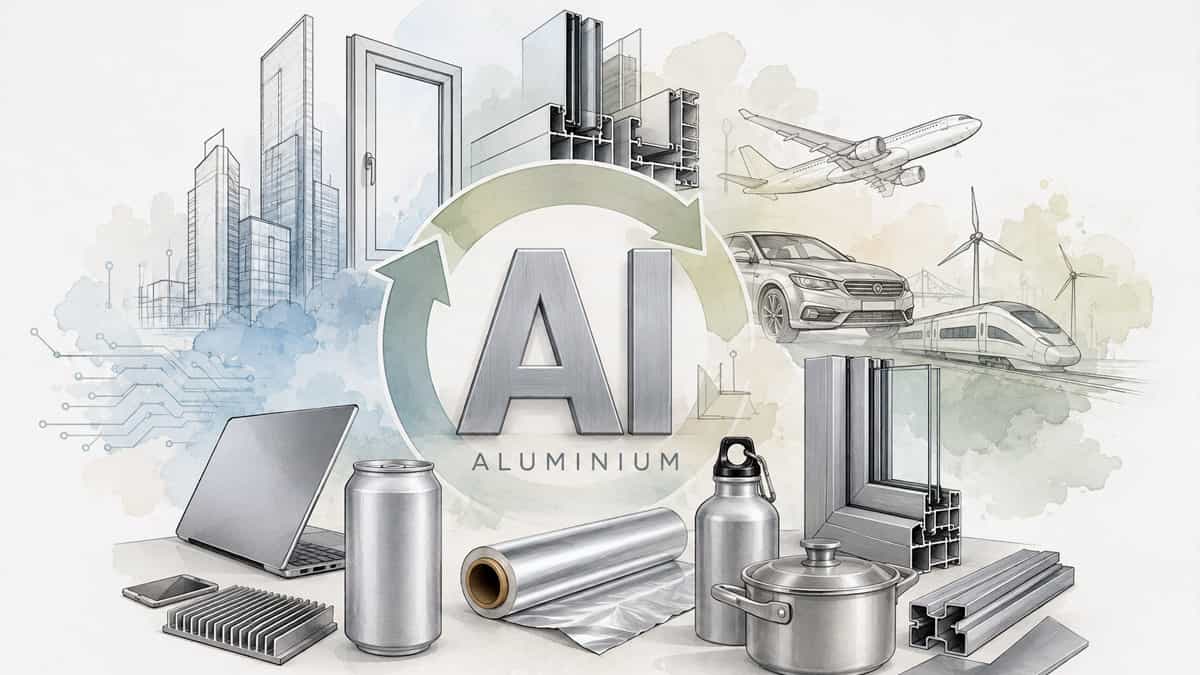
Aluminium is one of those materials that has become so common that we often stop noticing it. It is in buildings, vehicles, packaging, electrical systems, kitchens, furniture, electronics, machinery and thousands of everyday products.
But aluminium is more than a useful metal. It is a massive global business ecosystem. Its lightweight, durability, corrosion resistance, versatility and, most importantly, recyclability give it a strong long-term position across many industries.
Producing primary aluminium from bauxite is energy-intensive, but recycling aluminium requires about 95% less energy than primary production. Old aluminium can become new aluminium, allowing the same metal to remain in the economy through multiple cycles of use and recycling.
The result is a material with an enormous range of applications and a business ecosystem stretching from primary production and processing to manufacturing, fabrication, distribution, finished products and recycling.
Aluminium in Modern Life
Aluminium is a lightweight, silver-coloured metal that can be formed into many different shapes and products. Commercial aluminium products are commonly made using alloys that provide the required strength, formability, corrosion resistance and other properties.
Aluminium can be rolled into sheets and foil, extruded into profiles, cast into components, machined into precision parts and finished through processes such as anodizing, painting and powder coating. This versatility allows the same metal to become a window frame, vehicle component, beverage can, electrical conductor, electronics heat sink or aircraft component.
Its relatively low weight, useful strength, durability, corrosion resistance and electrical and thermal conductivity make aluminium valuable across a wide range of applications. It is not limited to one product category—it can become thousands of different things.
For a detailed explanation of what aluminium is, how it is produced, how it is smelted, how alloys are made and the major aluminium alloy series and grades, see our comprehensive guide:
What Is Aluminium? 36 Types, Smelting Process & How Aluminium Is Made
-Ads-
That article covers the metal itself and its production in much greater depth. This article looks at what comes after aluminium becomes part of the wider economy: businesses, products, applications and opportunities.
Aluminium Business & Things
When people think about the aluminium business, they may imagine large smelters producing millions of tonnes of metal. That is only one part of the story.
Between aluminium production and the final product in a customer’s hands, many different businesses can be involved.
Raw material → Primary aluminium → Billets, slabs and ingots → Processing → Sheets, plates, foil, rods and extrusions → Fabrication → Finished products → Use → Scrap → Recycling → New aluminium products
Every stage creates opportunities. A business does not need to own a smelter to participate in the aluminium industry. Fabricators, extrusion distributors, architectural-product manufacturers, scrap dealers, cookware manufacturers, window companies and specialized component producers are all part of the aluminium economy.
And that is why the aluminium business is much bigger than the metal itself.
Things Made From Aluminium
Aluminium is used to make a huge variety of products for homes, buildings, offices and everyday life. In homes and kitchens, it can be found in cookware, utensils, furniture, ladders, shelves, trays, appliances and decorative products. Buildings use aluminium for doors, windows, curtain walls, facades, roofing, partitions, railings and other architectural components, while offices use it in furniture, partitions, frames, lighting and equipment.
Beyond buildings and homes, aluminium is used extensively in transportation, industry, packaging, electronics and outdoor products. Cars, aircraft, trains, boats and bicycles use aluminium components; factories use aluminium sheets, plates, profiles, tubes, machine parts and equipment; and packaging uses aluminium cans, foil, containers and pharmaceutical packs. Electronics and electrical equipment use aluminium for housings, heat sinks and other components, while outdoor products also make use of its light weight, durability and corrosion resistance.
In short, aluminium can be found in thousands of things we use, build, transport and manufacture every day.
Explore 50+ Products Made From Aluminium →
The Aluminium Business Ecosystem
The aluminium industry is not a single business. It is a chain of interconnected businesses operating at different stages of the material’s journey.
Aluminium Producers
Primary aluminium producers transform alumina into aluminium metal through electrolytic smelting and operate at the upstream end of the industry.
Aluminium Rolling Companies
Rolling mills convert aluminium into sheets, plates and foil used across construction, packaging, transportation, industry and consumer products.
Aluminium Extrusion Companies
Extrusion companies produce aluminium profiles from billets for architectural, industrial, automotive, electrical and other applications.
Aluminium Foundries
Foundries produce cast aluminium components in many shapes for automotive, machinery, engineering, consumer and industrial applications.
Aluminium Fabricators
Fabricators transform aluminium profiles, sheets, plates, tubes and other materials into finished or semi-finished products such as doors, windows, railings, furniture, industrial structures and equipment.
Aluminium Manufacturers
Manufacturers turn aluminium materials into products for specific markets, ranging from high-volume commodity products to specialized and customized components.
Aluminium Distributors
Distributors purchase aluminium products from producers and manufacturers and supply them to smaller businesses and end users, often specializing in particular products, alloys or markets.
Aluminium Stockists
Stockists maintain inventories of aluminium products so fabricators and manufacturers can obtain sheets, profiles, tubes, bars and other materials without waiting for new production.
Aluminium Importers and Exporters
Import and export businesses connect aluminium producers, manufacturers and buyers across countries, handling raw materials, semi-finished products or finished goods.
Aluminium Scrap Businesses
Scrap businesses collect and trade discarded aluminium from construction, manufacturing, vehicles, packaging and other sources, keeping valuable metal in the recycling stream.
Aluminium Recycling Companies
Recyclers sort, process and melt aluminium scrap to produce secondary aluminium, making recycling an important part of the modern aluminium economy.
Why Aluminium Recycling Matters to the Aluminium Business
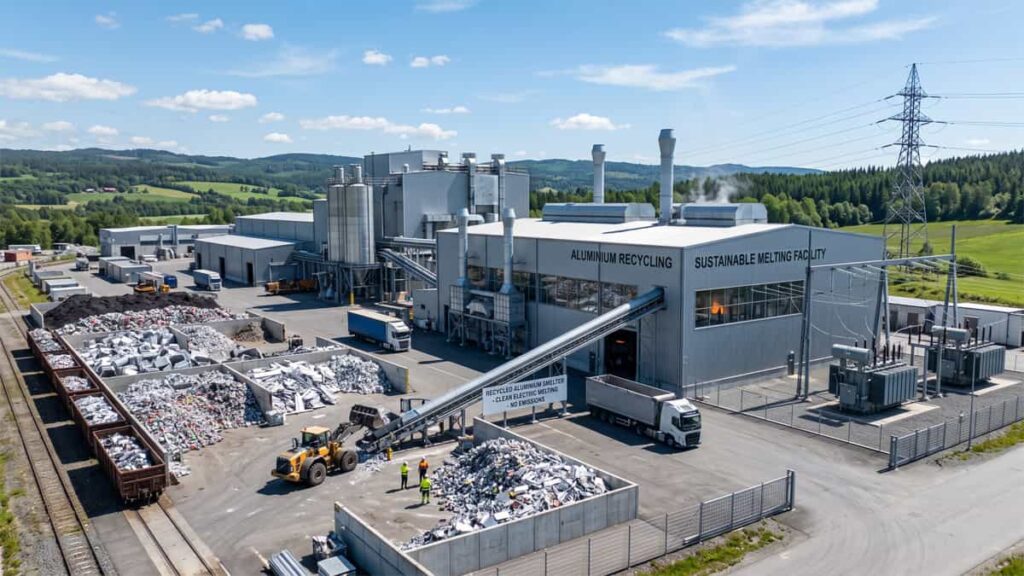
Recycling is not simply an environmental side story attached to the aluminium industry. It is a business sector in its own right.
Primary aluminium production requires mining, refining and energy-intensive smelting. Recycled aluminium starts with metal that already exists in the economy. Scrap can come from manufacturing waste, old buildings, vehicles, packaging, electrical products and consumer goods.
After collection and sorting, aluminium scrap can be processed and melted and then returned to manufacturing. The International Aluminium Institute estimates that recycled aluminium production requires about 95% less energy than primary aluminium production.
This energy difference gives recycled aluminium an important economic role and makes it closely connected with the circular economy. A building component can become scrap, that scrap can become new aluminium, and the new aluminium can become another building component, automotive part, packaging product or industrial component.
Industry data also shows the scale of aluminium’s long material life: the International Aluminium Institute estimates that about 75% of all aluminium produced since 1888 was still in use as of 2021.
Aluminium Business Opportunities
The aluminium economy creates opportunities at very different levels. A company can manufacture semi-finished products, fabricate finished products, distribute material, trade aluminium, provide specialist services or work entirely in recycling. Aluminium entrepreneurship is therefore not restricted to large corporations.
Manufacturing Opportunities
Businesses can manufacture aluminium products for construction, packaging, transportation, furniture, kitchens, electronics, industry and consumer markets.
Fabrication Opportunities
Fabricators can purchase aluminium profiles, sheets, tubes and other materials and turn them into customized products such as doors, windows, railings, partitions, furniture and industrial structures.
Trading Opportunities
Aluminium trading can involve sheets, plates, profiles, tubes, bars, billets, ingots, scrap and finished products, with businesses operating locally, nationally or internationally.
Distribution Opportunities
Distributors can supply aluminium products to fabricators, contractors and manufacturers, specializing by product type, alloy, industry or geographic market.
Recycling Opportunities
Aluminium scrap collection, sorting, processing and recycling can create businesses around material recovery. Because aluminium retains value and can be recycled repeatedly, scrap is a secondary raw material rather than simply waste.
Specialized Product Opportunities
A business can also focus on one specific aluminium product, customer group or application instead of competing across the entire market. Opportunities can include architectural products, kitchen products, industrial components, outdoor products, packaging, furniture, automotive components and specialized accessories.
Why Aluminium Is Likely to Remain Important
No material has a guaranteed future, but aluminium has several characteristics working in its favour. It is lightweight, durable, versatile and recyclable, while its ability to become sheets, plates, foil, tubes, profiles, castings and finished products allows it to serve many different industries.
Construction, transportation, packaging, electrical systems, electronics, machinery, consumer products and energy applications all create demand for aluminium. Combined with its ability to remain in the material cycle through recycling, these characteristics give aluminium a strong position across the modern economy.
Aluminium Is More Than a Metal
Aluminium is more than a chemical element or raw material. It moves through a huge ecosystem—from billets, sheets, profiles and foil to doors, windows, vehicles, packaging, electronics, machinery and everyday products. These products create businesses across manufacturing, fabrication, trading, distribution and recycling, allowing aluminium to keep moving through the economy long after its first use.
That is what makes Aluminium and Aluminium Business & Things so broad: one versatile metal supports thousands of products, industries and business opportunities.
Related Articles

Featured


You May Also Like

Aluminium vs. Desert Heat: A Comprehensive Guide to Window S…

Aluminum Tungstate (Al₂(WO₄)₃): The Complete Guide

The Future of Aluminium: Shaping Tomorrow’s World

ALUMINIUM CHINA 2024 to Unveil in Shanghai this July: Regist…
Sodium Aluminium Fluoride (Na₃AlF₆): Technical Guide to Cryo…
