
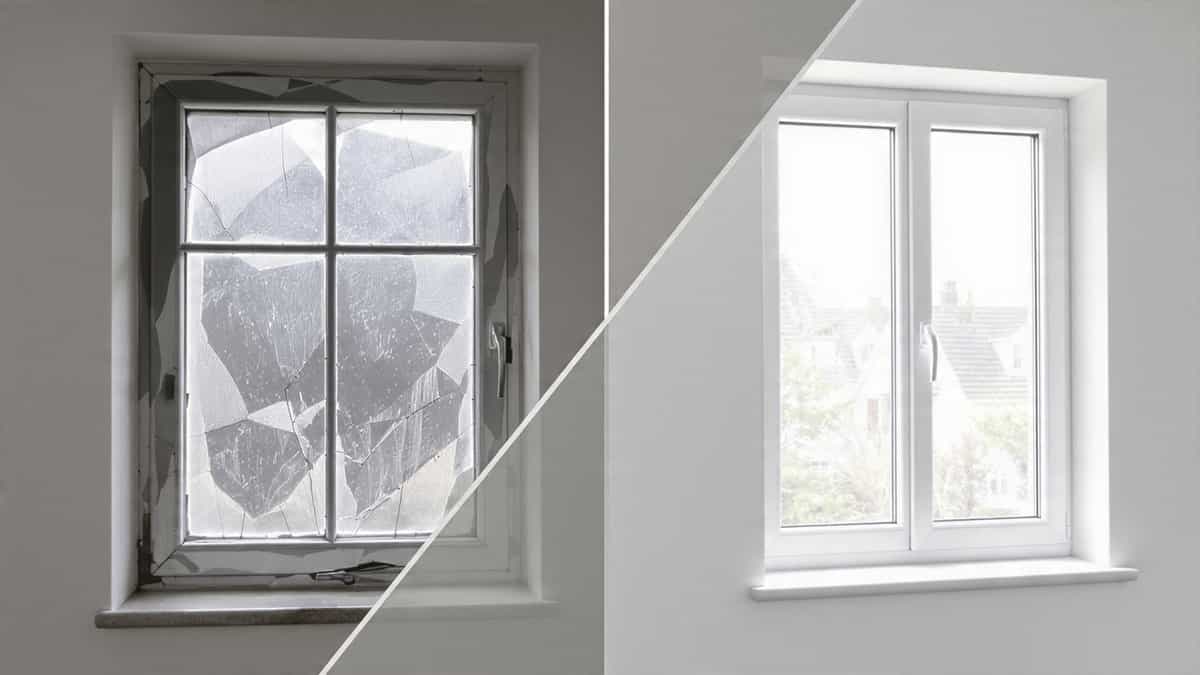
A Homeowner’s Practical Guide to Making the Right Choice
Deciding between repairing or replacing your windows isn’t just about the immediate price tag—it’s about your home’s thermal envelope, security, and long-term value. If you’re asking yourself, “Is this worth fixing?”, you’re in the right place. This guide will help you weigh the pros and cons to make a confident decision.
✅ Quick Self-Assessment Checklist
Answer these questions to get a clearer picture of your window’s health:
- Are your windows fighting you when you try to open, close, or lock them?
- Do you feel drafts or chill spots even when windows are shut tight?
- Is there condensation or “fog” trapped between the glass panes?
- Do you see visible rot (wood), warping (vinyl), or corrosion?
- Are your energy bills creeping up despite a stable climate?
- Is street noise sounding louder inside than it used to?
If you answered “yes” to two or more, simple repairs might just be a band-aid solution.
🔧 When Repair Makes Sense
Repair is often the smartest, most cost-effective route if the core window unit is healthy. Stick to repairs if:
- Damage is Cosmetic: Cracked or chipped glass in an otherwise solid, square frame.
- Hardware Failures: Broken locks, cranks, handles, or hinges. These are easily swappable.
- Worn Weatherstripping: Drafts caused by peeling seals are an easy, affordable fix.
- Frame Is Structurally Sound: Your existing wood or aluminium frames are straight, with no deep rot or deformation.
- Historical Preservation: You live in a heritage home where original joinery is protected or adds significant value.
💡 Tip: Many “failures” are just a lack of care. Regular cleaning and lubrication can extend window life by years. Learn more in our guide: How to Maintain Aluminum Windows.
-Ads-
🚀 When Replacement Is the Better Investment
Sometimes, throwing money at an old window is a sunk cost. Replacement is the better financial move if you observe:
1. Poor Energy Efficiency
Old single-pane windows or first-generation double glazing often lack low-E coatings or gas fills. Modern thermally broken aluminium windows offer a unique advantage here: they provide the structural strength to hold heavy triple-glazing while maintaining slim sightlines that bulky vinyl or wood frames cannot match.
📊 Replacing single-pane windows with Energy Star-rated models can reduce heating/cooling costs by up to 15–20%.
2. Foggy Glass (Seal Failure)
If you see condensation between the panes, the vacuum or gas seal has failed. While you can replace just the glass unit (IGU), if the frame is older than 15 years, it is usually more economical to replace the whole unit.
3. Safety & Mechanical Failure
Windows that slam shut unexpectedly, refuse to lock, or are painted shut pose a safety hazard during emergencies.
4. Aesthetic & Functional Upgrades
Switching to modern operations—like tilt-and-turn for easy cleaning or lift-and-slide doors—can transform how you use your space.
🧠 Considering a style update? Explore Aluminium Sliding Window Design Ideas.
🌍 Climate-Specific Considerations
Cold Climates (Canada, Northern Europe, etc.)
In freezing temperatures, frame material matters.
- The Aluminium Advantage: Look for “thermally broken” aluminium. This technology separates the interior and exterior metal to stop cold transfer.
- Glass: Prioritize Triple-glazing with Argon or Krypton gas.
- Read more: Energy-Efficient Windows for Cold Climates (Note: Resource covers principles for extreme temps)
Hot, Humid & Stormy Climates (Florida, Queensland, etc.)
Heat gain and hurricanes are the enemies here.
- The Aluminium Advantage: Aluminium is the gold standard for impact resistance (HVHZ zones). It won’t warp under intense UV rays like vinyl might.
- Glass: Low Solar Heat Gain Coefficient (SHGC) is critical to lower AC bills.
- Read more: Best Windows for Hot Climates
Mixed & Temperate Climates (UK, Pacific Northwest, etc.)
- Priority: Balanced double-glazing.
- Check: Ensure frames have high-quality drainage channels (weep holes) to handle frequent rain without leaking.
🏛️ Special Consideration: Historic Homes
For period properties, the rules change.
- Repair First: Original sash windows made of old-growth wood are incredibly durable. Restoring weights and cords is often preferred.
- Sensitive Replacement: If replacement is necessary, look for aluminium-clad wood or slim-profile aluminium that mimics the “sightlines” of steel heritage windows (crittall style) without the poor thermal performance of old metal.
🛡️ Always check with your local conservation officer or HOA before removing original windows.
-Ads-
💰 Cost Comparison: Repair vs. Replace
Estimates based on standard sizes. Prices vary by region.
| Scenario | Typical Cost Range | Expected Lifespan Extension |
| Glass Replacement Only | $150 – $400 per sash | 5–10 years |
| Draft Repair / Weatherstripping | $100 – $300 per window | 3–8 years |
| Pocket Replacement (Vinyl) | $400 – $800 per window | 15–20 years |
| Full Replacement (Thermal Aluminium) | $800 – $1,800 per window | 30–50 years |
⚖️ The 50% Rule: If repair costs exceed 50% of the price of a new window, replacement is almost always the smarter financial choice.
🌿 The Energy Efficiency Factor
Old windows are often the “hole” in your home’s thermal pocket. Upgrading isn’t just about comfort—it’s about math.
- U-Factor: How well the window keeps heat inside (Lower is better).
- SHGC: How much solar heat it blocks (Lower is better for hot climates).
🔍 Confused by the labels? Read our explainer on U-Factor and SHGC in Windows.
❓ FAQ: Common Questions
Q: How long do replacement windows last?
A: Quality thermally broken aluminium windows can last 40+ years due to their resistance to rust and warping. Vinyl typically lasts 15–20 years before seals fail or frames yellow.
Q: Is aluminium eco-friendly?
A: Yes. Unlike vinyl (PVC), aluminium is 100% recyclable at the end of its life, making it a top choice for sustainable building.
Q: What is a “Pocket Replacement”?
A: This involves inserting a new window unit into your existing frame. It’s cheaper and less messy, but you lose some glass area. A Full-Frame Replacement removes the old frame entirely, allowing for better insulation and more light.
Q: Will new windows really lower my energy bills?
A: Yes. Replacing single-pane windows with double-glazed low-E models allows typical homeowners to save significantly on heating and cooling costs year-round.
✅ Final Decision Flowchart
- Assess damage – Is it just broken glass or a broken lock? → REPAIR.
- Check age – Are the frames >20 years old? → LEAN TOWARD REPLACE.
- Evaluate efficiency – Do you have single-pane glass? → REPLACE.
- Calculate costs – Is the repair quote >50% of a new window? → REPLACE.
- Future Plans – Is this your “forever home”? → REPLACE (Invest in high-quality aluminium for longevity).
🏡 The Bottom Line
- Repair if: The issues are minor, the frames are solid heritage timber, or you are on a strict immediate budget.
- Replace if: You have foggy glass, structural rot, high energy bills, or want to increase the resale value of your home.
📌 Ready to upgrade to modern performance? Start with our Window Buying Guide.
-Ads-
Choosing to repair or replace is a big decision. By weighing the age of your current windows against the long-term energy savings of new ones, you can make a choice that keeps your home comfortable for decades.
Related Articles

Featured


You May Also Like
Aluminum Pan Finishes: Non-Coated vs. Non-Stick vs. Anodized

How Aluminium Industry Drives Sustainable Development
Why Most Modern Bicycles Use Aluminum Frames
How Long Do Aluminium Telescopic Ladders Last?

Aluminum Tariffs & Price Trends 2025: Impact & Best …
