
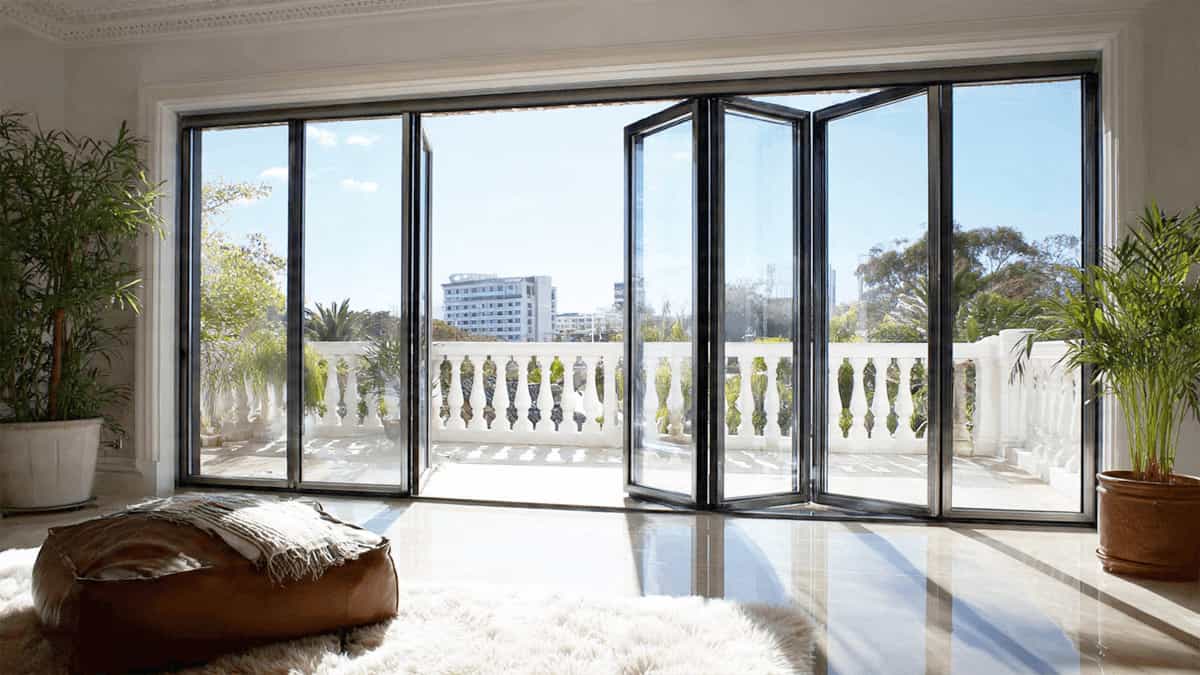
Bi-fold doors (also known as folding doors or folding door systems) have revolutionized indoor-outdoor living, offering expansive views and seamless transitions between spaces. But not all bi fold doors are created equal. This comprehensive guide breaks down everything you need to know—from their top features to climate suitability and maintenance realities.
Top 10 Features of Bi-Fold Doors
1. Material Excellence: Why Aluminium Wins
Aluminium offers the perfect balance of strength, durability, and design flexibility. Unlike wood (which rots) or uPVC (which can warp), aluminum maintains its structural integrity for decades. Modern thermal break technology eliminates conductivity issues, making this type of folding door energy-efficient year-round.
Learn more: Aluminium vs Wood vs Vinyl Doors & Windows
2. Installation Versatility: Multiple Location Options
Bi-fold doors excel in:
- Patio/terrace openings (most common)
- Room dividers between living and dining areas
- Conservatory connections to gardens
- Commercial spaces like restaurants and offices
Where they don’t work: Narrow spaces with limited wall area for stacking panels, or areas requiring high water/air tightness without premium systems.
3. Design Flexibility & Customization
Modern bifold doors systems offer:
- Multiple panel configurations (2-8+ panels)
- Various opening modes (inward/outward folding)
- Color options from classic anodized finishes to modern powder coatings
- Slim sightlines for maximum glass area
Explore: Popular RAL Colours for Aluminium Windows & Doors
4. Space-Saving Opening Mechanism
Unlike sliding doors that require parallel wall space, these folding door systems stack neatly to one or both sides, preserving usable floor and wall space. This is particularly valuable in smaller rooms where every inch counts.
5. Maximum Open Space Creation
When fully opened, bi fold doors can achieve up to 90% opening width (compared to 50% for sliding doors), creating a truly seamless transition between indoors and outdoors.
6. Aesthetic Superiority Over Sliding Systems
Aluminum folding doors offer:
- Cleaner lines without visible tracks in the opening
- More symmetrical appearance
- Ability to create larger uninterrupted openings
- Modern, high-end architectural appeal
7. Luxury & Value Addition
Premium bi-fold doors systems signal quality and design sophistication, potentially increasing property value by 5-10% when properly specified and installed.
8. Functional Advantages
- Better ventilation – Multiple opening configurations allow precise airflow control
- Easier access for moving large items indoors/outdoors
- Flexible use – Can open partially as French doors or fully as an opening wall
9. Enhanced Security Features
Quality bifold doors systems include:
- Multi-point locking systems along entire height
- Reinforced profiles and hinges
- Secure locking when in partially open ventilation position
- Optional smart lock integration
10. Maintenance Advantages vs. Sliding Systems
- No bottom tracks to collect debris (in top-hung folding doors systems)
- Easier seal replacement on folding edges
- Less frequent adjustment needed compared to sliding door rollers
- Simpler hardware replacement
Related: How to Maintain Aluminum Windows
Practical Considerations
Where to Install (and Avoid) Bi-Fold Doors
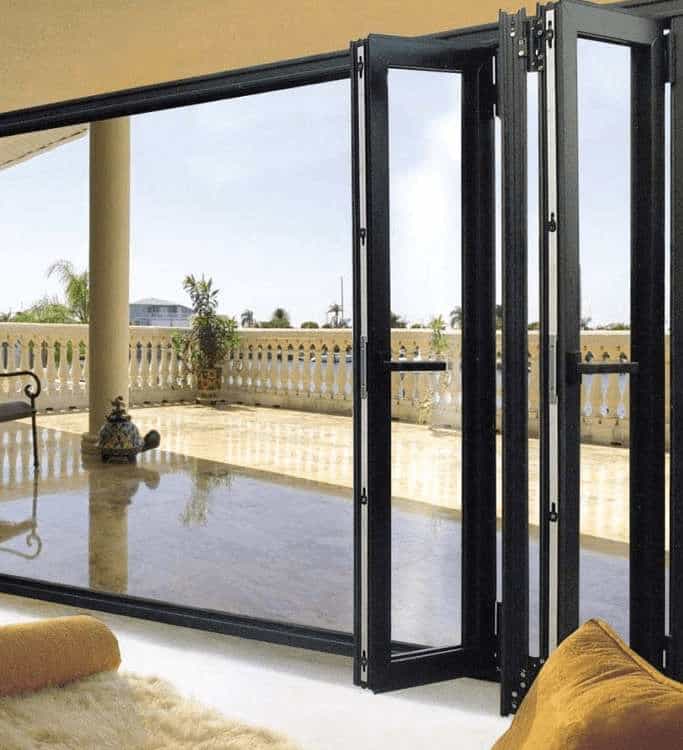
Ideal Locations:
- South-facing walls for indoor-outdoor living
- Spaces with adequate stacking room (minimum 1 panel width)
- Areas with proper structural support for wide openings
- Homes with level thresholds to outdoors
Avoid Installing:
- In high-wind zones without tested systems
- Where direct heavy rainfall hits the doors frequently
- Spaces with extreme temperature differentials without thermal breaks
- Areas with security concerns without appropriate hardware upgrades
Climate Suitability
Best Climates:
- Temperate zones (UK, Pacific Northwest) with moderate conditions
- Mediterranean climates with indoor-outdoor lifestyles
- Areas with mild winters where thermal efficiency is less critical
Challenging Climates (Require Special Aluminum Systems):
- Hot & humid (Florida, Queensland): Need thermal break + corrosion protection
- Extreme cold (Canada, Scandinavia): Require triple glazing + thermal breaks
- Coastal/salty air: Need marine-grade finishes and hardware
Climate-specific guidance: Choosing Aluminum Windows for Different Climates
Maintenance & Replacement Parts Timeline
Yearly Maintenance:
- Clean tracks and drainage channels
- Lubricate hinges and locks with silicone spray
- Check and adjust weather seals
3-5 Year Replacements:
- Weather stripping and gaskets
- Lock mechanisms (with heavy use)
- Bottom rollers on threshold systems
5-10 Year Considerations:
- Full hinge system inspection/replacement
- Glass seal inspection (for insulated units)
- Hardware upgrade for improved security/performance
Important Installation Considerations
Structural Support: Wide openings require lintels or reinforced framing
Threshold Design: Proper drainage and level transitions prevent water ingress
Professional Installation: Complex folding door systems require experienced installers
Building Regulations: Compliance with local codes for safety and energy
Best Aluminum Alloys for Bi-Fold Doors
- 6063-T5/T6: Most common – excellent extrudability, good strength
- 6061-T6: Higher strength for larger spans or wind loads
- Thermally Broken Systems: 6060/6063 with polyamide breaks for efficiency
Material comparison: Aluminium 6061 vs 6063
Recommended Glass Specifications
Industry Standards:
- Double glazing minimum: 24mm overall thickness
- Low-E coatings for thermal efficiency
- Argon/Krypton gas fill for enhanced insulation
- Laminated outer pane for safety and security
- Warm Edge spacers to prevent condensation
Learn about glass: Types of Glass for Aluminium Doors & Windows
Quality Certifications & Performance Standards
International Standards:
- EN 14351-1: European standard for windows and doors
- AAMA/WDMA: North American performance standards
- ASTM E283/E330: Air/water infiltration and structural tests
Country-Specific Requirements:
- UK: Building Regulations Part L (energy), Part Q (security)
- USA: ENERGY STAR® ratings, local building codes
- Australia: Window Energy Rating Scheme (WERS)
- EU: CE marking with performance classification
About standards: Global Standards for Aluminium Systems
How to Ensure You’re Ordering the Correct Folding Door System
7-Point Verification Checklist
- Supplier Credentials: Check for industry certifications and project portfolio
- System Test Certificates: Request air/water/wind load test reports
- Sample Inspection: Examine finish quality, hardware smoothness, seal integrity
- Energy Ratings: Verify U-values and SHGC appropriate for your climate
- Warranty Terms: Minimum 10 years on profiles, 5 years on hardware
- Installation Team: Qualified installers with system-specific training
- Project References: Contact previous clients with similar installations
Red Flags to Avoid
- No performance test certificates available
- Unwillingness to provide detailed specifications
- “One size fits all” claims regardless of climate/application
- Significantly lower pricing than market average
- No local service/support network
Pre-Installation Questions to Ask
- What are the exact U-value and air infiltration rates?
- Can you provide independent test certification?
- What maintenance is required and how often?
- What’s the lead time for replacement parts?
- Who handles adjustments in the first year?
- Is the system suitable for my specific wind/rain exposure?
- What security testing has been completed?
Final Recommendations
For most residential applications: Choose thermally broken 6063-T6 aluminum with double glazed Low-E units, multi-point locking, and top-hung operation for easiest maintenance.
Premium installations: Consider 6061-T6 alloy for larger spans, triple glazing for extreme climates, and smart home integration capabilities for your bifold doors.
Budget-conscious projects: Don’t compromise on thermal breaks or hardware quality—these are false economies that cost more long-term.
Bi-fold doors represent a significant investment in your property’s functionality and value. By understanding these features and considerations, you can make an informed decision that delivers beauty, performance, and durability for decades.
Need design inspiration? Explore: Bi-Fold Folding Door Design Ideas
Considering other options? Compare: Bi-Fold Door vs Sliding Door
Related Articles

Featured
You May Also Like

Aluminium Baking Tray: Pros and Cons, Health Perspective, Cl…

Malaviya Solar Energy gets Solar panel recycling Exclusive L…

The Business of Facades & Glazing: Margins, Capital Need…

Alumil India Expands Southern Presence With New Experience C…
Top 9 Tips for Aluminum Sliding Door Treatment
