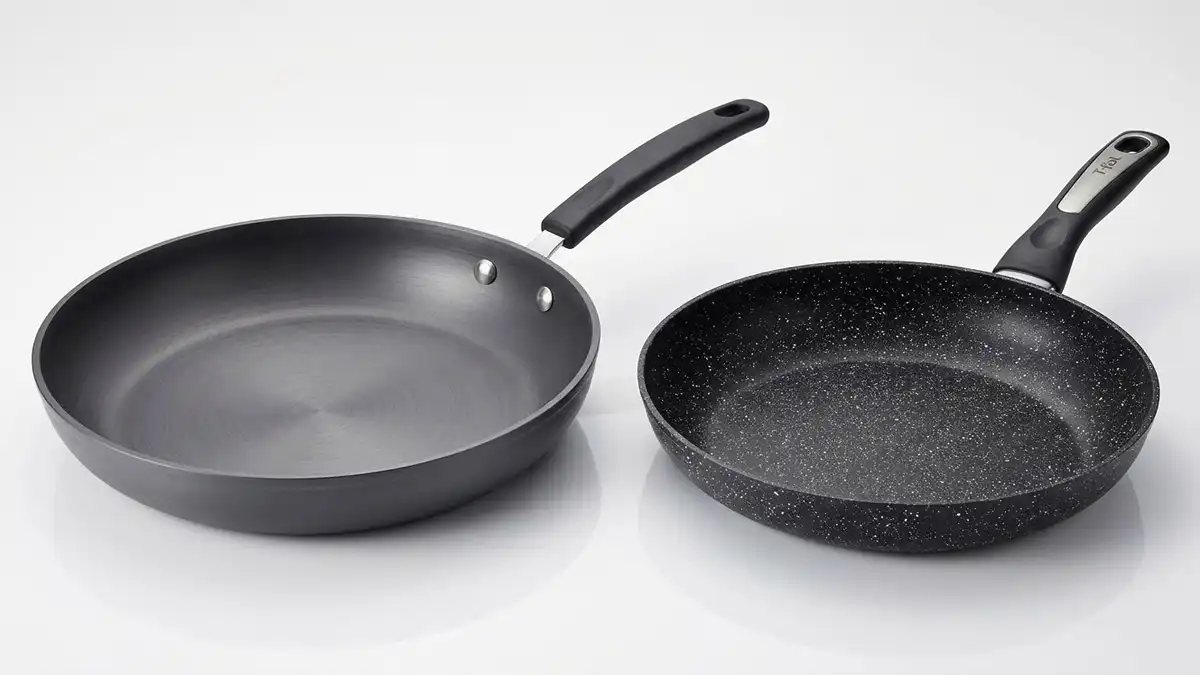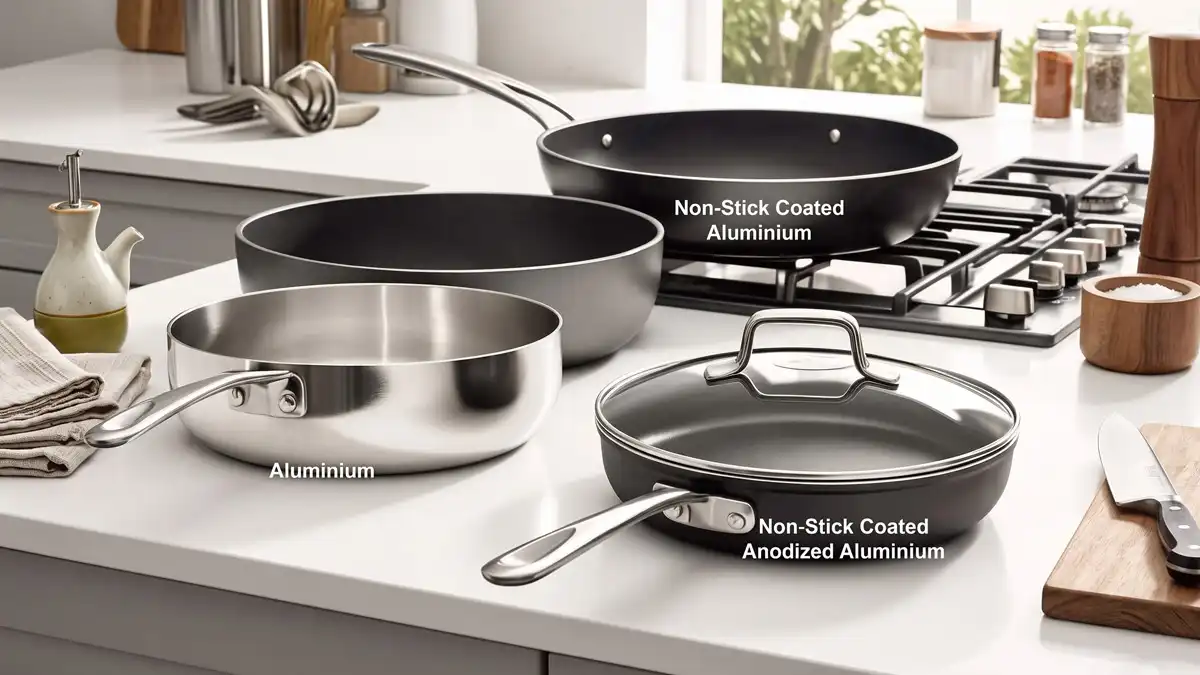
Choosing the right cookware can significantly impact your cooking experience and health. This blog post dives into the differences between non-coated aluminium pans, non-stick coated pans, and anodized non-stick coated aluminium pans, backed by scientific research and industry insights.
Understanding the Three Types of Aluminium Cookware
1. Non-Coated Aluminium Pan

Non-coated aluminium pans are made of pure aluminium without any surface treatment. Known for their excellent heat conductivity, they heat up quickly and evenly. However, bare aluminium reacts with acidic foods (e.g., tomatoes, citrus), potentially leaching metal into food.
BENEFITS
- ✓ Lightweight and affordable.
- ✓ Ideal for high-heat cooking (e.g., frying, searing).
DRAWBACKS
- ✕ Reactive with acidic ingredients.
- ✕ Requires frequent seasoning to prevent sticking.
2. Non-Stick Aluminium Pan

These pans feature a PTFE (Teflon) or ceramic coating applied to aluminium. The coating prevents food from sticking and reduces oil usage. However, overheating can degrade the coating, releasing harmful fumes.
BENEFITS
- ✓ Effortless cleaning and low-fat cooking.
- ✓ Widely available in budget-friendly options.
DRAWBACKS
- ✕ Coating scratches easily, reducing lifespan.
- ✕ Not suitable for high-heat cooking (above 260°C).
You May Also Like
Is Anodized Aluminum Safe? Deep Dive Analysis
3. Anodized Non-Stick Coated Aluminium Pans

Anodized aluminium undergoes an electrochemical process to create a hard, non-reactive oxide layer. This surface is then coated with a non-stick layer, combining durability with non-stick convenience.
BENEFITS
- ✓ Resistant to scratches, corrosion, and acidic foods.
- ✓ Enhanced heat distribution properties.
DRAWBACKS
- ✕ Higher cost compared to standard non-stick pans.
- ✕ Requires gentle cleaning to preserve the coating.
Scientific Insights and Safety
SCIENCE-BACKED FACT CHECKS
- ✓ Reactivity: Bare aluminium reacts with acids, altering food flavor and posing health risks. Anodization eliminates this issue by creating a chemically stable layer.
- ✓ Durability: Anodized pans last up to 10x longer than standard non-stick pans, as per lab tests.
- ✓ Safety: PTFE coatings are safe below 260°C. Overheating releases toxic fumes, while anodized surfaces remain inert even at high temperatures.
FAQs
Is cooking with non-coated aluminium pans safe?
While safe for occasional use, prolonged cooking of acidic foods in non-coated aluminium can lead to metal leaching. Anodized or coated options are safer for daily use.
Can I use metal utensils on anodized non-stick pans?
No. Though anodized surfaces are scratch-resistant, metal utensils can damage the non-stick coating. Opt for silicone or wooden tools.
Do non-stick coatings contain harmful chemicals?
Modern PTFE coatings are PFOA-free, but overheating can still release fumes. Ceramic coatings are a safer alternative for high-heat cooking.
Why choose anodized cookware over regular non-stick?
Anodized pans offer superior durability, non-reactivity, and even heat distribution, making them ideal for heavy-duty cooking.
How do I maintain anodized non-stick pans?
Avoid abrasive cleaners. Handwash with mild soap and a soft sponge to preserve the coating’s integrity.
For everyday cooking, anodized non-stick coated aluminium pans strike the best balance between safety, durability, and performance. Budget-conscious cooks may prefer standard non-stick pans, while professionals might lean toward non-coated aluminium for high-heat tasks. Always prioritize proper usage and maintenance to extend your cookware’s lifespan.
For more insights on aluminium applications, explore our guides on Thermal Break Windows and Aluminium in Modern Design.