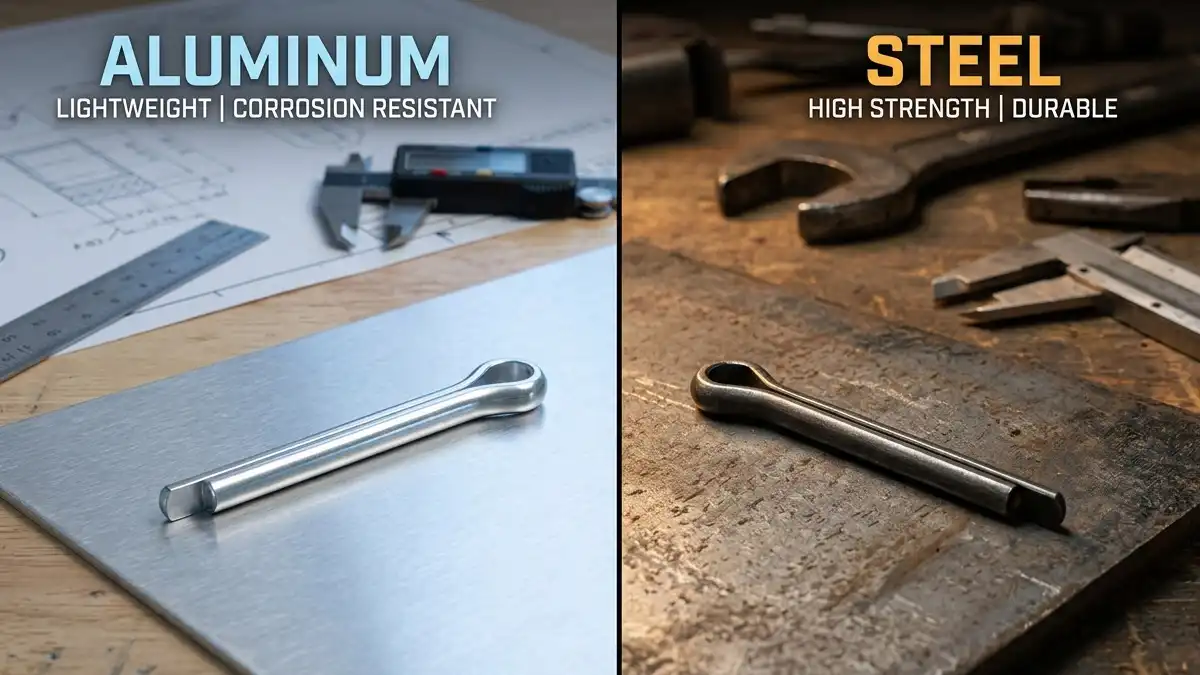
Cotter pins, also known as split pins, are essential fasteners widely used across various industries, from automotive and manufacturing to construction and aerospace. These small yet incredibly important components play a vital role in securing parts and preventing them from loosening. Two of the most common materials used to manufacture cotter pins are steel and aluminum.
While both materials serve similar functions, they have distinct properties that affect their performance, durability, and suitability for specific applications. For a broader overview of how aluminum compares to steel in terms of weight, durability, and sustainability, see this guide on aluminum vs. steel.
This article will provide an in-depth comparison between steel and aluminum cotter pins, including the types of each, the materials used to make them, their anodized vs. non-anodized options, and an overview of their sizes.
What Is a Cotter Pin?
A cotter pin is a fastener that is typically used to secure two or more parts together by fitting into a hole and locking into place. The pin is designed with two split ends that are bent outward after insertion, preventing the pin from slipping out of the hole. Cotter pins can be used in various configurations depending on the application, and they are commonly found in machinery, engines, vehicles, and structural components.
Aluminum Cotter Pin: Characteristics and Applications
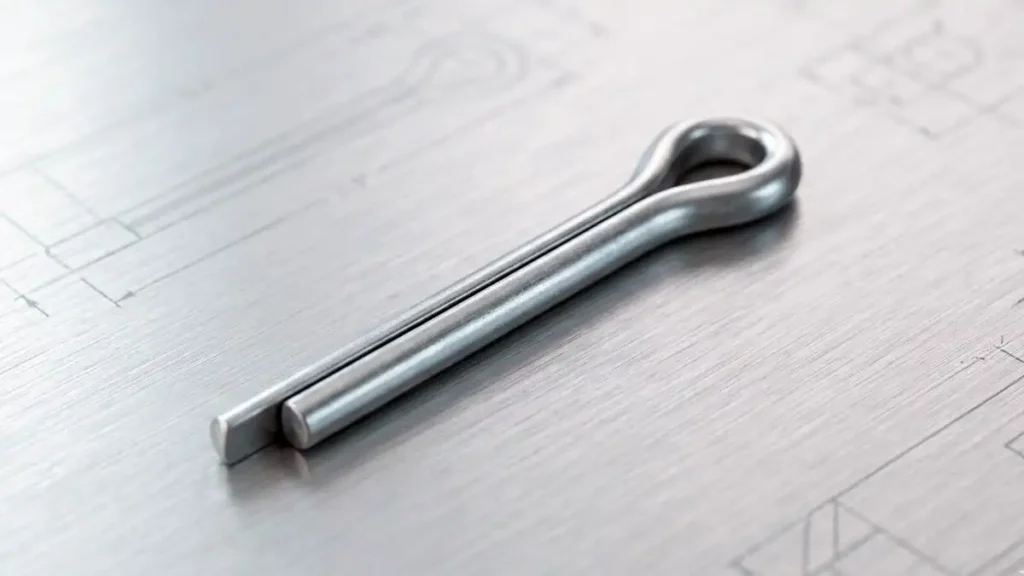
Aluminum cotter pins are lightweight, non-corrosive, and easy to handle, making them suitable for applications where weight reduction is a priority. Here’s a closer look at aluminum cotter pins:
Types of Aluminum Cotter Pins
- Pure Aluminum Cotter Pins: Pure aluminum cotter pins offer excellent corrosion resistance, making them ideal for use in environments where moisture exposure is high. However, they may not be as strong as steel cotter pins.
- Aluminum Alloy Cotter Pins: Aluminum alloys, such as 2024 or 7075, provide superior strength compared to pure aluminum while still maintaining a lightweight and corrosion-resistant profile. These cotter pins are commonly used in aerospace and military applications.
Advantages of Aluminum Cotter Pins
- Lightweight: Aluminum is significantly lighter than steel, making aluminum cotter pins an excellent choice for applications where weight reduction is important, such as in aviation and aerospace.
- Corrosion Resistance: Aluminum naturally forms a protective oxide layer on its surface, making it resistant to rust and corrosion. This makes aluminum cotter pins a great option for outdoor and marine environments.
- Non-Magnetic: Aluminum cotter pins are non-magnetic, which is important in applications where electromagnetic interference could be a concern. Learn more about why aluminum is non‑magnetic.
Aluminum Cotter Pin Uses and Applications
Aluminum cotter pins are widely used in applications where weight, corrosion resistance, and non-magnetic properties are essential. These include the aerospace industry (see why aluminum works for aircraft parts), military applications, marine equipment, and high-performance vehicles.
Steel Cotter Pin: Characteristics and Applications
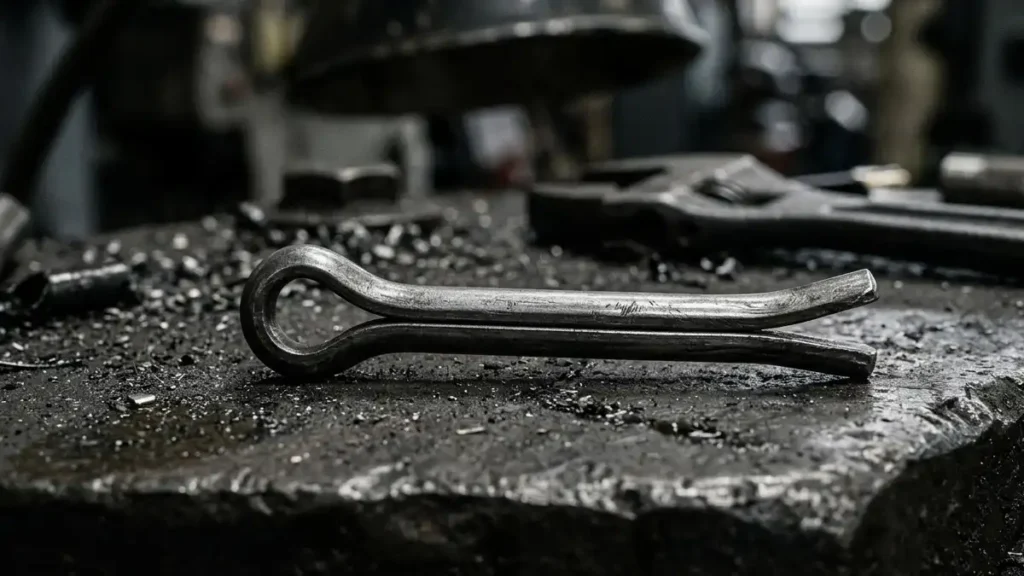
Steel cotter pins are known for their strength, durability, and ability to withstand high-stress environments. Steel, especially carbon steel and stainless steel, is the most commonly used material for cotter pins. Here’s a deeper dive into the types and properties of steel cotter pins:
Types of Steel Cotter Pins
- Carbon Steel Cotter Pins: These are made from high-quality carbon steel, offering great tensile strength, resistance to wear, and overall durability. Carbon steel cotter pins are perfect for general-purpose use and are highly effective in automotive and mechanical applications.
- Stainless Steel Cotter Pins: Stainless steel cotter pins are highly corrosion-resistant and ideal for applications where exposure to moisture, chemicals, or harsh environments is a concern. These are commonly used in marine and industrial applications where rust or corrosion could weaken other materials.
- Galvanized Steel Cotter Pins: These cotter pins are coated with zinc to enhance their resistance to rust and corrosion, making them suitable for use in outdoor or exposed conditions.
Advantages of Steel Cotter Pins
- Strength and Durability: Steel cotter pins provide excellent strength, making them ideal for applications involving high levels of mechanical stress or vibrations.
- Corrosion Resistance: Stainless steel and galvanized steel cotter pins are resistant to corrosion, increasing their longevity in challenging environments.
- Cost-Effective: Carbon steel cotter pins are relatively inexpensive and offer a good balance of strength and cost.
Steel Cotter Pin Uses and Applications
Steel cotter pins are used in a variety of industries, including automotive, construction, agriculture, and machinery. They are ideal for securing components like wheels, gears, and shafts, as well as other mechanical parts that require a reliable fastening solution.
What Are Anodized and Non-Anodized Aluminum Cotter Pins?
When it comes to aluminum cotter pins, you have the option of choosing between anodized and non-anodized varieties. Here’s an overview of each:
Anodized Aluminum Cotter Pins
Anodizing is an electrochemical process that thickens the natural oxide layer on aluminum, enhancing its corrosion resistance and surface hardness. Anodized aluminum cotter pins are more durable and resistant to wear than their non-anodized counterparts. The anodization process can also provide color options, making these cotter pins ideal for aesthetic purposes or for easier identification in specific applications. For a comparison with other finishing methods, see powder coating vs. anodizing. You might also be interested in anodized aluminum bolts, another type of anodized fastener.
Non-Anodized Aluminum Cotter Pins
Non-anodized aluminum cotter pins do not undergo the anodization process, meaning they retain their natural surface properties. These cotter pins are less durable than anodized ones and may be more susceptible to corrosion in harsh environments. However, they are still suitable for many applications where extreme durability and corrosion resistance are not the primary concerns.
Steel Cotter Pin vs. Aluminum Cotter Pin: A Comparison
Material Strength
- Steel: Steel cotter pins are generally much stronger than aluminum cotter pins. Steel is highly resistant to tensile stress and deformation, making it the preferred choice for heavy-duty applications.
- Aluminum: While aluminum is a lightweight material, it is not as strong as steel. However, certain aluminum alloys (such as 7075) offer remarkable strength for their weight. Aluminum cotter pins are ideal for applications where strength is not the most critical factor, such as lightweight machinery or outdoor equipment.
Corrosion Resistance
- Steel: Stainless steel and galvanized steel cotter pins offer excellent corrosion resistance. However, carbon steel cotter pins may rust without proper coating or exposure to moisture.
- Aluminum: Aluminum naturally resists corrosion and oxidation, which makes it a good choice for environments exposed to water or chemicals. Anodized aluminum offers even greater corrosion resistance.
Weight
- Steel: Steel cotter pins are heavier, making them less suitable for applications where weight reduction is important.
- Aluminum: Aluminum cotter pins are lightweight and offer a significant weight reduction in applications where this is important, such as in aerospace.
Cotter Pin Sizes and Types Chart
Here is a basic guide to the common sizes and types of steel and aluminum cotter pins available on the market:
| Material | Pin Diameter | Length Range | Common Uses |
|---|---|---|---|
| Steel (Carbon) | 1/16″ to 1/4″ | 1/2″ to 3″ | General-purpose, automotive, mechanical parts |
| Steel (Stainless) | 1/16″ to 1/4″ | 1/2″ to 3″ | Marine, industrial, corrosion-resistant uses |
| Aluminum (Pure) | 1/16″ to 3/16″ | 1/2″ to 2″ | Lightweight applications, non-corrosive environments |
| Aluminum (Alloy) | 1/16″ to 3/16″ | 1/2″ to 2″ | Aerospace, military, high-performance uses |
Which Cotter Pin Should You Choose?
Choosing between steel and aluminum cotter pins largely depends on your application requirements. Steel cotter pins are the go-to solution for strength and durability, especially when dealing with high-stress environments. On the other hand, aluminum cotter pins offer lightweight benefits and superior corrosion resistance, making them ideal for outdoor, marine, or aerospace applications.
By understanding the key differences between these two types of cotter pins, you can select the best material for your specific needs, ensuring the longevity and reliability of your machinery, equipment, or construction projects.
Related Articles

Featured


You May Also Like

Aluminum Chlorohydrate (Al₂(OH)₅Cl): The Complete Guide

Why Is Tempered Glass (Toughened Glass) Recommended for Alum…

Anodized Aluminum Bolts: Strength, Durability, and Applicati…

Aluminium Industry Beginner’s Guide: Everything Students &am…

Which Glass Storm Door Is Right for You? Low-E, Tempered and…