— Forget emotional recycling bins. Here’s the data-driven battle for packaging supremacy.
The Packaging Thunderdome
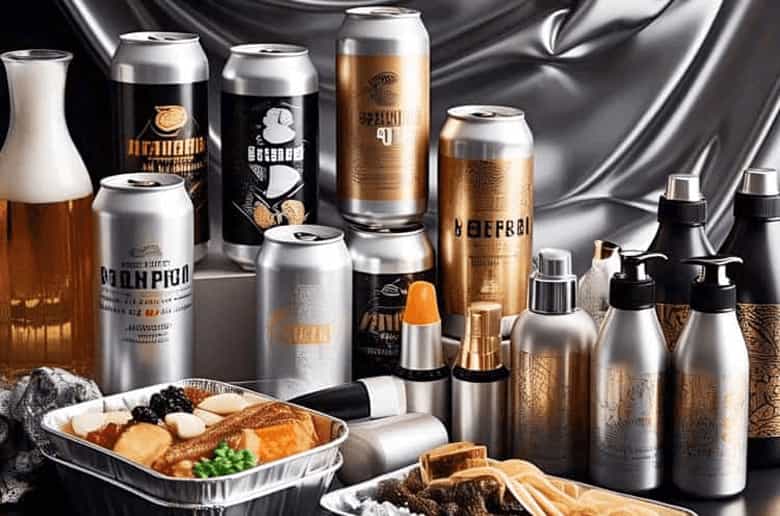
Three contenders enter. One leaves as the 2025-2026 champion. Not by marketing, but by physics, economics, and geopolitics.
As global tariffs shift, supply chains wobble, and carbon taxes tighten, your choice of beverage container is about to become a financial and environmental statement. Let’s strip away the greenwashing. This is the cold, hard showdown between aluminium, plastic, and glass.
Round 1: Energy & CO₂ Footprint — The Carbon Heavyweights
Plastic (PET):
- Production: Energy-light, fossil-fuel-heavy.
- CO₂: ~3-4 kg CO₂ per kg of PET resin.
- The kicker? 95% of plastic’s carbon footprint is in production (extracting and refining oil). Recycling only cuts emissions by ~30%.
Glass:
- Production: Extreme heat, extreme emissions.
- CO₂: ~1.2-1.4 kg CO₂ per kg of glass (but glass is heavy—so per bottle, emissions soar).
- The Reality: Melting sand at 1500°C isn’t green. Transportation weight multiplies the problem.
Aluminium:
- Virgin Production: The energy heavyweight. ~15-17 kg CO₂ per kg.
- But here’s the twist: Recycled aluminium cuts emissions by 95%.
- The Potential: In a circular system, aluminium’s footprint plummets. No other material matches this drop.
Data point: If all global cans were made from 100% recycled content, aluminium would beat plastic on lifetime emissions. We’re not there yet—but the potential is unmatched.
Want to understand the industry’s sustainable push? Read: How the Aluminium Industry is Driving Sustainable Development.
Round 2: Transport & Weight — The Logistics Game
- Plastic: Lightweight winner. 1000 plastic bottles ≈ 20 kg.
- Glass: The heavyweight. 1000 glass bottles ≈ 600-800 kg.
- Aluminium: Middleweight. 1000 cans ≈ 150-200 kg.
Transport emissions per 1000 units:
- Glass: Highest by far (3-4x aluminium, 10-15x plastic).
- Aluminium: 2-3x plastic.
- Plastic: The transport king.
But— transport is only ~10-15% of total lifecycle emissions. Glass’s weight penalty is brutal in distribution. Plastic’s lightness is its superpower.
Round 3: Circularity & Recycling Reality — The Loop Truth
Plastic:
- Global recycling rate: ~9%.
- Downcycling is common (bottle → fiber → landfill).
- Microplastic leakage is permanent pollution.
Glass:
- Theoretically infinitely recyclable, but heavy, breaks easily, and sorting colored glass is messy.
- Recycling rates vary: 70%+ in parts of Europe, <30% in many other regions.
- Often crushed and used as construction filler (downcycled).
Aluminium:
- Actually infinitely recyclable without quality loss (unlike plastic).
- High scrap value drives collection even in informal economies.
- Reality check: Current can-to-can recycling is ~50-70% in best systems, lower globally.
The recycling system isn’t perfect. Learn about the challenges: Understanding Aluminium Waste and Scrap.
Round 4: Price Stability & Tariff Impact — The 2025-2026 Wildcard
Here’s where the fight gets geopolitical:
Plastic:
- Tied to oil prices (volatile).
- Facing plastic taxes globally (EU Single-Use Plastics Directive, extended producer responsibility).
- Tariffs on imported resin? Possible.
Glass:
- Energy-intensive → vulnerable to carbon taxes and energy price spikes.
- Transportation costs skyrocket with fuel hikes.
- Less affected by metal/plastic tariffs, but not immune.
Aluminium:
- The Tariff King. Already facing 10-25% tariffs in US, EU, elsewhere.
- Prices swing with energy costs (smelting is electricity-hungry).
- The Saving Grace: Recycled aluminium bypasses most bauxite tariffs and is less energy-volatile.
- Scrap markets are localizing — a hidden strength.
Track the market movements: Aluminium Scrap Rate Today.
Round 5: The Consumer Experience — Taste, Safety, Brand
Plastic:
- Light, shatterproof, cheap.
- UV degradation, possible chemical leaching (BPA, phthalates).
- “Cheap” brand perception.
Glass:
- Premium feel, inert, no taste transfer.
- Heavy, breakable, safety risk.
- “Pure” and “premium” branding.
Aluminium:
- Shatterproof, light, chills fast.
- Liner concerns (mostly BPA-free now), metallic taste myth debunked.
- “Modern” and “sustainable” branding (Liquid Death, etc.).
The 2025-2026 Tariff War Scenario
Imagine this:
- Oil prices spike → plastic costs soar.
- Carbon taxes expand → glass and virgin aluminium hit hard.
- Recycled aluminium gets tax breaks in green legislation.
- Import tariffs protect local recycling industries.
In this world:
- Virgin aluminium suffers, but recycled aluminium thrives.
- Plastic becomes politically toxic (bans, taxes, consumer backlash).
- Glass becomes a luxury for local premium products only.
See how tariffs are reshaping the industry: Aluminium Tariffs, Price Trends & Impact Strategies (2025).
The Verdict: And the Winner Is…
It depends on your metrics:
- Lowest cost today: Plastic (but rising).
- Lowest carbon in a linear system: Plastic (but high end-of-life cost).
- Best circular potential: Aluminium (by a mile).
- Most tariff-resilient: Locally recycled aluminium.
- Premium branding: Glass (for local) or aluminium (for national).
For 2025-2026, the smart money is on aluminium — but only if:
- Recycling rates improve dramatically.
- Brands invest in recycled content.
- Deposit return systems expand.
Plastic is living on borrowed time. Glass is a niche player. Aluminium has the highest upside — and the most to lose if we fail to close the loop.
Quick Comparison Table
| Metric | Plastic (PET) | Glass | Aluminium |
| Production CO₂ | Medium | High | Very High (virgin) / Very Low (recycled) |
| Transport Weight | ✅ Lightest | ❌ Heaviest | ⚖️ Middle |
| Recycling Rate | ❌ ~9% global | ⚖️ 30-70% | ✅ 50-70% (best case) |
| Circular Potential | ❌ Low (downcycles) | ⚖️ Medium (but heavy) | ✅ High (true circularity) |
| Tariff Vulnerability | High (oil-linked) | Medium (energy-linked) | Very High (but recycled is safer) |
| 2025-2026 Outlook | ⬇️ Declining | ⚖️ Niche | ⬆️ Growing (if recycled) |
What Brands Should Do Now
- Shift to recycled aluminium — future-proof against tariffs and carbon costs.
- Design for recycling — easy-to-remove labels, standard alloys.
- Support deposit schemes — boost collection rates.
- Diversify sourcing — don’t rely on single materials or regions.
- Communicate transparently — “100% recyclable” is meaningless. Share recycled content percentages instead.
Explore opportunities in the circular economy: Profitable Niches in the Aluminium Industry.
The Bottom Line
The 2025-2026 packaging war won’t be won by the “greenest” material. It will be won by the most resilient, circular, and economically viable material in a world of tariffs, taxes, and traceability demands.
Plastic is a ticking regulatory time bomb. Glass is a luxury few can afford to ship. Aluminium is the high-stakes bet — incredible potential, but dependent on a recycling system we must fix now.
Choose wisely. Your packaging isn’t just a container — it’s a geopolitical statement.
Ready to go deeper? Learn everything about the can: Everything About Aluminium Cans You Need to Know.