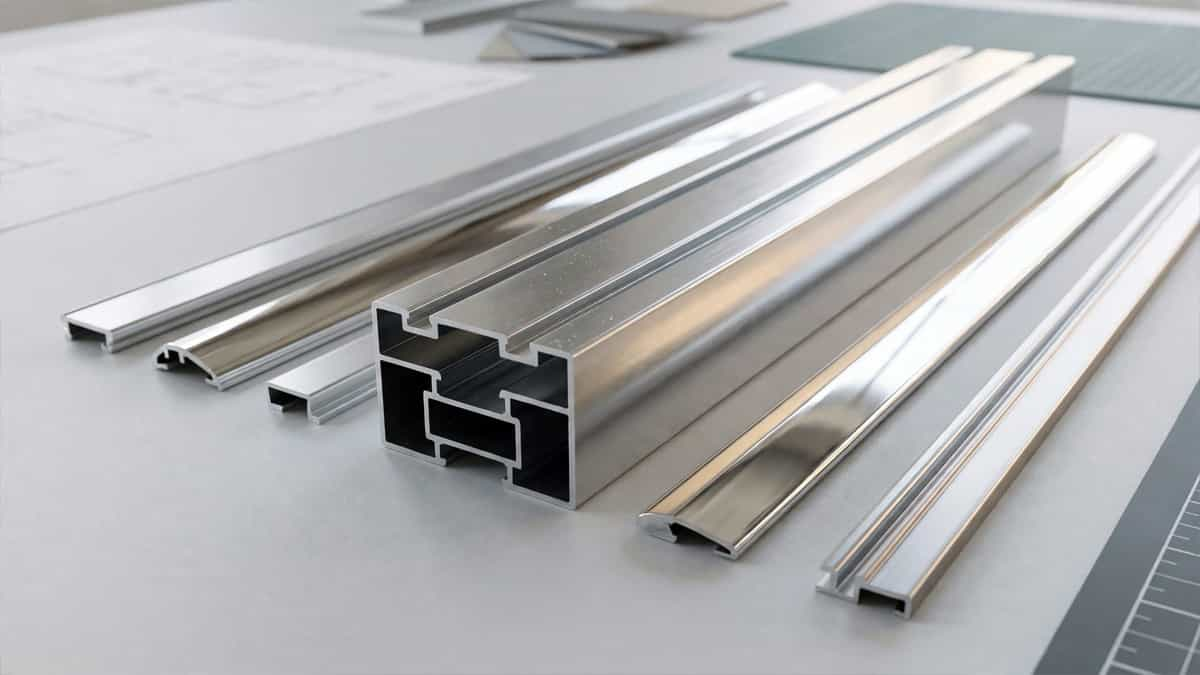
Aluminium 6463 – also known as Aluminum 6463 – is a heat‑treatable aluminium‑magnesium‑silicon alloy belonging to the 6000 series. While it is chemically a close relative of 6063, 6463 is not a general‑purpose structural alloy. It was developed and is specified for one defining purpose: producing a brilliant, mirror‑like anodized finish. Through tightly controlled chemistry – reduced iron and increased copper relative to 6063 – 6463 delivers the specular surface quality required for bright trim, architectural profiles, automotive bumpers, decorative hardware and reflective components. It is the primary bright extrusion alloy of the 6xxx family, and its unique surface aesthetics set it apart from every other alloy in its class.
What is Aluminium 6463?
Aluminium alloy 6463 is a member of the 6000 series (aluminium‑magnesium‑silicon) and is formally a variation of 6063 – alloys that differ only in the second digit are modifications of the same base composition. The critical difference lies in the impurity and trace‑element control: 6463 limits iron to a maximum of 0.15% (compared with up to 0.35% in 6063) and permits copper up to 0.20% (compared with 0.10% in 6063). Iron inhibits brightness, while copper enhances specular reflectance – so 6463 is essentially 6063 refined for optical performance.
Unlike 6063, which is produced in a wide range of product forms, 6463 is generally formed only by extrusion. It is commonly heat treated to tempers T4, T5 and T6, each offering a different balance of strength and formability. The alloy received its standard designation in 1957 and is covered by standards including ASTM B221, EN 573‑3 and EN 755‑2. Alternate designations include AlMg0.7Si(B), A96463 and EN AW‑6463.
Key Characteristics at a Glance
- ✓ Density: 2.69–2.70 g/cm³
- ✓ Melting range: 610–652°C
- ✓ Thermal conductivity: 175–200 W/m·K
- ✓ Modulus of elasticity: 67–70 GPa
- ✓ Typical tensile strength (T6): 230 MPa (some sources cite 195 MPa minimum per EN 755‑2)
- ✓ Typical yield strength (T6): 200 MPa (160 MPa minimum per EN 755‑2)
- ✓ Elongation (T6): 10–11%
- ✓ Hardness (T6): 74 HB
- ✓ Electrical conductivity (T6): 53% IACS
Data compiled from Pandolfo Alluminio, MakeItFrom and AZoM / MatWeb.
Chemical Composition
Aluminium 6463 is a magnesium‑ and silicon‑rich alloy with strictly controlled iron and copper levels that distinguish it from 6063. The magnesium and silicon form magnesium‑silicide (Mg₂Si) precipitates during artificial ageing – the primary strengthening mechanism for the 6xxx series. The low iron prevents dulling inclusions, while the controlled copper enhances the alloy’s response to chemical brightening and produces a transparent, colourless anodic film.
| Element | Percentage (%) |
|---|---|
| Aluminium (Al) | Remainder (approx. 97.9 – 99.4) |
| Silicon (Si) | 0.20 – 0.60 |
| Magnesium (Mg) | 0.45 – 0.90 |
| Iron (Fe) | ≤ 0.15 |
| Copper (Cu) | ≤ 0.20 |
| Manganese (Mn) | ≤ 0.05 |
| Zinc (Zn) | ≤ 0.05 |
| Others (Each) | ≤ 0.05 |
| Others (Total) | ≤ 0.15 |
Sources: EN 573‑3 / MakeItFrom / Pandolfo Alluminio
The tighter chemistry window relative to 6063 is not accidental – it is the metallurgical foundation of the alloy’s bright‑anodizing performance. Bright anodizing alloys require control of chemical composition to enhance response to chemical brightening and to result in anodic coatings that are essentially transparent.
Don't Miss
Aluminium 6351 T6: The High‑Strength Structural Alloy for Marine and Transport Applications
Key Properties of Aluminium 6463
✨ Brilliant Anodized Finish – The Defining Advantage
This is where Aluminium 6463 truly excels and why it exists. The alloy is specifically formulated to achieve a brilliant, reflective anodized surface that is unattainable with standard 6063. The reduced iron content minimises dulling second‑phase particles, while the controlled copper addition improves the specular reflectance of the bright‑dipped surface. After chemical brightening and anodizing, 6463 produces a clear, transparent anodic coating that preserves and enhances the metallic lustre beneath.
The alloy is widely used for bright dip anodizing, a process that demands tight control of extrusion surface quality. Surface defects such as streaks, die lines, pitting and back‑end defects can become visible after bright dip anodizing, so die design, billet quality and mill conditions must be carefully managed. When properly processed, 6463 delivers the mirror‑like finish required for premium architectural and automotive trim.
💪 Medium Strength – Temper‑Dependent
Aluminium 6463 is described as a medium‑strength alloy. It is not intended for high‑load structural applications, but its mechanical properties are more than adequate for trim, framing and decorative components.
Typical Mechanical Properties by Temper (Extruded Bar, EN 755‑2):
| Temper | Tensile Strength Rm (MPa) | Yield Strength Rp0.2 (MPa) | Elongation A% | Hardness (HB) |
|---|---|---|---|---|
| T4 | 125 min | 75 min | 14 | 46 |
| T5 | 150 min | 110 min | 8 | 60 |
| T6 | 195 min (230 typical) | 160 min (200 typical) | 10 | 74 |
Source: Pandolfo Alluminio / EN 755‑2; typical T6 values from MakeItFrom
In the T6 temper, 6463 achieves approximately 230 MPa ultimate tensile strength and 200 MPa yield strength with 11% elongation and 74 HB hardness – a practical balance for extruded profiles that must hold their shape while presenting a flawless surface. The T5 temper offers lower strength (150 MPa min) with better formability, while T4 provides the highest ductility (14% elongation) for bending and forming operations prior to finishing.
🛡️ Good Corrosion Resistance
Aluminium 6463 offers good corrosion resistance, consistent with its 6xxx heritage. The anodic film formed during anodizing provides an additional protective barrier, and the alloy performs well in architectural, decorative and automotive exterior environments. Research on anodized 6463 in chloride solutions has shown that optimised anodizing conditions – such as sulfuric‑boric acid electrolytes at 2 A/dm² – produce even coatings with low corrosion current density, further enhancing durability in marine and construction exposures.
🔧 Excellent Extrudability and Workability
One of 6463’s practical strengths is its excellent extrudability. The alloy is suitable for complex profiles, enabling designers to create intricate architectural shapes, heat‑sink‑style sections and thin‑wall decorative extrusions that would be difficult or impossible in higher‑strength alloys. Weldability is very good across all tempers, and polishability is rated very good. Machinability is good, and cold formability is medium – adequate for moderate bending and forming but not intended for severe cold deformation. The alloy is not recommended for forging or rolling; extrusion is its primary and essentially exclusive forming route.
🔥 Heat Treatment
As a heat‑treatable alloy, 6463 can be strengthened through solution treatment and artificial ageing. The common tempers are:
| Temper | Description |
|---|---|
| T4 | Solution heat treated and naturally aged – highest ductility, lowest strength |
| T5 | Cooled from hot extrusion and artificially aged – good balance for extruded profiles |
| T6 | Solution heat treated and artificially aged – highest strength and hardness |
Source: Pandolfo Alluminio / EN 515
The T6 temper is achieved through solution heat treatment followed by artificial ageing until standard mechanical property requirements are met. For extruded profiles, in‑die quenching can achieve T6‑level properties in the T6 D condition for sections up to 50 mm.
Applications of Aluminium 6463
Aluminium 6463 is a specialist aesthetic alloy whose brilliant anodized finish, excellent extrudability and medium strength make it the material of choice for applications where appearance is as important as performance.
🏛️ Architectural and Decorative Profiles – The Core Application
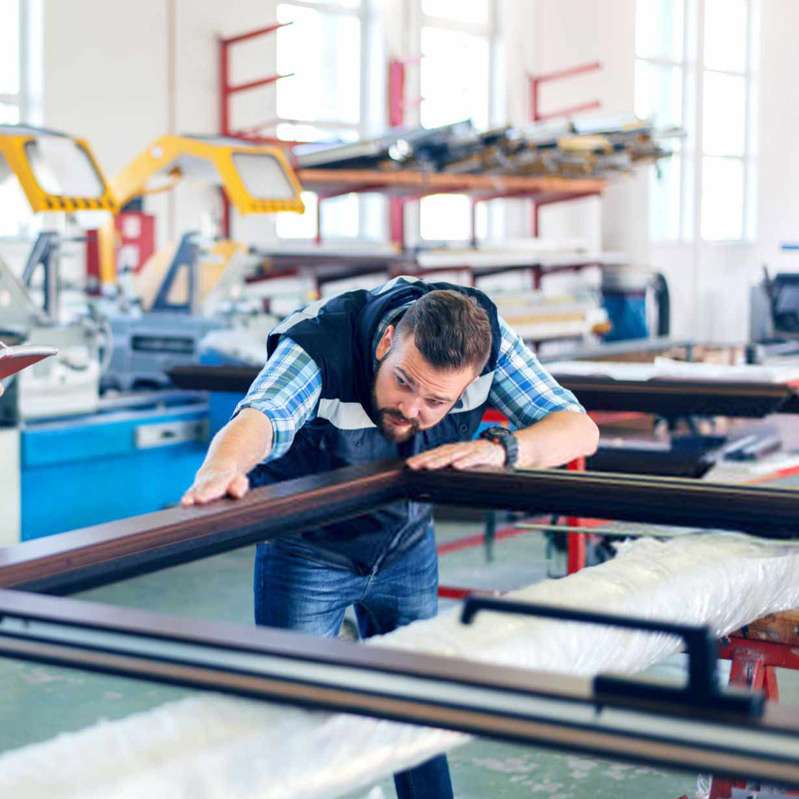
6463 is primarily used in extruded architectural and trim sections. Typical applications include:
- Window and door frames – bright anodized profiles for premium residential and commercial buildings
- Curtain wall and façade trim – reflective decorative elements
- Furniture and industrial design – exposed framing, edge trim and decorative components
- Interior design features – bright anodized profiles for retail, hospitality and residential interiors
The alloy’s ability to hold a mirror‑like finish after anodizing makes it the preferred choice for bright trim where 6063 would appear dull or hazy.
🚗 Automotive Trim and Brightwork
6463 is used for automotive bright trim, including bumper applications and decorative exterior mouldings. The alloy is classified as a medium‑strength bright anodizing extrusion alloy specifically suited to bumper and trim applications where a reflective, corrosion‑resistant surface is required. Its good corrosion resistance and ability to accept a clear anodic coating make it suitable for exterior automotive use, though anti‑glare requirements may call for lower‑gloss finishes in some trim applications.
🪞 Reflective and Lighting Components
The alloy’s specular surface quality makes it suitable for reflector applications and other components where controlled light reflection is required. Bright anodized 6463 profiles can serve as decorative reflectors, light‑fixture trim and optical framing in architectural and consumer lighting products.
🔩 General Extruded Profiles
Beyond aesthetics, 6463 is used for general extruded profiles where a combination of good corrosion resistance, very good weldability and excellent surface finish is required. Its very good polishability and good machinability make it practical for secondary operations on decorative parts.
Fabrication & Workability – Quick Guide
| Aspect | Recommendation |
|---|---|
| Extrusion | Excellent – suitable for complex profiles and thin‑wall sections; the primary forming route |
| Welding | Very good across T4, T5 and T6 tempers |
| Machining | Good – suitable for secondary operations on extruded profiles |
| Polishing | Very good – a key enabler of the bright anodized finish |
| Cold forming | Medium – adequate for moderate bending but not severe deformation |
| Heat treatment | T4, T5 and T6 tempers available; T6 via solution treatment and artificial ageing |
| Anodizing | The defining process – bright dip anodizing produces a clear, reflective finish |
| Forging / rolling | Not typical – the alloy is generally extrusion‑only |
WHY CHOOSE ALUMINIUM 6463?
- ✓ Brilliant anodized finish – the primary bright extrusion alloy of the 6xxx series
- ✓ Superior surface aesthetics – reduced iron and controlled copper deliver specular reflectance unattainable with 6063
- ✓ Excellent extrudability – suitable for complex and thin-wall profiles
- ✓ Very good weldability – across T4, T5 and T6 tempers
- ✓ Very good polishability – supports premium decorative finishing
- ✓ Good corrosion resistance – suitable for architectural and automotive exterior use
- ✓ Good machinability – practical for secondary operations
- ✓ Medium strength – adequate for trim, framing and decorative components (230 MPa UTS in T6)
- ✓ Transparent anodic film – preserves and enhances metallic lustre
CONS
- ✕ Not a structural alloy – medium strength only; not a substitute for 6061, 6082 or 7xxx alloys in load-bearing applications
- ✕ Extrusion-only – generally not formed by forging or rolling
- ✕ Tight chemistry control required – the bright-anodizing performance depends on strict iron and copper limits
- ✕ Surface defects visible after bright dip – die lines, streaks and pitting become apparent after anodizing, demanding careful process control
- ✕ Higher cost than 6063 – the refined chemistry and specialised processing command a premium
- ✕ Limited cold formability – medium rating restricts severe bending or forming operations
Aluminium 6463 (Aluminum 6463) is the bright‑anodizing specialist of the 6xxx series – an alloy that takes the familiar Mg‑Si foundation of 6063 and refines it for optical performance. By reducing iron and controlling copper, 6463 achieves a brilliant, mirror‑like anodized finish that standard 6063 cannot match, while retaining excellent extrudability, very good weldability and good corrosion resistance. It is a medium‑strength alloy (approximately 230 MPa UTS in T6), and it is not intended for structural loads – its purpose is to look exceptional while performing reliably in decorative and trim applications.
From bright anodized window frames and curtain wall trim to automotive bumpers, furniture framing and reflective lighting components, Aluminium 6463 provides the surface quality, extrudability and finishing response that premium aesthetic applications demand. It is not a general‑purpose alloy; it is a finishing alloy – the choice for designers and engineers who need aluminium that performs beautifully as well as functionally.
If your application requires a brilliant anodized finish on an extruded aluminium profile with good corrosion resistance and medium strength, Aluminium 6463 is the proven, trusted solution.