For decades, cast iron was the undisputed champion of engine block manufacturing. But today, a quiet revolution is under the hood. From high-performance sports cars to everyday sedans and even electric vehicles, automakers are increasingly turning to aluminium engine blocks. This shift isn’t just a trend—it’s a fundamental re-engineering driven by the relentless pursuit of efficiency, performance, and sustainability. This article explores the technical and economic reasons behind this pivotal change in automotive design.
Article Index
What Is an Aluminum Engine Block?
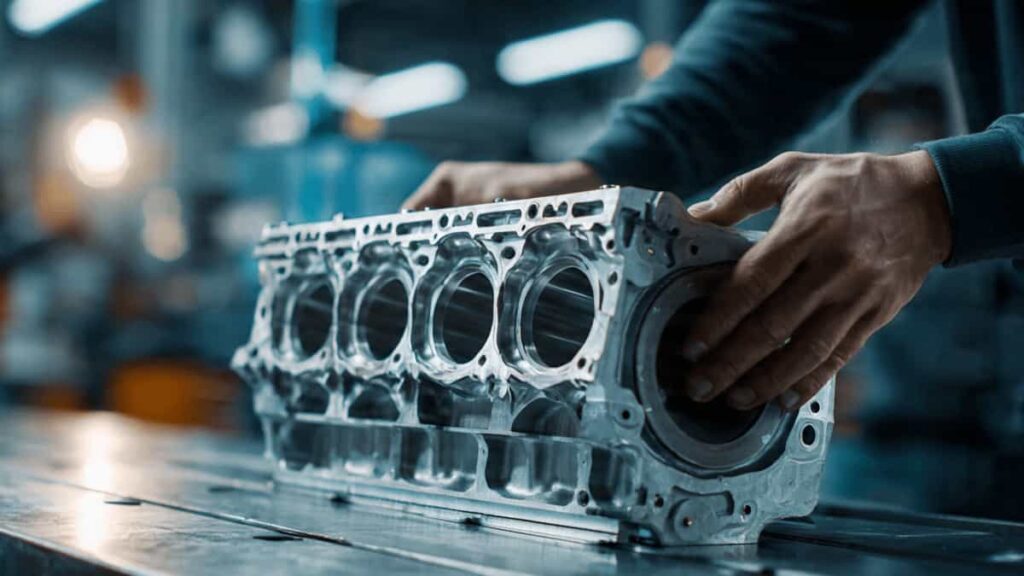
An aluminum engine block is the main structure of an engine, typically housing the cylinders, coolant passages, and crankcase, but fabricated from aluminium alloys instead of traditional cast iron. It serves as the foundational framework for all other engine components. Modern blocks are often cast using sophisticated processes like sand casting or die-casting and are frequently reinforced with cast-in iron or steel cylinder liners (sleeves) to handle the intense friction and heat of the piston rings.
Why Automakers Are Moving Away from Cast Iron
The move from iron to aluminum is a response to stringent global emissions regulations and consumer demand for better fuel economy and performance. Cast iron is incredibly strong and durable, but it’s also extremely dense and heavy. This weight penalty affects every aspect of a vehicle’s dynamics. Aluminium offers a path to lightweighting—a core principle in modern automotive design that directly translates to reduced energy consumption, whether from fuel or electricity. Furthermore, aluminum’s superior castability allows for more complex and optimized cooling passage designs, leading to more efficient engines.
Weight Reduction and Fuel Efficiency Impact
This is the most significant driver for the switch. Aluminium has a density approximately one-third that of cast iron. Reducing the mass of the engine block—often the single heaviest component in a vehicle—has a cascading effect. A lighter engine means the entire vehicle can be built with lighter supporting structures (chassis, suspension), creating a virtuous cycle of weight savings. For internal combustion engine (ICE) vehicles, every 10% reduction in weight can improve fuel economy by 6-8%. This principle of lightweight durability is a cornerstone of modern manufacturing. For a deeper look at material comparisons, see our analysis on the advantages of aluminum over steel for lightweight durability and sustainability.
Heat Dissipation and Engine Performance
Aluminum’s thermal conductivity is about three times greater than that of cast iron. This means an aluminium block can pull heat away from the combustion chambers and cylinder walls much more effectively. Better heat dissipation allows engineers to run higher compression ratios safely, which can increase power and thermal efficiency. It also leads to more stable operating temperatures, reducing the risk of overheating and allowing for tighter tolerances. Efficient thermal management is a critical aspect of modern engineering, much like it is in aluminum’s crucial role in transforming vehicles into next-gen intelligent mobility.
Strength, Durability, and Modern Alloy Design
The early adoption of aluminum was hindered by concerns over strength and wear resistance. Modern metallurgy has completely overcome these challenges. Today’s engine blocks use high-silicon aluminium alloys (like A390) or are reinforced with metal matrix composites. Techniques such as high-pressure die-casting and the use of nickel-plated iron cylinder liners ensure the block can withstand the immense pressures. The specific alloy composition is key; understanding different grades is as important here as it is in knowing the properties of aluminium 6061 T6 alloy for machining and applications.
Real-World Examples of Aluminium Engine Blocks
Many popular modern vehicles already rely on aluminum engine blocks, proving the technology is mature and reliable.
- Ford’s EcoBoost Engines: Widely used in the F-150 and Mustang, these engines use aluminium blocks to balance heavy-duty capability with fuel efficiency.
- BMW’s B-Series Engines (B48, B58): Known for reliability and tuning potential, these modular engines are fully aluminum, selected for their performance characteristics and weight reduction.
- Global Adoption: Giants like Toyota, Honda, and Mercedes-Benz have widely adopted aluminium blocks across their fleets.
This widespread use proves aluminum blocks are no longer experimental—they are the undisputed industry standard.
Aluminum Engine Blocks in Electric Vehicles
The shift to aluminium is even more pronounced in the electric vehicle (EV) sector. While EVs don’t have traditional engine blocks, they use large, complex aluminum castings for structural components like the battery enclosure and drive unit housing. These “mega-castings” reduce part count, improve structural rigidity, and are essential for maximizing range by minimizing weight. This trend highlights how the aluminium industry is driving sustainable development across all transportation sectors read more here, providing the material solutions needed for electrification.
Common Misconceptions About Aluminium Engines
- “They’re not as durable as iron blocks.” False. With modern alloys, liners, and manufacturing, a well-maintained aluminum engine is just as durable for the lifespan of a modern vehicle.
- “They overheat more easily.” False. Their superior heat dissipation actually makes them more resistant to overheating compared to iron blocks.
- “They can’t handle high performance.” False. Most modern high-performance and racing engines, including those in Formula 1, use aluminium blocks due to the ideal strength-to-weight ratio.
The Future of Engine Materials
The future points towards increased use of advanced aluminum alloys and hybrid material strategies. We are seeing experimentation with aluminium matrix composites reinforced with ceramic fibers for even greater strength. Furthermore, the evolution of large-scale, integrated aluminum castings for both ICE and EV platforms will continue to reduce vehicle mass and complexity. This innovation is a key part of the broader impact of the aluminium industry on global economies, fostering new manufacturing paradigms.
FAQ
Are aluminum engine blocks durable enough?
Yes. Modern aluminium alloys and reinforcement designs (like cast-in iron liners) allow engine blocks to withstand high pressures and temperatures reliably for the entire service life of a vehicle.
Why are aluminium engines lighter than iron ones?
Aluminum has a much lower density (about 2.7 g/cm³) than cast iron (about 7.8 g/cm³), reducing overall engine weight by up to 50% for the block alone without sacrificing performance.
Do aluminum engine blocks overheat easily?
No. Aluminium actually dissipates heat more efficiently due to its higher thermal conductivity, helping engines run cooler and more consistently.
Are aluminium blocks more expensive?
Initially, the raw material and casting processes can be more costly than for cast iron. However, the savings from improved fuel efficiency and vehicle lightweighting often offset the initial cost over the vehicle’s lifecycle.