The future of construction is not just about building with materials; it’s about building with energy. Moving beyond traditional bolt-on solar panels, a revolutionary approach is transforming our skylines: Building-Integrated Photovoltaics (BIPV). These are not merely energy systems added to a structure; they are the structure itself—seamlessly generating clean power while serving as essential building components like roofs, facades, and windows.
At the heart of this architectural evolution is a material uniquely suited to the task: aluminium. Its combination of strength, versatility, and sustainability makes it the indispensable framework for the BIPV revolution, turning entire buildings into silent, efficient power plants.
The Perfect Synergy: Why Aluminium and BIPV are Inseparable
BIPV demands more from a material than conventional construction. It requires a component that can bridge the worlds of architecture, engineering, and energy production. Aluminium does this effortlessly.

Structural Integrity and Lightweight Nature: BIPV modules must withstand decades of environmental stress—wind, snow, and thermal cycling. Aluminium’s exceptional strength-to-weight ratio provides a robust, durable framework for fragile photovoltaic cells without imposing a significant structural load on the building. This is a key reason for the advantages of aluminum over steel in modern, lightweight construction.
Design Flexibility and Precision Engineering: The aesthetic of a building is paramount. Aluminium can be extruded into virtually any profile, allowing for custom-designed channels, clips, and frames that integrate solar cells into sleek, modern facades, curved curtain walls, or elegant brise-soleil. This versatility is what allows architects to design with energy generation in mind, without compromising on form.
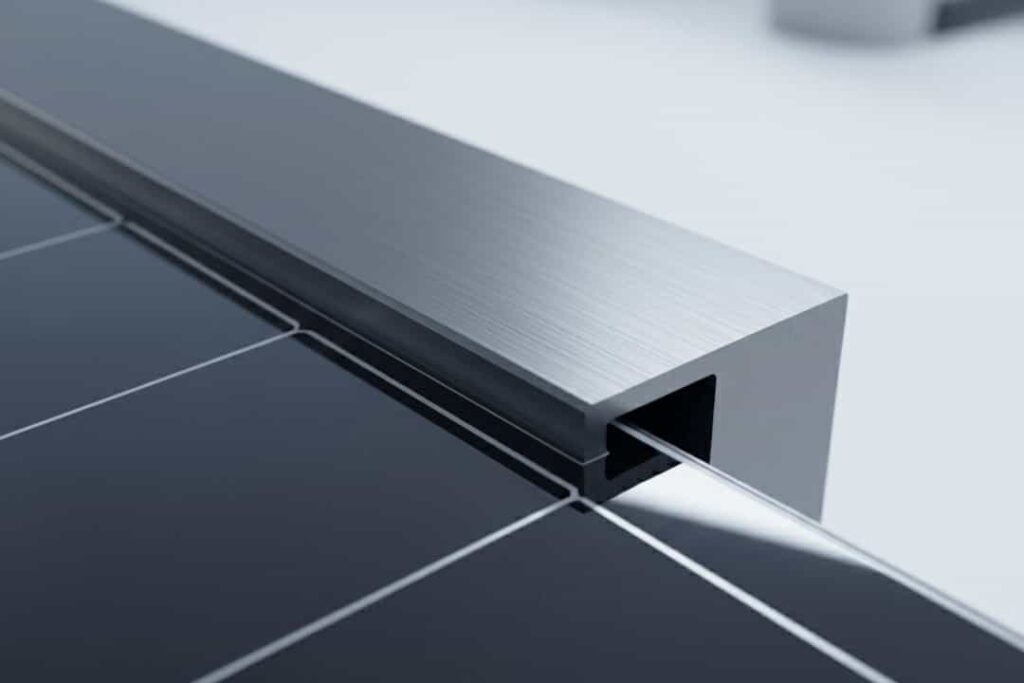
Superior Durability and Corrosion Resistance: A BIPV system is designed to last as long as the building itself, often 50 years or more. Aluminium naturally forms a protective oxide layer, making it highly resistant to corrosion from rain, humidity, and pollution. This ensures the structural integrity and aesthetic appearance of the BIPV facade for its entire lifespan, a critical factor detailed in resources on the advantages of aluminium sheets and profiles.
Thermal Management: Photovoltaic cells lose efficiency as they heat up. Aluminium, an excellent conductor of heat, acts as a heat sink, passively drawing heat away from the solar cells and maintaining their optimal operating temperature, thereby maximizing energy output.
Aluminium in Action: Key BIPV Applications

The synergy between aluminium and BIPV is best understood by looking at its real-world applications in the building envelope.
Solar Facades and Curtain Walls: Replacing conventional cladding materials, aluminium-framed BIPV panels become the weather-proof outer skin of a building. They generate electricity while providing insulation and weather protection, a powerful example of how aluminum powers modern infrastructure.
Solar Roofing and Canopies: Aluminium profiles can form the support structure for solar tiles and slates, creating a uniform, aesthetically pleasing roof that is also a power generator. Similarly, aluminium-framed solar canopies over parking lots or walkways provide shade and energy simultaneously.
Solar Shading Systems (Brise-Soleil): One of the most elegant applications, aluminium BIPV louvres are mounted on a building’s exterior. They actively generate electricity while performing their primary function: controlling solar gain, reducing cooling costs, and mitigating glare. This directly contributes to overall energy efficiency.
Semi-Transparent Solar Glazing: Here, aluminium frames hold specialized PV glass that allows diffused light to pass through while generating power, ideal for skylights and atrium roofs.
The Sustainable Loop
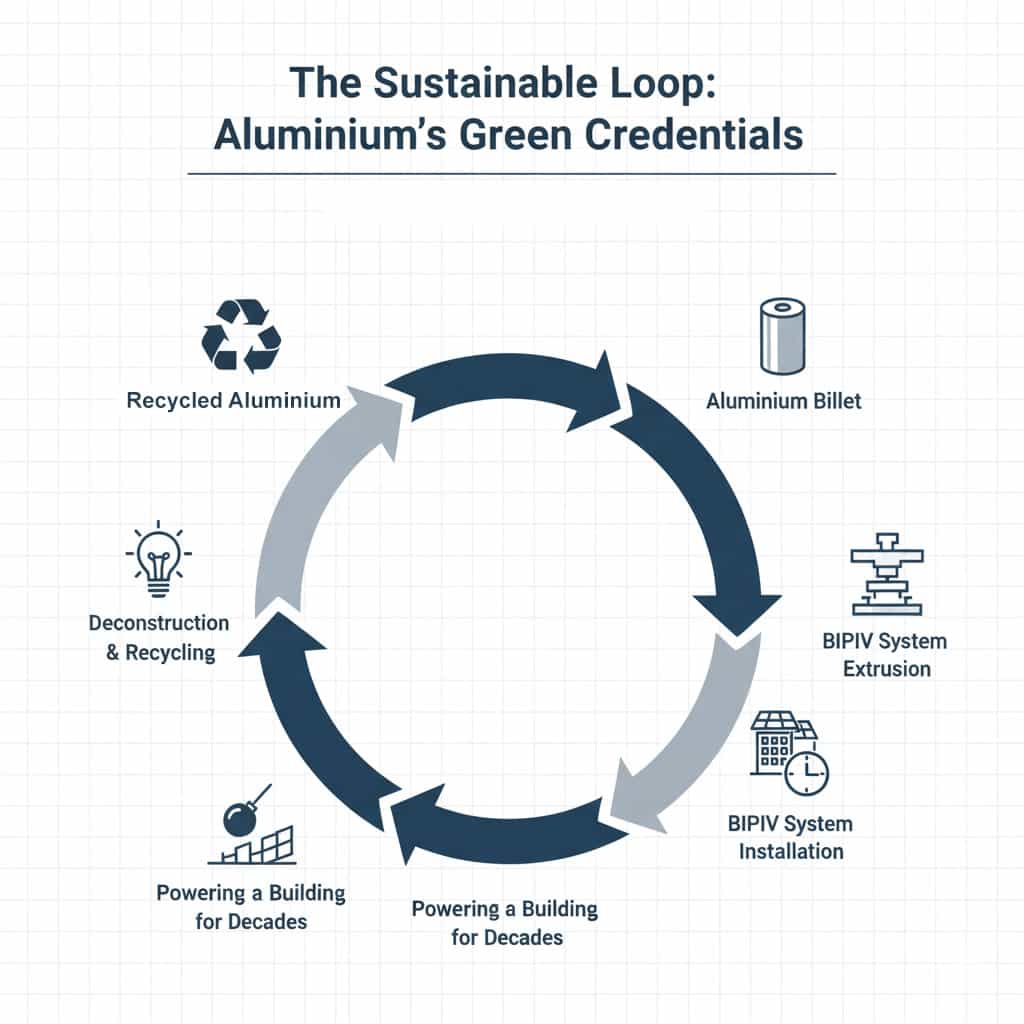
BIPV is the pinnacle of sustainable design, and aluminium amplifies this benefit. The material is infinitely recyclable without loss of quality. The energy required to recycle it is a mere fraction of that needed for primary production.
This means the aluminium framework of a BIPV system not only generates clean energy for decades but also, at the end of its long life, can be completely recycled into new high-quality products. This creates a powerful circular economy, perfectly aligning with the green principles of BIPV and the industry’s drive towards a sustainable future.
The Future is Integrated and Aluminium-Backed
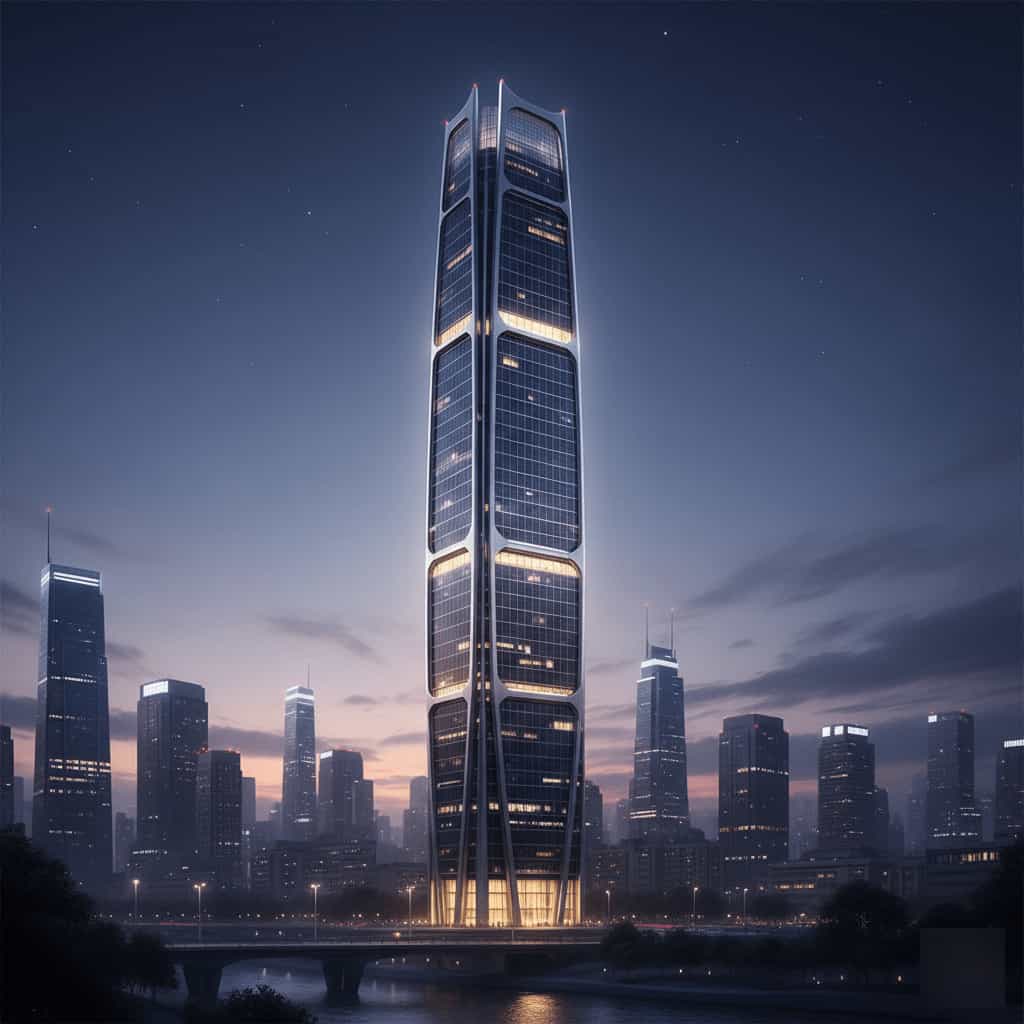
As BIPV technology advances—with more efficient cells, a wider range of colours, and improved flexibility—the role of aluminium will only grow. Its ability to be fabricated into ever-more complex and beautiful systems positions it as the permanent backbone of this transformative technology.
The buildings of the future will no longer be passive consumers of energy but active generators. And they will be clad, framed, and supported by aluminium—the material that makes this elegant, energy-producing architecture not just possible, but practical and profitable.
Aluminium Magazine is a premier publication for professionals and enthusiasts in the aluminium industry, covering the latest in technology, applications, and market trends.