In the pursuit of building smarter, more sustainable homes and commercial spaces, every detail counts. While features like double glazing and thermal breaks often steal the spotlight, the air permeability class of your doors and windows is a silent yet critical factor determining your building’s energy efficiency, comfort, and long-term cost savings. This article demystifies this essential rating, explaining why it should be a top priority in your next construction or renovation project.
What Exactly is Air Permeability?
Air permeability measures how much air can leak through a closed door or window assembly. It’s not about the air you intentionally let in by opening a window; it’s about the unseen drafts that seep through microscopic gaps in the frame, seals, and installation points. Think of it as the “wind tightness” of your building envelope. A standardized rating system, typically ranging from Class 1 (highest resistance) to Class 4 (lowest resistance), is used to classify this performance.

Air Permeability Class Ratings
| Class | Air Infiltration Rate (m³/h·m²) | Performance | Application |
| Class 4 | ≤ 3 | Excellent | Recommended for all climates, especially those with high winds, heavy rain, or extreme temperatures. Provides the highest level of energy efficiency and comfort. |
| Class 3 | > 3 to 9 | Very Good | Suitable for most applications in moderate climates. Offers strong performance and is a reliable choice for energy efficiency. |
| Class 2 | > 9 to 27 | Average | Acceptable for some applications in very mild, sheltered areas. Provides a baseline level of performance. |
| Class 1 | > 27 | Poor | Not recommended for modern, energy-efficient buildings. High levels of air leakage will negatively impact energy costs and indoor comfort. |
The Direct Link to Energy Efficiency and Your Wallet
The impact of air permeability on energy efficiency is profound. Doors and windows with a poor rating (e.g., Class 3 or 4) act like a sieve for your conditioned air. In winter, valuable heated air escapes, forcing your furnace to work overtime. In summer, cool, air-conditioned air leaks out, allowing hot air to infiltrate.
This constant battle against air leakage leads directly to:
- Skyrocketing energy bills: Your HVAC system consumes significantly more energy to maintain a comfortable temperature.
- Reduced system lifespan: The increased strain on your heating and cooling equipment can lead to more frequent repairs and earlier replacement.
By selecting products with a low air permeability class (Class 1 or 2), you create a tight building envelope. This is a cornerstone of passive house design and is crucial for maximizing the benefits of other energy-efficient features, like the ones discussed in our guide to thermal break windows vs. double glazing.
Beyond Energy: Enhanced Comfort and Indoor Air Quality
The benefits extend far beyond saving money. A tight building envelope dramatically improves occupant comfort by eliminating cold drafts and hot spots near windows and doors. It also acts as a barrier against external pollutants, pollen, and dust, contributing to a healthier indoor environment.
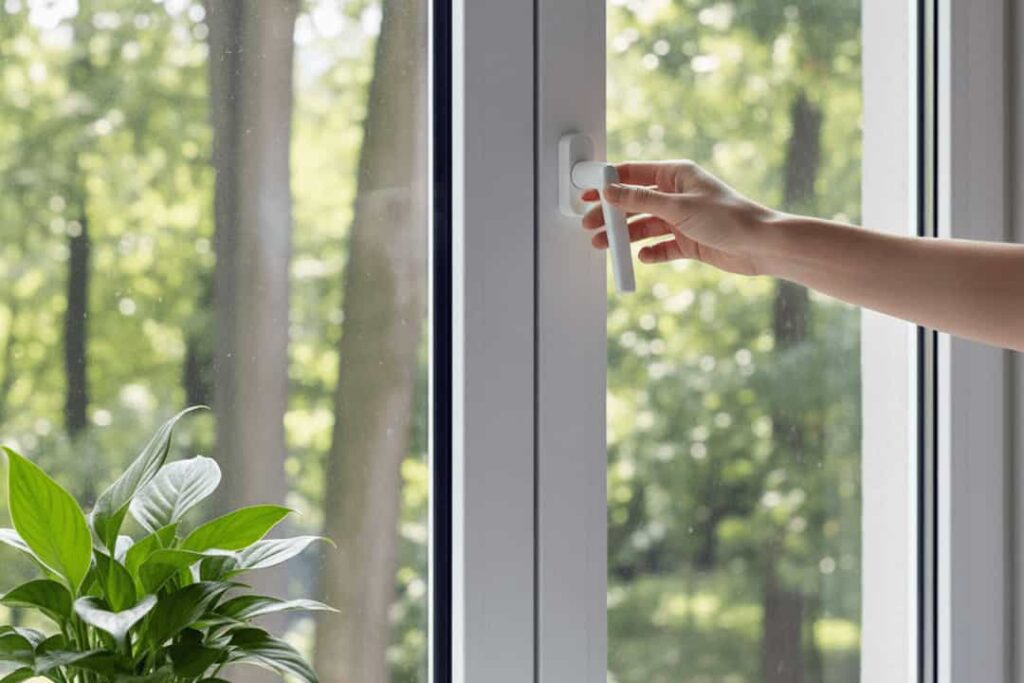
However, it’s important to strike a balance. While minimizing uncontrolled leakage is vital, proper ventilation is equally important to prevent moisture buildup and maintain air quality. This is where purpose-built ventilation systems or strategically opened windows become essential.
How to Choose the Right Products for Your Climate
Selecting doors and windows with an appropriate air permeability class is a strategic decision. Your choice should be guided by your local climate:
- Harsh Climates: For regions with extreme cold, heat, or strong winds, a Class 1 rating is ideal. It ensures maximum protection against the elements and is a key feature of energy-saving thermal break aluminium windows.
- Moderate Climates: While still important, a Class 2 rating may be sufficient in milder areas, but aiming for the best performance is always a wise investment.
Understanding your climate’s demands is the first step. Our guide on how to choose the right windows for hot climates offers further insights into making informed decisions.
The Role of Installation
Even the highest-rated window will underperform if installed incorrectly. Proper installation is non-negotiable to ensure the designed air-tightness is achieved. This makes choosing an experienced installer as important as choosing the product itself.
The air permeability class is not just a technical specification on a datasheet; it is a fundamental indicator of a door or window’s ability to contribute to an energy-efficient, comfortable, and healthy building. By prioritizing a low air permeability rating—and ensuring professional installation—you make a conscious decision to reduce your carbon footprint, lower your energy costs, and enhance your daily living experience. In the world of modern construction, it’s a detail that delivers outsized rewards.
For a deeper dive into the technical terms that define window performance, explore our article on thermal break and other energy-efficient terms.