

As global temperatures continue to soar, the need for energy-efficient solutions in buildings has become more urgent than ever. Homeowners and businesses are increasingly facing high energy costs, especially in hot climates like North India, Texas, California, Queensland, and South Africa. The demand for sustainable building materials is skyrocketing, with aluminium doors and windows emerging as the ideal choice for energy-conscious consumers.
.
The Impact of Rising Global Temperatures on Energy Consumption
The increasing global temperature has led to a surge in energy consumption, particularly for cooling systems. In major cities such as London, Birmingham, and Brisbane, air conditioners have become a necessity, driving up electricity costs and carbon emissions. This growing demand underscores the importance of adopting energy-efficient building materials to counteract rising temperatures and environmental impact.
.
Government Policies Promoting Energy Efficiency
Governments worldwide are implementing policies to encourage the use of energy-efficient materials in construction. For example:
- Canada: Provinces like Ontario and British Columbia are prioritizing energy-saving initiatives.
- New Zealand & South Africa: These countries are enforcing green building standards to promote the use of sustainable materials like aluminium doors and windows.
- United States & UK: Government subsidies and tax credits are incentivizing homeowners to install energy-efficient windows and doors.
By integrating energy-saving aluminium solutions, homeowners can align with government policies while significantly reducing their carbon footprint.
.
Why Aluminium Doors and Windows Are Leading the Market
Aluminium doors and windows have gained massive popularity due to their numerous benefits:
1. Exceptional Thermal Insulation
Aluminium frames equipped with thermal-break technology dramatically reduce heat transfer between the interior and exterior of a building. This feature is particularly important for locations such as Arizona, South Africa, and Queensland, where high temperatures lead to increased cooling requirements. Learn more about thermal-break aluminium windows.
2. Strength and Durability
Aluminium doors and windows outperform traditional materials like wood and uPVC due to their high durability. They resist corrosion, warping, and weather-induced damage, making them ideal for extreme climates. Discover why aluminium is better than uPVC.
3. Eco-Friendly and Recyclable
Unlike PVC and wooden materials, aluminium is 100% recyclable, reducing environmental impact. The production of recycled aluminium consumes 95% less energy than primary aluminium production. Explore how aluminium is made and its benefits.
4. Aesthetic Appeal
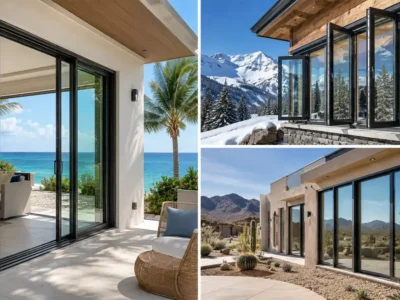
Modern slimline aluminium profiles offer sleek designs that complement contemporary and traditional architectural styles. Their large glass panels maximize natural light while maintaining high energy efficiency. See modern aluminium window designs.
5. Low-E Glass & Smart Technology
Innovations such as Low-Emissivity (Low-E) glass and smart windows enhance energy efficiency. Low-E coatings reflect heat, keeping indoor spaces cooler in summer and warmer in winter. Read about Low-E glass and its benefits.
.
Energy-Saving Benefits of Aluminium Windows & Doors
Lower Energy Costs
By reducing heat transfer, aluminium doors and windows help maintain indoor temperatures, decreasing reliance on air conditioning and heating systems. Homeowners can experience up to 30% savings on energy bills annually.
Noise Reduction
Aluminium frames paired with triple-glazed glass offer excellent sound insulation, ideal for urban areas with high noise pollution. Compare the pros and cons of triple-glazed windows.
Compliance with Green Building Certifications
Aluminium windows and doors comply with global green building standards such as LEED and BREEAM, making them a preferred choice for sustainable construction projects. Find out why aluminium is used in green buildings.
.
The Future of Aluminium Doors and Windows in Sustainable Construction
With increasing environmental awareness, the future of aluminium doors and windows looks promising. Governments and industry leaders are investing in advanced technologies to enhance energy efficiency and sustainability in building materials.
Innovations Shaping the Industry
- Low-E Coatings: Further reducing heat loss and enhancing insulation.
- Smart Windows: Allowing users to adjust tint levels and optimize natural light.
- High-Performance Thermal Breaks: Improving insulation capabilities even further. Learn about thermal break materials.
As global temperatures rise, investing in energy-efficient aluminium doors and windows is a smart and sustainable choice. These solutions provide superior insulation, lower energy bills, and contribute to green building initiatives. Whether for residential or commercial properties, aluminium remains the leading option for those looking to enhance energy efficiency and durability in their structures.
.
Frequently Asked Questions
1. Why are aluminium doors and windows considered energy-efficient?
Aluminium frames with thermal-break technology reduce heat transfer, maintaining stable indoor temperatures while minimizing energy use.
2. How do aluminium doors help reduce energy bills?
Their insulation properties keep indoor spaces cooler in summer and warmer in winter, reducing reliance on heating and cooling systems.
3. Are aluminium windows better than uPVC for energy savings?
Yes, thermally broken aluminium windows outperform uPVC in insulation, durability, and eco-friendliness.
4. How long do aluminium doors and windows last?
With proper maintenance, aluminium doors and windows can last 40+ years without significant degradation.
5. Are aluminium doors environmentally friendly?
Yes, aluminium is 100% recyclable, making it an eco-conscious choice.
6. What is Low-E glass, and how does it work?
Low-E glass features a special coating that reflects heat, improving insulation and energy efficiency.
Check out more on the benefits of aluminium windows.
Related Articles


Featured
You May Also Like
Choosing Aluminum Doors & Windows for Different US Clima…

Which Mosquito Net is Best for Fixed Aluminium Frame?
Aluminum Channel Shapes: C, U & L Profiles and Their Use…

AlF₃ & AlF₃·3H₂O Explained: Melting Point, Solubility, C…
Beat the Heat: Why Aluminum Screen Doors Are a Sunbelt Essen…
