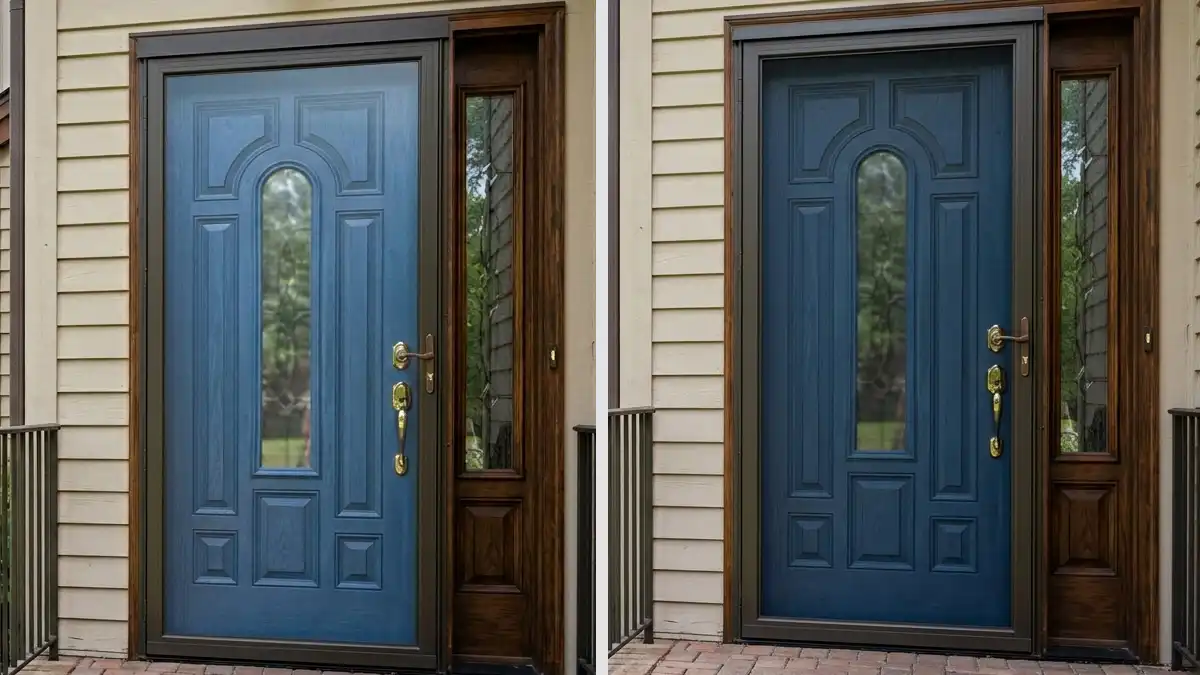
When summer arrives, you want fresh air moving through your home—not stale, conditioned air recirculating while your AC runs nonstop. A storm door with a proper screen system turns your front entrance into a passive ventilation gateway.
But not all screen-equipped storm doors perform the same. Retractable screens disappear when not needed. Interchangeable panels offer simplicity. And the aluminum frame itself determines whether your screen door survives humid summers without warping, rusting, or jamming.
This guide covers the best configurations for summer ventilation, the difference between screen types, and which aluminum frame features keep air flowing smoothly.
Why Ventilation Matters in Summer
Opening your main door invites insects, debris, and security risks. A storm door with a high-quality screen solves all three:
- Passive cooling: Let cross-breezes move through your home without running AC
- Insect protection: Fine mesh keeps mosquitoes, flies, and gnats outside
- Security: A locked storm door with screen allows airflow while maintaining a barrier
In temperate US regions—Pacific Northwest, Mid-Atlantic, New England, and upper Midwest—homeowners can keep AC off for weeks by simply ventilating through a screen-equipped storm door.
For hot-humid states (FL, TX, GA, LA, SC), a ventilating storm door is even more critical. Full glass traps heat between doors. A screen-dominant model prevents condensation and heat damage to your primary door.
Types of Screen Systems in Storm Doors
1. Interchangeable Glass and Screen Panels
The most traditional design. The door comes with a glass panel and a separate screen panel. In winter, the glass stays in. In spring, you remove the glass (usually by lifting it out of tracks) and insert the screen.
Pros:
- Simple, reliable, few moving parts
- Screen can be replaced individually if damaged
- Lower cost than retractable systems
Cons:
- Requires storage space for the off-season panel
- Changing panels takes a few minutes (not instant)
- Tracks need occasional cleaning
2. Retractable Screen
The screen lives rolled up inside a slim cassette at the top of the door frame. Pull a handle, and the screen unrolls and locks into place at the bottom. Release it, and the screen automatically retracts back into the cassette.
Pros:
- Instant conversion – seconds, not minutes
- No loose panels to store
- Clean, minimalist aesthetic when screen is hidden
Cons:
- More moving parts (spring mechanism, guides)
- Screen repairs are more involved
- Higher upfront cost
3. Self-Storing (Slide-Away)
The glass panel slides horizontally or vertically into a built-in pocket on the side or top of the frame. As the glass moves, the screen automatically emerges from the opposite direction.
Pros:
- No separate panels to store
- One smooth motion
Cons:
- Internal tracks collect dust and debris
- Harder to clean than exposed tracks
- Less common today
4. Ventilating (Divided Design)
Not a full screen system, but a hybrid. The door splits into two sections: upper glass, lower screen. You can open the upper glass independently, allowing hot air to escape while the lower screen brings in cooler air near the floor.
Pros:
- Excellent for hot-humid climates
- No panel swapping needed
- Maintains privacy at eye level
Cons:
- Less total screen area than full-view
- Not ideal for cold winters (glass area is reduced)
For most US homeowners with four seasons, an interchangeable full-view door or retractable screen offers the best balance.
What to Look for in a Summer-Ready Aluminum Storm Door
1. Fine Mesh Screen – 18×16 or Tighter
Standard screens use 18×16 mesh (18 strands per inch horizontally, 16 vertically). That’s fine for most insects. But if you deal with no-see-ums, gnats, or tiny biting flies, upgrade to 20×20 mesh or insect-proof micro-mesh.
Micro-mesh blocks 98% of tiny insects while maintaining airflow. The trade-off: slightly reduced visibility and higher cost.
2. Screen Frame Retention
Cheap screens simply sit in a channel. When you open and close the door vigorously, the screen can pop out. Look for screens with spring-loaded pins, twist-lock fasteners, or rubber spline retention that holds the mesh tight even during slamming.
3. Aluminum Frame That Won’t Trap Moisture
This is where extruded aluminum shines. Unlike vinyl or wood frames, extruded aluminum:
- Won’t absorb humidity and swell
- Won’t grow mold or mildew around screen channels
- Stays dimensionally stable in 90°F + 80% humidity
For coastal or Gulf Coast homes, specify anodized aluminum rather than powder-coated. Anodizing resists salt corrosion and won’t peel in high humidity.
4. Smooth-Operating Track System
If you choose interchangeable or self-storing screens, inspect the track design. Nylon or UHMW (ultra-high-molecular-weight polyethylene) glides are superior to bare aluminum-on-aluminum contact. They reduce friction and won’t gall over time.
5. Lower Screen Option for Hot Climates
In the Deep South and Texas, a ventilating door (glass on top, screen below) is often better than a full screen. Why? Hot air rises. Opening the top glass vent releases trapped heat. The lower screen pulls in cooler ground-level air. This natural convection keeps the gap between doors from becoming an oven.
For a deeper look at how different designs perform by region, see our storm doors necessary by climate guide.
Retractable Screen vs. Interchangeable Panels: Which Is Better?
| Factor | Retractable | Interchangeable |
|---|---|---|
| Conversion speed | 5 seconds | 2–3 minutes |
| Storage needed | No | Yes (glass panel) |
| Complexity | Higher | Lower |
| Initial cost | $$$ | $$ |
| Long-term reliability | Very good | Excellent |
| Aesthetic (screen hidden) | Yes | No (screen always visible when in use) |
Our take: Retractable screens are worth the premium if you value instant switching and a clean look. Interchangeable panels are the reliable workhorse—simpler, easier to repair, and more affordable.
Best Summer Configuration by Region
| Region | Recommended Screen Setup |
|---|---|
| Northeast / Midwest | Interchangeable full-view or retractable |
| Southeast / Gulf Coast | Ventilating (glass top, screen bottom) or retractable |
| Pacific Northwest | Interchangeable full-view |
| Desert Southwest | Retractable only (no permanent glass) |
| Mid-Atlantic | Interchangeable or retractable |
For homes in Florida, Texas, or Georgia, a ventilating aluminum door with anodized finish is the gold standard. The top glass panel should be tilt-out or removable to release heat. The lower screen should use corrosion-resistant mesh.
Maintenance for Long Screen Life
- Vacuum screens twice a year – Dust and pollen clog mesh, reducing airflow
- Inspect for tears – Patch small holes with screen repair tape; replace panels for large tears
- Lubricate retractable screen guides – Use dry silicone spray, not oil (oil attracts dust)
- Check track alignment – If the screen drags, adjust the guide brackets
Unlike vinyl or wood frames, extruded aluminum requires no painting or sealing. A quick soap-and-water wipe down once a year keeps the frame looking new.

The Bottom Line
A storm door with a high-quality screen system turns your front entrance into a passive cooling tool. For most US homes, an interchangeable full-view door or a retractable screen model built from extruded aluminum delivers the best balance of summer ventilation and winter protection.
In hot-humid states, prioritize ventilating designs (glass top, screen bottom) with anodized aluminum frames to prevent corrosion and heat buildup.
For a complete starting point, see our best aluminum storm doors for front entrances buyer’s guide, then filter for models with retractable or interchangeable screens.