Rabbits can squeeze through 1-inch gaps, dig under shallow barriers, and jump surprisingly high. If your current garden fence isn’t stopping them, the issue is usually the design and material choice—not just a lack of effort.
Waking up to decimated vegetable patches and nibbled flower beds is frustrating. But here is the good news: a properly engineered aluminium fence addresses all three rabbit vulnerabilities (squeezing, jumping, and digging) while outlasting wood, vinyl, and steel in harsh weather.
Let’s break down exactly what works and why.
QUICK SUMMARY: HOW TO STOP RABBITS PERMANENTLY
- Mesh Size: Must be 1 inch or smaller (ideal size is ½ inch).
- Height: Minimum 3 feet tall to prevent clearing jumps.
- Ground Level: Must be buried 6 inches deep with an outward L-shaped apron.
First, Understand What You Are Actually Fighting
Before choosing a fence, understand how the animal gets into your garden. Different pests exploit different weaknesses.
- 🐰 Rabbits follow fence lines looking for small gaps and can squeeze through surprisingly narrow openings. If they find a weak spot under a gate or along the bottom edge, they’ll keep using it.
- 🦫 Groundhogs are expert diggers. Instead of searching for gaps, they often tunnel directly beneath fences, making below-ground protection just as important as fence height.
- 🦌 Deer rely on their jumping ability rather than digging or squeezing. A fence that’s too short or provides an easy landing area is unlikely to stop a determined deer.
The takeaway: A fence should match the behavior of the animal you’re trying to keep out. The right design matters just as much as the material itself.
What Does a Rabbit-Proof Fence Actually Require?
To keep rabbits out permanently, your fence must meet these three non-negotiable criteria:
- Mesh Size: No larger than 1 inch. Ideally ½-inch mesh to prevent even young rabbits from squeezing through.
- Height: At least 3 feet (90 cm) tall. Cottontails can jump up to 2 feet, so 3 feet gives you a safety margin.
- Underground Barrier: Must be buried 6 inches (15 cm) deep, preferably bent outward in an “L” shape (apron) to stop digging.
Now, the real question is: Which building material can actually deliver these three requirements for 20 to 30 years without rotting, rusting, or warping?
The Material Showdown: Which One Actually Lasts?
Here is the hard truth. Wood rots at the soil line. Steel rusts at the soil line. Vinyl cracks in cold weather. Let’s look at the data.
| Material | Rust / Rot Resistance | Rabbit Proofing | Maintenance Required | Average Lifespan |
|---|---|---|---|---|
| Wood | ❌ Poor (Rots) | Medium | High (Stain/Paint) | 5–10 Years |
| Steel | ❌ Poor (Rusts) | Excellent | Medium (Paint/Galv) | 10–15 Years |
| Vinyl | ✅ Good | Good | Low | 10–20 Years |
| Aluminium | ⭐ Excellent | Excellent | Very Low | 30+ Years |
UPSIDES
- ✓ Zero Rust: Forms a natural, self-healing oxide layer that doesn’t rust in damp soil.
- ✓ No Warping: Won’t crack in deep freezes or swell during torrential rains.
DOWNSIDES
- ✕ Higher Initial Cost: More expensive upfront than raw timber or basic wire netting.
- ✕ Permanent Choice: Built to last 30+ years, so design placement requires planning.
Why Aluminum Wins Unanimously
When you bury a fence 6 inches into the damp earth, the soil holds moisture. Wood drinks it up and rots. Steel reacts with it and rusts. Aluminium? It forms a natural, self-healing oxide layer that simply does not rust.
- Zero Rust: Even in coastal salt air or humid subtropical climates.
- No Warping: Aluminium doesn’t swell in rain or crack in freezing temperatures.
- Low Maintenance: A quality powder-coated finish protects against UV fading, meaning you install it once and forget about it for decades.
Which Type of Aluminum Fence Is Best for Gardens?
Based on the requirements above, here are the three best aluminium fencing styles to keep rabbits out:
1. Aluminium Picket Fence
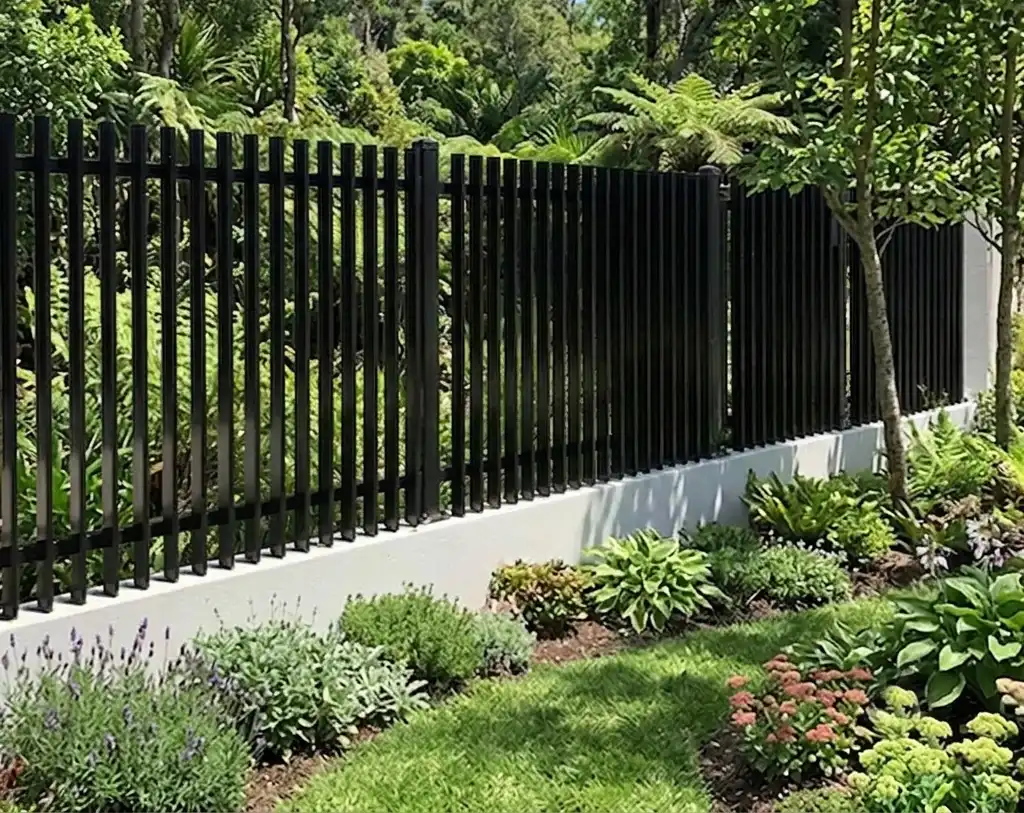
A classic look that works beautifully for front yards. Just ensure the gaps between the pickets are 1 inch or less.
Best for: Ornamental gardens and front yards where curb appeal matters.
2. Aluminum Mesh / Wire Fence
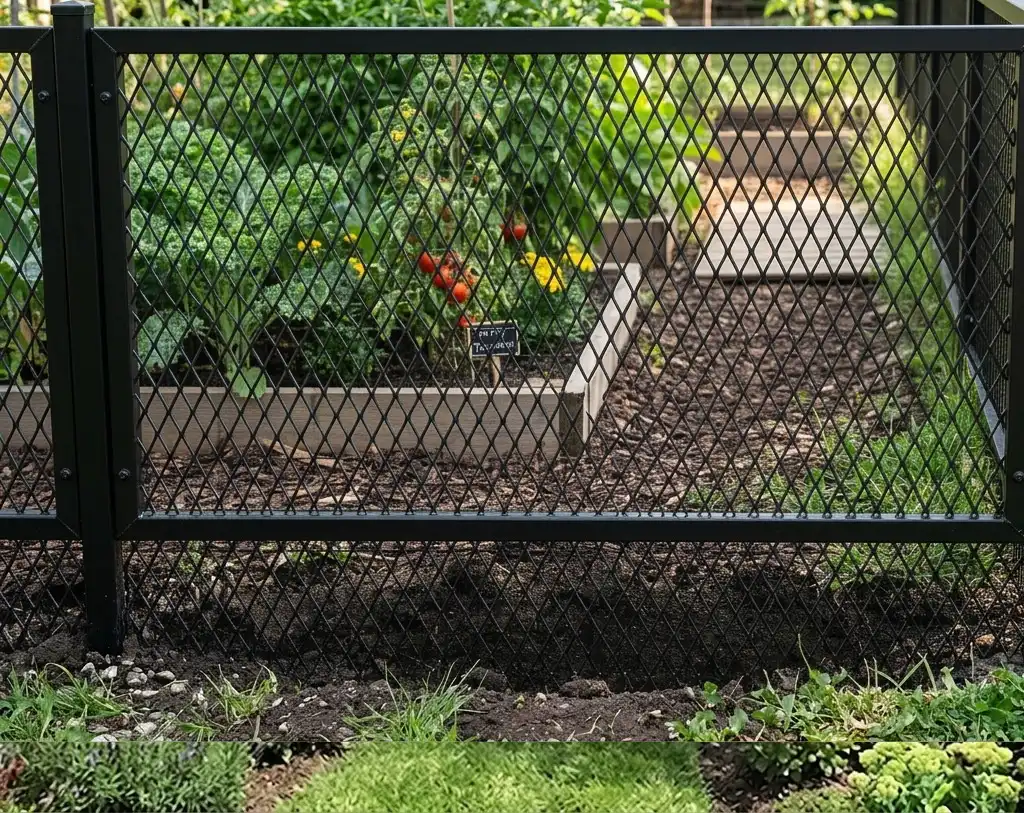
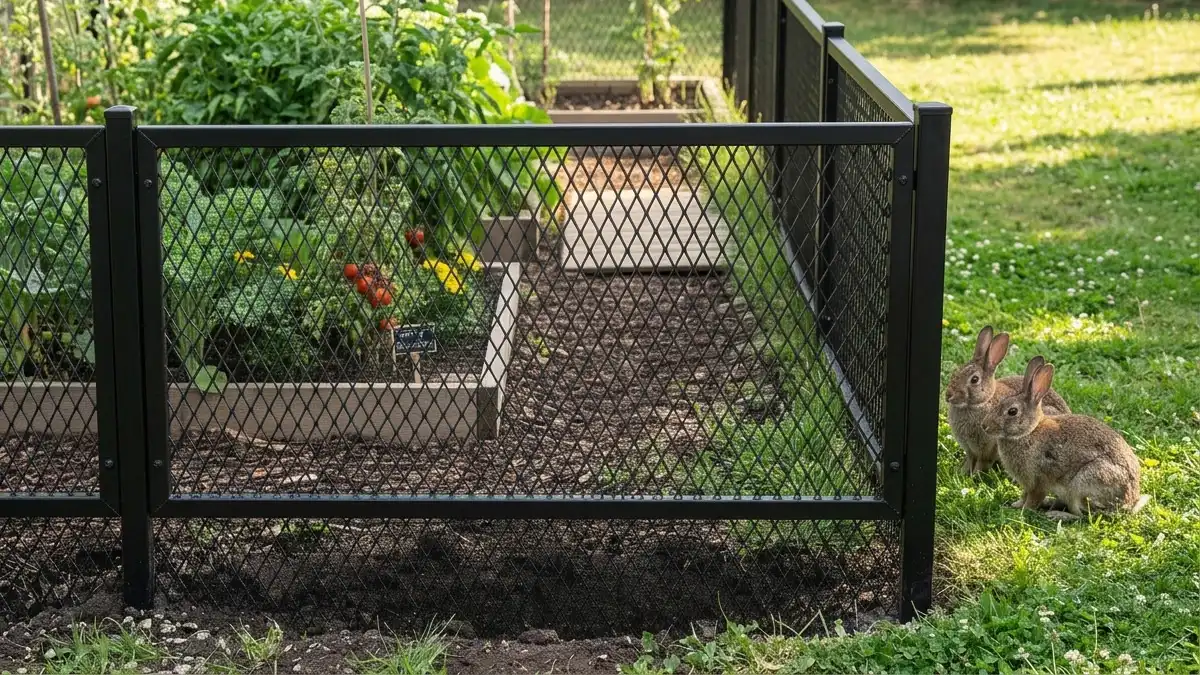
This is the gold standard for rabbit exclusion. An aluminium-framed mesh panel with ½-inch openings makes it physically impossible for a rabbit to squeeze through.
Best for: Vegetable patches, raised beds, and high-value plantings.
3. Aluminum Slat Privacy Fence
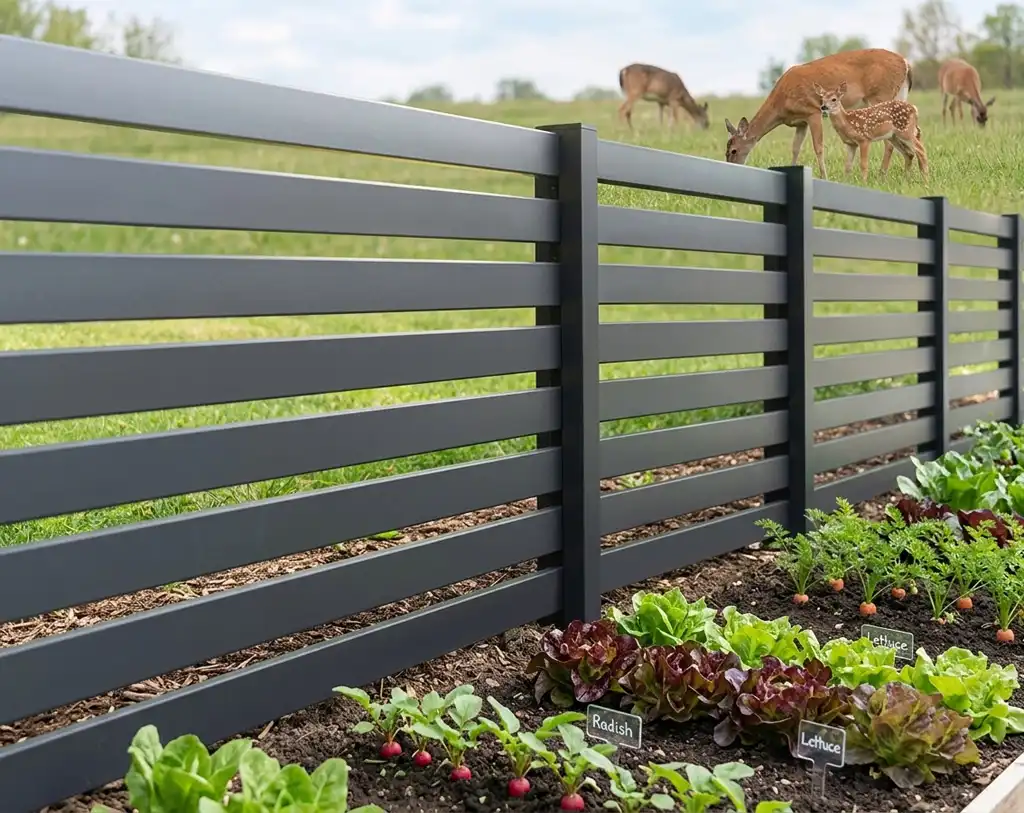
If you want privacy and rabbit protection, modern slat systems with 0–25% openness work perfectly, provided the horizontal or vertical gaps are too narrow for a rabbit to pass.
Best for: Backyard gardens where privacy is also a priority.
REQUIRED PRODUCT SPECIFICATIONS
- ✓ Commercial Powder Coating (Mandatory for underground soil contact)
- ✓ 1/2-Inch Maximum Air Gaps between lower pickets or mesh elements
- ✓ Heavy-Duty Bottom Rail configuration to anchor the underground mesh extensions
How to Ensure Your Aluminum Fence Lasts 30+ Years
Durability isn’t just about the metal; it’s about the finish.
- Powder Coating is Mandatory: Raw aluminium is fine, but powder-coated aluminium is exceptional. It adds a tough, weather-resistant layer that stops scratches and prevents UV fading.
- Coastal Areas: If you live near the ocean, opt for a marine-grade powder coating for maximum protection against salt spray.
- Climate Versatility: Aluminium fences perform flawlessly across all US climates—from the dry heat of Arizona to the freezing winters of Minnesota and the humid summers of Florida.
The “Deadly” Installation Tips
Even the best aluminium fence fails if installed poorly. Here is how to guarantee success:
- Bury It Deep: Dig a trench 6–8 inches deep and set the mesh into it. Do not just lay it on top of the grass.
- Add the “Apron”: Bend the bottom 6 inches of the mesh outward at a 90-degree angle (facing away from your garden) before burying it. When rabbits dig down, they hit this horizontal barrier and give up.
- Secure the Gate: Rabbits are experts at squeezing under gates. Install a heavy-duty door sweep or bury a mesh extension at the gate threshold.
- Clear the Perimeter: Rabbits use tall grass and brush for cover. Keep the fence line clear so they feel exposed and vulnerable.
The Bottom Line
If you simply throw up a cheap wooden picket fence, you are inviting rabbits to dinner. If you install a steel fence without proper coating, you are inviting rust.
The best solution is a powder-coated aluminium fence with ½-inch mesh, buried 6 inches deep with an outward apron. It stops the rabbits, survives the weather, and requires almost zero maintenance for decades.
Your garden is an investment. Protect it with a material that lasts as long as your love for gardening.
FAQs
Can rabbits chew through an aluminium mesh fence?
No. Unlike plastic-coated wire grids or standard plastic chicken mesh which rabbits can easily gnaw through, commercial-grade structural aluminium is completely impervious to rodent teeth.
Will burying an aluminium fence corrode the metal over time?
No. Unlike steel or iron, aluminium naturally forms a protective oxide layer that resists wet soil corrosion completely, especially when treated with a high-quality powder coating.
What is the absolute maximum safe gap size to block baby rabbits?
Baby rabbits can pass through surprisingly small gaps. To keep your garden safe, ensure your bottom mesh spacing or picket gaps do not exceed 1/2 inch to 1 inch maximum.