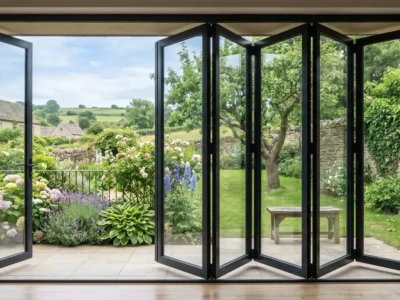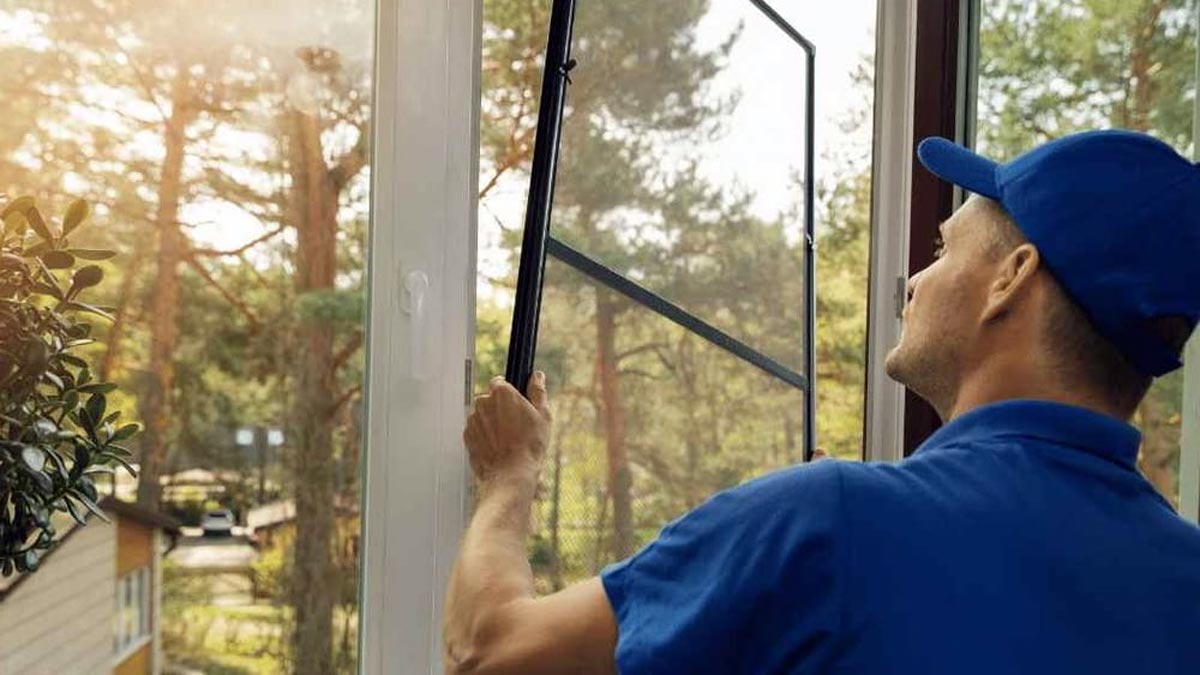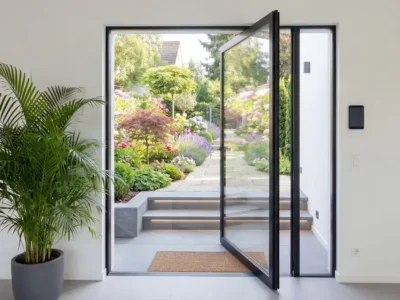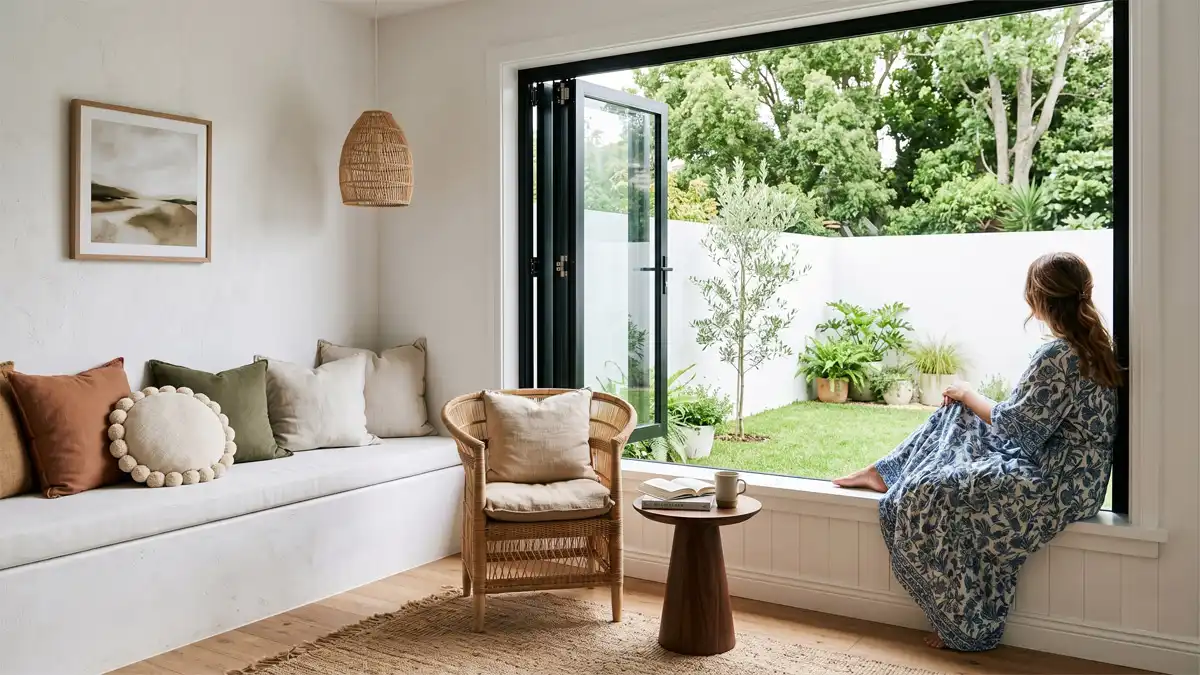
Aluminium bifold windows are available in multiple panel configurations, allowing different opening patterns depending on the width of the opening and available stacking space. Some designs fold completely to one side, while others split the panels between both sides for a more balanced appearance.
The design codes shown below help identify the total number of panels and how they fold when opened. Understanding these configurations can help homeowners, architects, and fabricators choose the most suitable bifold window layout for kitchens, patios, balconies, serving counters, and large wall openings.
How to Read Bifold Window Design Codes
Example: Design Code 5-2-3
- First number (5) = Total panels.
- Second number (2) = Left-side bi-fold panel group.
- Third number (3) = Right-side bi-fold panel group.
So a 5-2-3 design has 5 total panels, with 2 panels folding together on the left and 3 panels folding together on the right.
Aluminium Bifold Windows Design-220
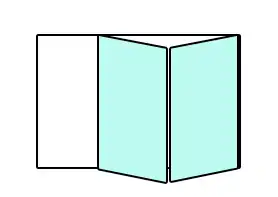
Design: 2-2-0
Configuration
Two panels connected as a single bi-fold set folding to one side.
Features
- Simplest bi-fold window arrangement.
- Requires minimal track length.
- Easy operation with fewer moving parts.
- Lower maintenance compared to larger configurations.
Best Suited For
- Kitchen serving windows.
- Compact openings.
- Apartments and small balconies.
- Areas where maximum opening is desired from a limited window width.
Aluminium Bifold Windows Design-330
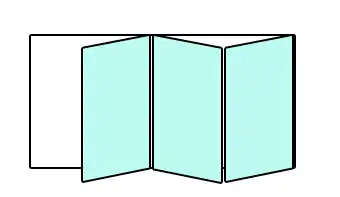
Design: 3-3-0
Configuration
This design consists of three total panels, with all three panels connected as a single bi-fold group that folds and stacks to one side of the opening.
Features
- All panels fold in the same direction.
- Creates a wide, unobstructed opening when fully opened.
- Simple operating mechanism with a single stacking side.
- Provides better outdoor connectivity than traditional sliding windows.
- Requires stacking space on one side for the folded panel bundle.
- Suitable for medium-width openings where maximum access is desired.
Best Suited For
- Kitchen servery windows.
- Patio-facing openings.
- Balcony connection windows.
- Outdoor entertainment areas.
- Modern residential and café-style designs.
Opening Style
When opened, all three panels fold together and stack neatly against one side of the frame, leaving most of the window opening clear for ventilation, serving, or outdoor views.
Aluminium Bifold Windows Design-312

Design: 3-1-2
Configuration
One panel remains on one side while two panels fold together on the opposite side.
Features
- Creates an asymmetric opening pattern.
- Allows one side to remain relatively fixed.
- Good balance between ventilation and accessibility.
- Can be opened partially or fully depending on usage.
Best Suited For
- Modern residential facades.
- Kitchen pass-through windows.
- Indoor-outdoor serving counters.
Aluminium Bi-fold Windows Design-422

Design: 4-2-2
Configuration
Total Four panels divided equally into two bi-fold groups.
Features
- Symmetrical appearance.
- Panels stack evenly on both sides.
- Balanced weight distribution on tracks.
- Creates a large central opening.
Best Suited For
- Entertainment and serving areas.
- Wide living room openings.
- Garden-facing windows.
Aluminium Bifold Windows Design-413

Design: 4-1-3
Configuration
One panel on one side and three connected folding panels on the other.
Features
- Majority of panels stack to a single side.
- Provides a larger clear opening.
- Useful where one side has limited stacking space.
- Creates a visually modern asymmetrical layout.
Best Suited For
- Corner spaces.
- Modern villa designs.
- Areas with furniture or walls restricting one side.
Aluminium Bifold Windows Design-440

Design: 4-4-0
Configuration
All four panels fold together in a single direction.
Features
- Entire window stack moves to one side.
- Maximum uninterrupted opening.
- Simple operating pattern.
- Requires adequate stacking space on one end.
Best Suited For
- Serving counters.
- Cafes and restaurants.
- Open-plan living spaces.
Aluminium Bifold Windows Design-550

Design: 5-5-0
Configuration
All five panels fold and stack to one side.
Features
- Provides the widest possible opening.
- Creates a near wall-free appearance when opened.
- Large panel stack on one side.
- Excellent indoor-outdoor connectivity.
Best Suited For
- Luxury homes.
- Patio-facing openings.
- Outdoor entertaining areas.
Aluminium Bifold Windows Design-514

Design: 5-1-4
Configuration
One panel on one side and four panels folding together on the opposite side.
Features
- Allows most panels to stack in one location.
- Produces a wide clear opening.
- Flexible opening positions.
- Modern asymmetric design style.
Best Suited For
- Contemporary homes.
- Large kitchen openings.
- Balcony-facing windows.
Aluminium Bifold Windows Design-523

Design: 5-2-3
Configuration
Two panels fold together on the left side while three panels fold together on the right side.
Features
- Panels stack on both sides instead of one.
- Creates a balanced opening arrangement.
- Reduces panel stack thickness on each side.
- Improves weight distribution across the track.
- Suitable for wider window openings.
Best Suited For
- Large residential openings.
- Garden-view windows.
- Cafes and hospitality spaces.
- Projects requiring a symmetrical appearance when opened.
Choosing the Right Bifold Window Panel Configuration
When selecting an aluminium bi-fold window design, consider:
- Available opening width.
- Preferred stacking direction.
- Furniture placement near the window.
- Ventilation requirements.
- Whether you need a symmetrical or asymmetrical appearance.
- Track load capacity for larger panel counts.
Generally, 2-2-0 and 3-1-2 designs work well for smaller openings, while 4-2-2, 5-1-4, and 5-2-3 configurations are more suitable for wide openings where maximum ventilation and unobstructed views are required.