The global transition to green energy and advanced defense systems has put two rare earth elements—Neodymium (Nd) and Dysprosium (Dy)—at the center of a high-stakes geopolitical and economic drama. These metals are the fundamental components of the permanent magnets that drive electric vehicles (EVs) and wind turbines. Their price volatility and the complex challenge of securing their supply chain are now critical risks for every major industrial sector.
This article analyzes the recent market volatility of these magnet-critical elements and provides a critical update on the U.S. countermeasure to China’s dominance: the strategic revival of the Mountain Pass supply chain.
The NdPr Rollercoaster – Volatility and the EV Engine
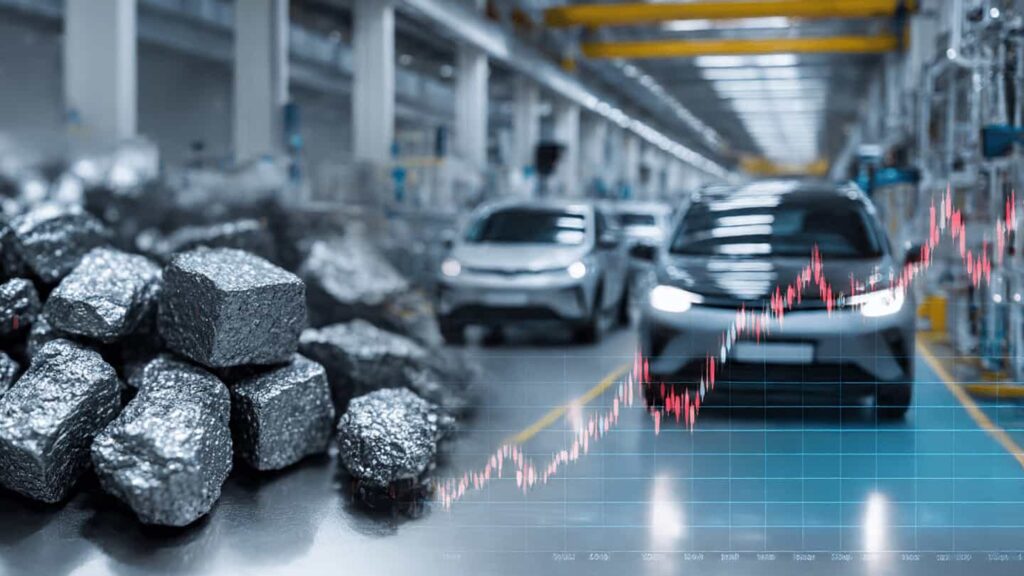
Neodymium (often sold combined with Praseodymium as NdPr oxide) is the primary workhorse of the modern permanent magnet. Its price trend has been characterized by sharp swings, reacting both to demand shifts in the Electric Vehicle sector and capacity changes in China.
The market has been on a dramatic ride. In January 2023, Neodymium prices were high at approximately $209.30 per kilogram, still buoyed by strong demand and supply concerns. However, by January 2024, the market saw a significant correction, with prices slumping by over 45% to around $113.20/kg. This plunge was driven by a buildup of inventories and a temporary softening in the global EV market.
More recently, as of October 2025, we are witnessing a strong rebound. Prices have climbed to roughly $150.10/kg, a gain of about 32.6% since the start of 2024. This resurgence is fueled by intensified demand from EV motor manufacturers and new energy-intensity restrictions that are tightening supply from Chinese processing facilities.
Analysis: NdPr prices remain highly dynamic. While the 2023 correction provided short-term relief, the fundamental demand trajectory—projected to nearly triple by 2035—means price volatility is the new norm. Any market softening is quickly offset by strategic buying and supply bottlenecks, ensuring long-term upward pressure.
For more on how China’s control impacts the broader EV supply chain, see: Rare Earth Minerals: China’s Control Over the EV Supply Chain
The Scarcity Premium – Dysprosium and Geopolitical Risk
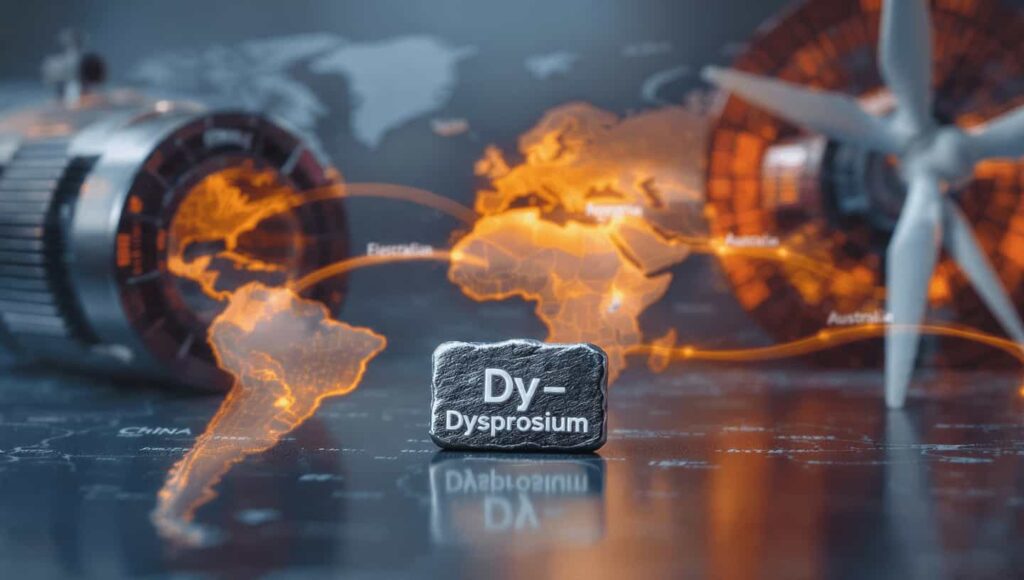
Dysprosium (Dy) is a Heavy Rare Earth Element (HREE) that is both scarcer and more expensive than NdPr. Its value lies in its ability to maintain magnetic strength at high temperatures, making it indispensable for high-performance EV motors and direct-drive wind turbines.
The price of Dysprosium Oxide has shown a general decline from a high of ~$653.40/kg in January 2023 to ~$587.40/kg in January 2024, and further to ~$453.90/kg by October 2025. However, these domestic price movements mask a critical vulnerability: extreme sensitivity to Chinese policy.
This risk was starkly illustrated in April 2025, when China imposed new export restrictions on seven heavy rare earths, including Dysprosium. The result was immediate; European spot prices for the element nearly tripled overnight, temporarily disrupting global supply chains and highlighting the market’s fragility.
Analysis: Dysprosium remains acutely sensitive to Chinese political decisions. Analysts warn of long-term “premium pricing” outside Chinese markets, where Dysprosium could climb to over $1,100/kg by 2034 if Western supply chains remain dependent.
The push for sustainability is also reshaping material use in other industries. Learn more: How the Aluminium Industry is Driving Sustainable Development
The Western Countermove – Revival of Mountain Pass
Recognizing this existential supply risk, the United States has accelerated efforts to build a secure, vertically integrated domestic rare earth supply chain centered on the Mountain Pass mine in California. The progress as of late 2025 is significant:
- Mine Production: The mine produced approximately 45,000 metric tons of rare earth oxide (REO) in 2024, re-establishing the U.S. as a major miner and ensuring a domestic feedstock supply.
- Processing (LREE): The U.S. has completed or is nearing full commercial operation of facilities to separate and refine Light Rare Earth Elements (LREEs), specifically high-purity NdPr oxide. This breakthrough moves the country past the critical bottleneck of depending on China for midstream refining.
- Processing (HREE): To address the most critical scarcity point, the U.S. Department of Defense has funded projects to restore domestic capabilities for separating Heavy Rare Earth Elements (HREEs) at Mountain Pass, directly targeting China’s greatest leverage.
- Magnet Manufacturing: In a crucial final step, MP Materials began commercial production of NdFeB magnets at its Fort Worth, Texas facility in early 2025. This establishes a fully vertically integrated U.S. supply chain—from mine to finished magnet.
Strategic Outlook: While global rare earth supply security remains a long-term challenge, these aggressive policy actions and multi-billion-dollar investments are fundamentally reshaping the supply chain narrative away from total dependence on China.
The strategic importance of materials extends beyond rare earths. Aluminium plays a crucial role in the green transition: Aluminium’s Crucial Impact on Transforming Vehicles into Next-Gen Intelligent Mobility and Aluminium’s Key Role in the Electric Vehicle Revolution.