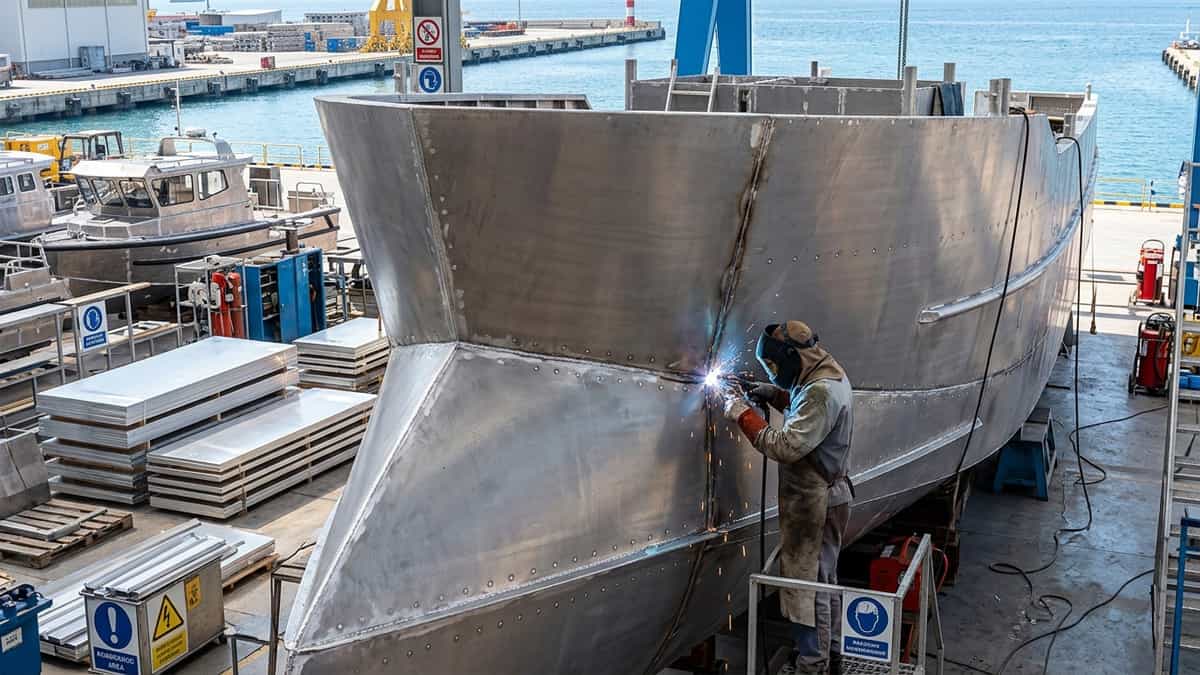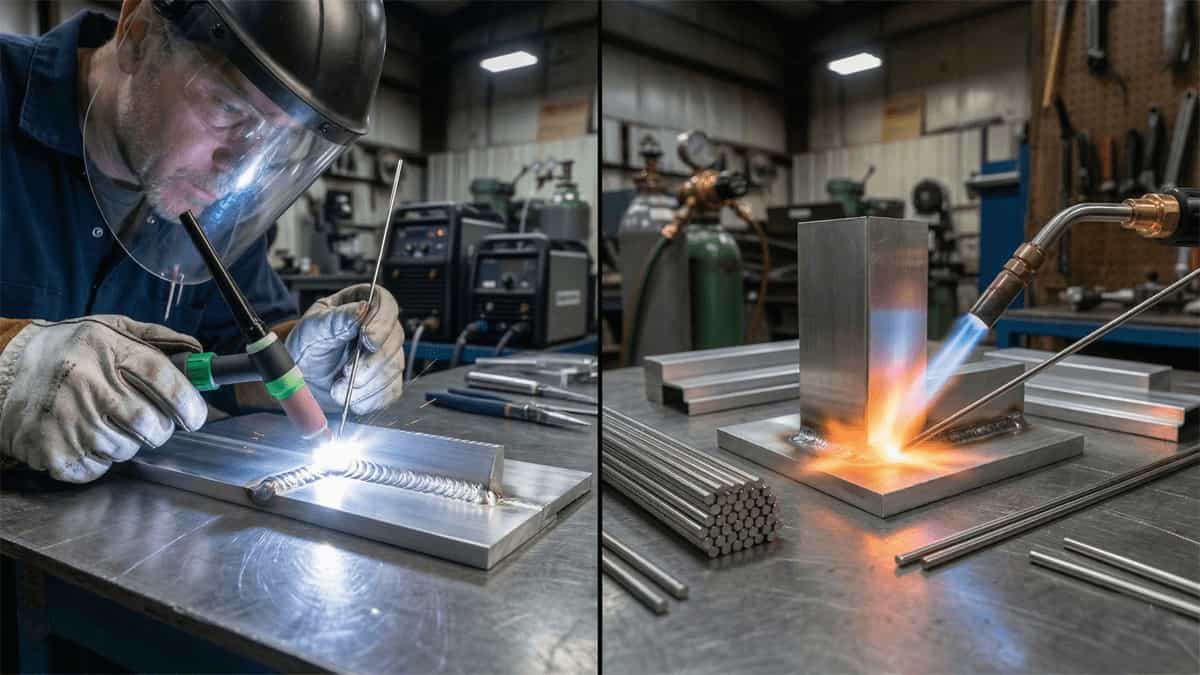
Whether you spell it Aluminum (American) or Aluminium (British), one thing remains constant: joining this metal is a specialized skill. If you’ve ever searched for repair or fabrication solutions, you’ve likely encountered two distinct options: Welding Rods and Brazing Rods.
At first glance, they look nearly identical. However, the process, temperature, equipment, and structural integrity of the resulting joint are worlds apart. Many DIY enthusiasts mistakenly buy brazing rods expecting “weld-like” strength, leading to joint failure under load.
Quick Answer
Welding melts the aluminum base metal to create a strong structural joint.
Brazing melts only the filler rod and bonds the metals without melting the base material.
Before you fire up your torch or welder, let’s break down the technical realities of each.
Key Differences
| Feature | Aluminum Welding Rod | Aluminum Brazing Rod |
| Joining Process | Fusion (Metallurgical Bond) | Capillary Action (Adhesion) |
| Base Metal | Melts and fuses | Does NOT melt |
| Temperature | ≈ 660°C (1220°F) or higher | 380°C – 450°C (715°F – 840°F) |
| Equipment | TIG or MIG Welder + Argon Gas | Propane or MAP Gas Torch |
| Joint Strength | Structural (Equal to base metal) | Moderate (Repair grade) |
| Distortion Risk | High (due to intense heat) | Low (due to moderate heat) |
| Dissimilar Metals | Very Limited | Excellent |
| Surface Finish | Rough “bead” (requires grinding) | Smooth, clean joint |
1. Aluminum Welding Rods
For Structural Integrity
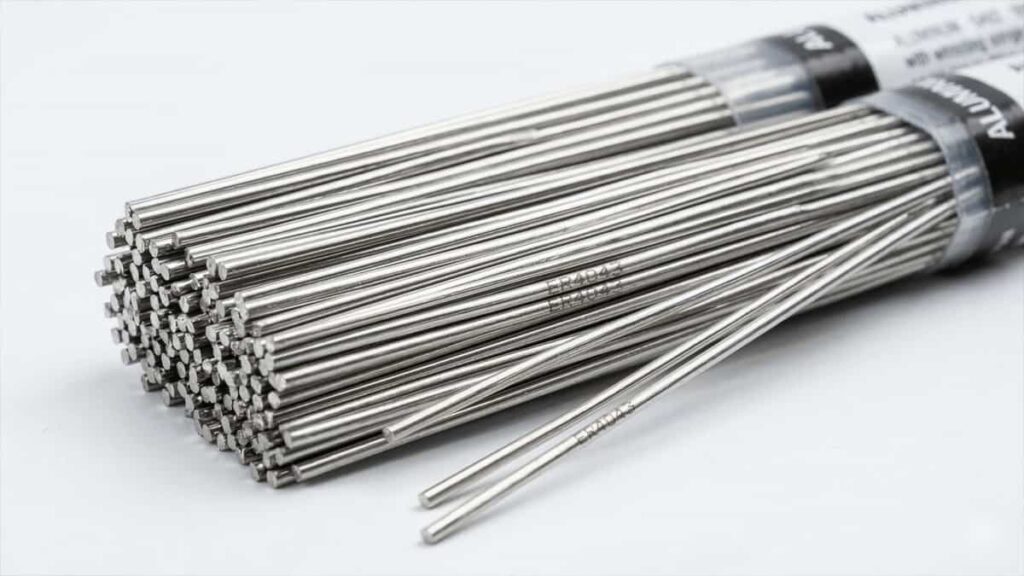
Aluminum welding rods are filler metals used in fusion welding. In this process, the base aluminum actually melts. This creates a true metallurgical bond where the rod and the workpiece become one single piece of metal.
Why Choose Welding?
- Maximum Strength: Because the metals fuse, the joint is strong enough for load-bearing structures like vehicle frames or boat hulls.
- High-Temperature Performance: Welded joints maintain their integrity in high-heat environments (e.g., engine components), whereas brazed joints may soften or fail.
The Trade-offs
- Heat Distortion: Because welding requires reaching the melting point of aluminum (≈ 660°C), thin parts are at high risk of warping or “blowing through.”
- Skill Ceiling: It requires a TIG or MIG machine and significant practice to manage the oxide layer and heat dissipation.
Common Rod Types:
-Ads-
- ER4043: The “go-to” for general purpose welding.
- ER5356: High-strength, excellent for marine and structural parts.
2. Aluminum Brazing Rods
The Precision Repair Tool
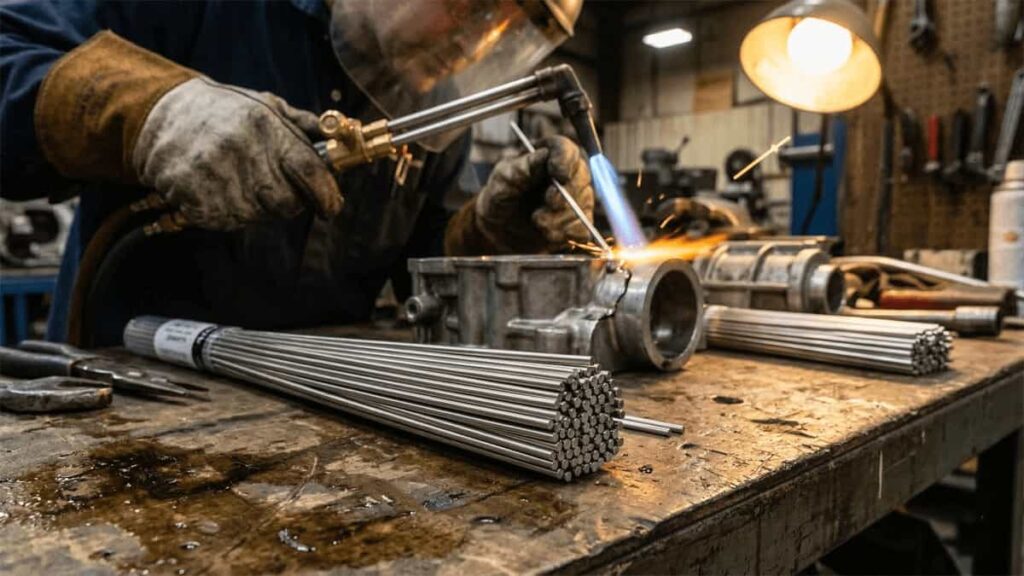
Brazing is a “low-heat” alternative where the base metal remains solid. The rod melts at a much lower temperature than the aluminum itself, flowing into the joint through capillary action.
The Brazing Advantage
- Joining Dissimilar Metals: One of the biggest technical wins for brazing is its ability to join aluminum to copper, brass, or even certain steels. Because you aren’t melting the base metals, you can bond materials with vastly different melting points.
- Minimal Distortion: Lower heat means the part keeps its shape. This is critical for thin-gauge aluminum or decorative items.
- Superior Finish: Brazed joints usually result in a “fillet” that is smooth and aesthetic, often requiring zero post-processing or grinding.
Typical Applications
- HVAC & Radiators: Sealing leaks in aluminum pipes or radiator fins.
- DIY Repairs: Fixing cracks in lawn furniture or non-structural castings.
3. Real-World Decision Matrix
How do you decide which one to grab from the shelf? Use these real-world scenarios:
Scenario A: Aluminum Window Frame Fabrication
- Main Frame Joints: Welding. The corners must handle the weight of glass and wind pressure.
- Decorative Accents: Brazing. Use it to attach small trim pieces without ruining the finish.
Scenario B: Automotive Radiator Repair
- A Puncture in the Core: Brazing Rod. A TIG welder would melt the thin aluminum fins instantly.
- A Cracked Mounting Bracket: Welding. The bracket must hold the weight of the radiator under vibration.
⚠️ The Most Common Mistake
The most frequent error is treating a brazing rod as a structural substitute for a welding rod. While brazing is incredibly strong for its class, it relies on surface adhesion. If you are building a trailer, a bike frame, or a load-bearing bracket, you must weld. Brazing is for sealing, joining dissimilar metals, and aesthetic repairs.
ER4043 vs. ER5356: Which Filler Rod is Better?
Choosing the right aluminum metal rod often comes down to these two industry standards. Here is the quick breakdown of when to use which.
ER4043 (Silicon-Based)
Best for general-purpose fabrication and 6061 aluminum.
| Pros | Cons |
| Easier to use: The silicon makes the weld pool more fluid and “forgiving.” | Poor Color Match: If the part is anodized later, the weld will turn dark grey/black. |
| Less Cracking: Higher resistance to “hot cracking” during the cooling process. | Lower Ductility: The weld is more brittle than 5356. |
| Better Aesthetics: Produces a brighter, shinier weld bead. | Lower Shear Strength: Not ideal for heavy structural loads. |
ER5356 (Magnesium-Based)
Best for structural, marine, and high-strength applications.
| Pros | Cons |
| High Strength: Significantly higher shear strength than 4043. | Harder to Weld: The puddle is “stiff” and less fluid, requiring more skill. |
| Anodizing Friendly: Provides an excellent color match after post-weld anodizing. | Heat Sensitivity: Not recommended for parts constantly exposed to temperatures above 65°C. |
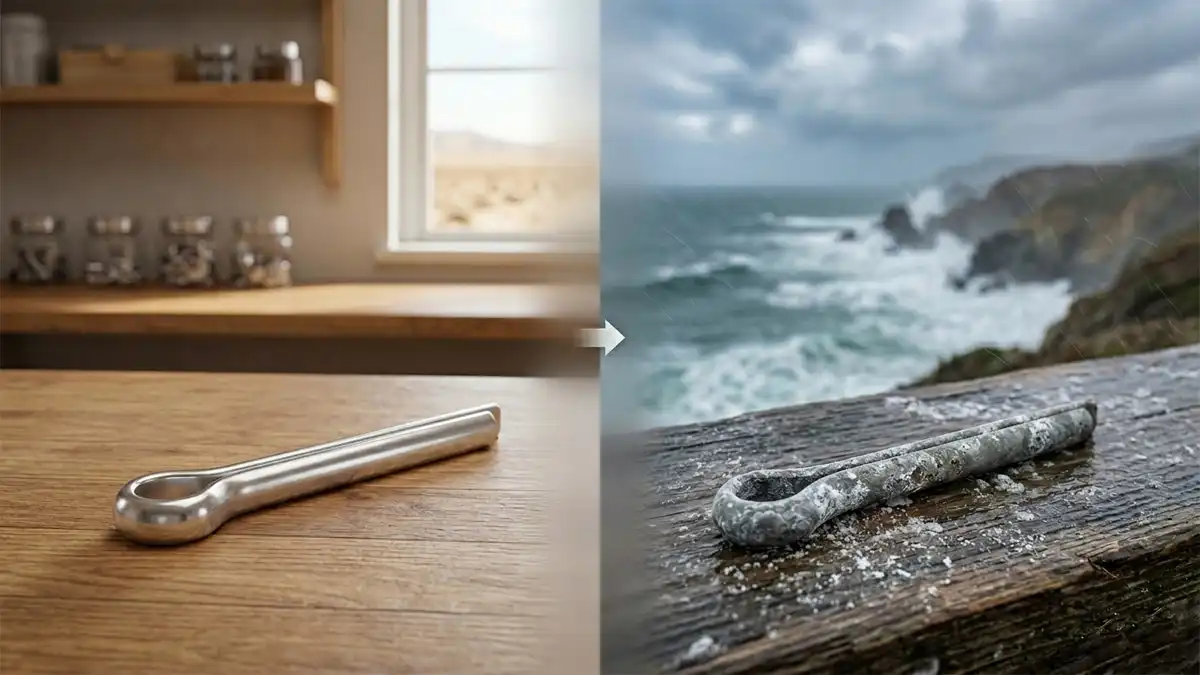
| Corrosion Resistant: The magnesium content makes it perfect for saltwater environments. | Sooty Welds: Often leaves more “smut” (black soot) around the weld area. |
The Verdict:
- Use ER4043 if you want a beautiful, easy weld on a non-structural part.
- Use ER5356 if you are building a boat, a trailer, or anything that needs to handle high stress.
FAQs (People Also Ask)
Can you use a propane torch with aluminum welding rods?
No. Aluminum welding rods require the intense, concentrated heat of a TIG welder or MIG welder to melt the base metal. A standard propane torch doesn’t get hot enough to achieve fusion. If you only have a torch, you should use an aluminum brazing rod instead.
What is the strongest rod for welding aluminum?
For most structural applications, ER5356 is considered the strongest and most rigid filler rod. However, ER4043 is more common for general fabrication because it is easier to work with and less prone to “hot cracking.” The choice depends on the specific alloy of the aluminum metal rod you are joining.
Do aluminum brazing rods work for structural repairs?
Generally, no. While a brazing rod creates a strong bond for leaks or cosmetic fixes, it does not fuse the metal pieces together at a molecular level. For load-bearing structures like vehicle frames or heavy machinery, you must use rods for welding aluminum with a proper TIG or MIG setup.
What is the difference between 4043 and 5356 TIG welder rods?
- 4043 rods contain silicon, which makes the weld pool more fluid and reduces cracking. They are best for 6061 alloys.
- 5356 rods contain magnesium and offer higher shear strength and better corrosion resistance, making them the standard for marine-grade projects.
Do I need flux for aluminum brazing?
It depends on the rod. Many modern aluminum brazing rods are “self-fluxing” or flux-cored, meaning they clean the oxidation as they melt. However, for traditional brazing, a separate flux is required to break through the tough aluminum oxide layer so the filler can bond properly.
Final Takeaway
- Welding Rods = Industrial strength, permanent fusion, requires a welder.
- Brazing Rods = Precision repairs, low distortion, requires only a torch.
By choosing the right method, you ensure your project doesn’t just look good—it stays together.