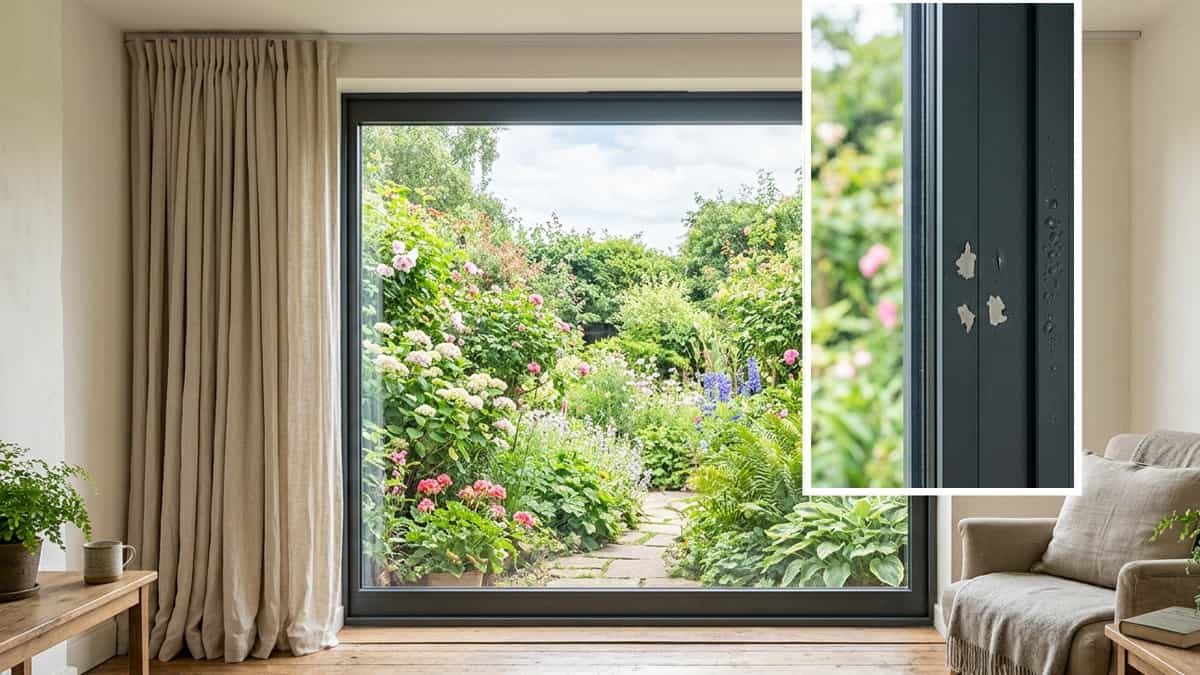
Powder coating is the gold standard for architectural aluminium. It’s tougher than wet paint, more environmentally friendly, and provides that perfect, uniform finish we see on window frames, thermally broken profiles, and curtain walls. But let’s be honest—if you’ve been in the fabrication or contracting game long enough, you’ve seen it fail. You’ve seen the chalky white residue on a 5-year-old window or the bubbles forming along the bottom rail.
Powder coating is durable, but it is not invincible. It’s a chemistry experiment that, if done wrong, becomes a very expensive warranty claim. Here is exactly why it fails on aluminum specifically, and the hard-won, shop-floor advice on how to stop it.
1. Common Powder Coating Failures
Before you can fix a problem, you need to diagnose the specific disease. Not all powder failures look the same.
Peeling / Flaking: This is catastrophic adhesion loss. The coating separates from the metal in sheets or chips, often revealing shiny, untouched aluminium underneath. This is almost always a prep issue.
Bubbling / Blistering: These look like tiny pimples or craters in the finish. They are caused by outgassing—trapped air or moisture in the aluminum’s porous surface expanding during the high-heat curing process and bursting through the semi-molten powder.
Orange Peel Effect: The surface texture resembles the skin of an orange—slightly wavy and dimpled rather than perfectly smooth. While slight orange peel is acceptable in some architectural standards (AAMA 2603), severe texture indicates incorrect film thickness or improper cure flow.
Fading / Chalking: This is the slow death of a finish. UV rays break down the resin binder in the powder, leaving pigment particles exposed. You can wipe your hand across the surface and come away with a chalky, colored dust. It’s a sign of low-quality resin or using an interior-grade powder outdoors.
Quick Reference: Failure Diagnosis
| Failure Type | Primary Symptom | Most Likely Culprit |
|---|---|---|
| Peeling | Large flakes/chips detaching from metal | Poor pre-treatment / Grease residue |
| Blistering | Small bubbles or pimples on surface | Outgassing / Moisture contamination |
| Chalking | White powdery residue when rubbed | UV degradation / Low-grade resin |
| Orange Peel | Wavy, dimpled texture | Incorrect film thickness / Voltage issue |
2. Root Causes of Failure
You can have the most expensive super-durable polyester powder in the world, but if the metal underneath is dirty, the coating is worthless.
Poor Surface Preparation:
Aluminum arrives from the mill with mill oil, die lubricant, and shop dust. If you don’t remove this completely, you’re trying to glue paint to grease. It will fail.
No Proper Pre-Treatment:
Aluminum needs a conversion coating. Historically this was hexavalent chrome (excellent but toxic). Modern lines use non-chrome (zirconium or titanium-based) pre-treatment. For high-end architectural work, adherence to international pre-treatment standards like Qualicoat or GSB is the only way to guarantee long-term adhesion.
Incorrect Curing Temperature:
Powder needs to hit a specific Part Metal Temperature (PMT) for a specific duration. If the oven is too cold, the powder doesn’t crosslink and stays soft (under-cure). If it’s too hot, the resin burns and becomes brittle (over-cure).
Moisture Contamination:
Compressed air lines with water in them will spit moisture into the powder stream, causing craters. Or, if thick aluminum profiles are brought from a cold warehouse into a hot powder booth, condensation forms instantly, trapping moisture under the coating before it even hits the oven.
Low-Quality Powder:
You get what you pay for. Cheap powders use lower-grade resins and pigments that simply cannot stand up to UV radiation for more than a few years. If you want to know more about choosing the right aesthetic and durability balance, comparing the powder coating vs anodizing process highlights exactly where the cost/performance trade-offs lie.
3. Aluminium-Specific Challenges
Steel is forgiving. Aluminium is a diva. Here’s why this metal is particularly tricky to coat:
The Oxide Layer Issue: Aluminium instantly forms aluminium oxide when exposed to air. This layer is soft and powdery. If you apply powder over heavy oxidation, you are coating the oxide, not the metal. When that oxide layer eventually fails, the coating comes off with it.
Smooth Surface = Adhesion Problems: Extruded aluminum is incredibly smooth. There are no microscopic “teeth” for the paint to grip unless you create them.
Importance of Etching: This is why a quality etch stage in the pre-treatment wash is non-negotiable. The etching process doesn’t just roughen the surface; it chemically removes the unstable natural oxide layer and replaces it with a controlled conversion layer that provides a superior anchor profile for the powder coating to adhere .
4. How to Fix & Prevent Failures
If you’re the end-user or contractor seeing a failure, the fix is a full strip and re-coat—there is no magic touch-up that restores the structural integrity of the coating. For applicators, here is the non-negotiable process checklist:
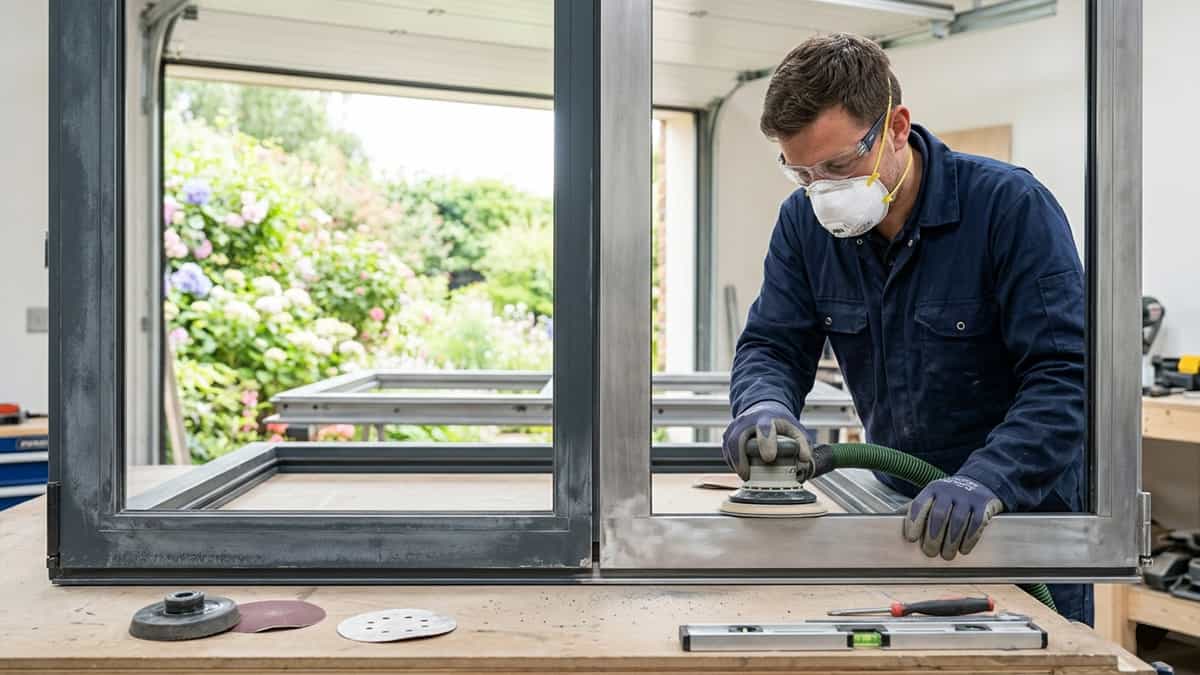
Proper Cleaning & Degreasing: Use a heated, agitated alkaline cleaner. Let the chemicals do the work; don’t just rely on a quick spray.
Chemical Pre-Treatment: Always apply a chrome or non-chrome conversion coating. Rinse with Deionized (DI) water. Tap water contains minerals that leave spots that cause blistering.
Correct Curing Cycle: Know your alloy. 6063 thick extrusions act as a massive heat sink. They take longer to reach PMT (Part Metal Temperature) than thin sheet metal. Use a temperature probe on the part itself—do not trust the oven’s air temperature gauge alone. Aim for 200°C (392°F) for 10-15 minutes for standard polyesters, after the part reaches that temperature.
Quality Powder Selection: For exterior architectural work, specify AAMA 2604 or AAMA 2605 compliant powder. These are tested for UV and humidity resistance. Also, ensure the color is backed by a recognized standard. If you are specifying a specific grey, ensure it matches a certified RAL colour chart for windows and doors to guarantee batch-to-batch consistency and avoid on-site mismatch disputes.
5. When to Avoid Powder Coating
Powder coating is fantastic, but it has limits. In some environments, you are setting yourself up for a maintenance headache.
Extreme Coastal Zones & Filiform Corrosion:
Within 500 meters of breaking surf, salt spray is relentless. This environment accelerates Filiform Corrosion—that distinct “worm-like” creeping corrosion that tunnels under the paint film. Salt is hygroscopic; it pulls moisture into the microscopic pores of the coating, attacking the metal/paint interface. In these zones, powder coat fails 3x faster than inland. You are better off with marine-grade anodizing or selecting a specific super-durable marine powder spec.
High-Abrasion Environments:
Heavy foot traffic areas (door thresholds, elevator interiors). Powder is hard, but it scratches. Once the film is breached, moisture creeps under the surrounding finish and initiates filiform corrosion. Anodizing penetrates the metal surface rather than sitting on top, making it superior for scratch-prone areas.
Final Wrap
Powder coating is only as good as the process that came before it. When it fails, it’s rarely the powder’s fault; it’s almost always a lack of cleanliness, a rushed cure schedule, or a specification mismatch. For fabricators, the best fix is a rigorous quality control check on your pre-treatment line. For contractors and homeowners, the fix is understanding that a cheap powder coat job is a false economy—you’ll be paying to strip it and do it right in five years when it chalks out. Invest in the process, and aluminium will hold its color for decades.
Have you dealt with a coating failure that wasn’t covered here? Let us know in the comments.
Related Articles
Featured
You May Also Like
Aluminium Rolling Ladders: Benefits, Safety, and Selection

Perforated Aluminium Sheet — More Than Just A Fancy Design
How Aluminium Cladding Improves Energy Efficiency in Buildin…

How the Iran War Is Disrupting the Global Aluminium Market

Aluminium Arched Windows: Pros & Cons of Aluminum Frames